Lower Back Stretcher: How to Use It Right and How Fast to Progress
The short answerA back stretcher is an ergonomic arch you lie on for a few minutes so your lower back gets a gentle stretch. Use it on a rug or yoga mat, start on the lowest level for 2–3 minutes, and gradually work up to 5–10 minutes twice a day. Only move up a level once the current one feels completely comfortable, and stop right away if you feel sharp pain, numbness or pain that spreads to your legs.
In a nutshell
- Start on level 1 for just 2–3 minutes, and progress slowly.
- Only move up a level once the current one feels completely comfortable.
- Sharp pain, numbness or pain spreading to your legs: stop immediately.
- Herniated disc, osteoporosis, scoliosis or back surgery: check with a doctor or physical therapist first.
What is a back stretcher and how does it work?
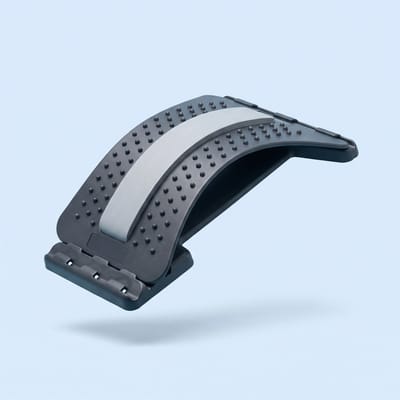
A back stretcher is an arch you lie on with your lower back resting on the curved part. Your body weight does the work, and the muscles in your lower back get a gentle stretch.
XNEEX SpineArch™ has three adjustable arch heights. You start low and go up gradually. A foam spine strip runs down the center, designed to spare your vertebrae from excess pressure, and there are acupressure points on both sides.
No power, no maintenance, and it folds flat, so it even fits in a suitcase.
How to use a back stretcher, step by step
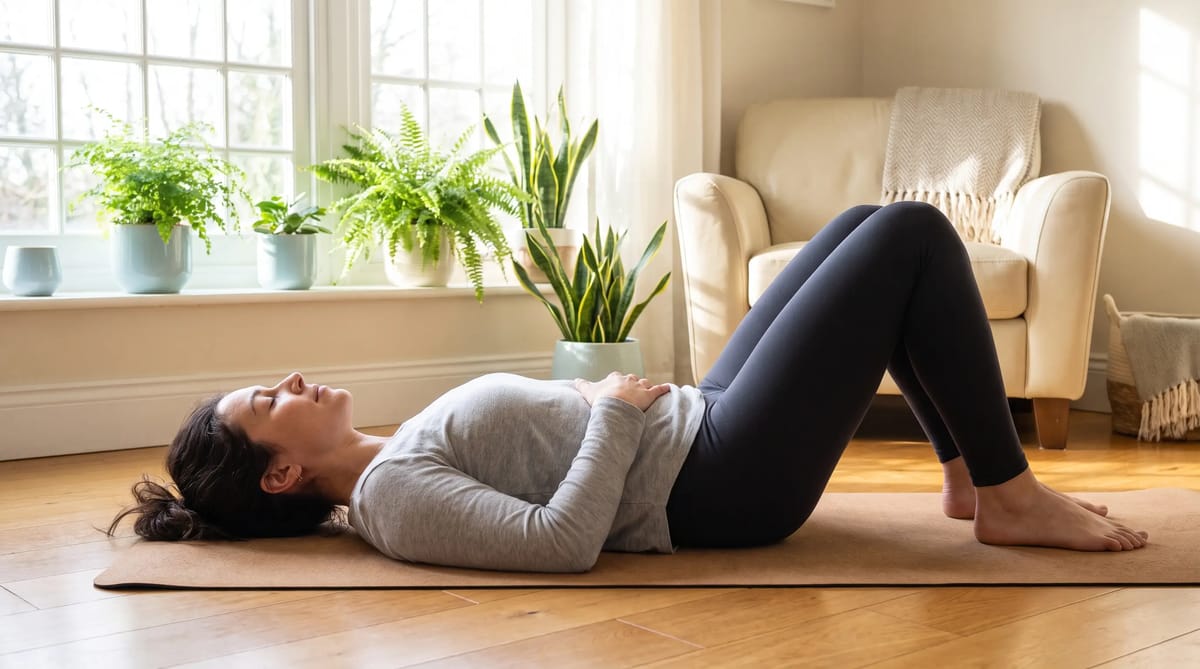
Lie down on it slowly, on a stable surface, and let your body get used to it. You don't need to do anything beyond breathing calmly.
- Place the stretcher on a rug or yoga mat, not on a soft bed.
- Set it to level 1, the lowest.
- Sit in front of the stretcher and slowly lower yourself down so your lower back rests on the arch.
- Knees bent, feet flat on the floor, arms by your sides.
- Breathe slowly for 2–3 minutes.
- To get up, roll gently onto your side and only then sit up.
Getting up matters as much as lying down. Sitting straight up in one go can feel unpleasant after a stretch.
How fast should you progress?
Slowly. Your body needs a few days to get used to the sensation, and there's no advantage in rushing. The table shows an example of gentle progress.
| Stage | Level | Duration | When to move on |
|---|---|---|---|
| Starting out | 1 | 2–3 minutes, twice a day | When lying on it feels comfortable and relaxed |
| Adjusting | 1 | Up to 5–10 minutes, twice a day | When the longer time also feels completely comfortable |
| Progressing | 2 | Go back to 2–3 minutes and extend gradually | Only if level 2 feels completely comfortable |
| Advanced | 3 | Start with a short time again | Optional; some people stay on level 2 |
Note: every time you move up a level, go back to a short session. A deeper stretch needs time to adjust again.
There's no need to reach the top level. The goal is a pleasant feeling, not a personal record.
What should you feel while lying on it?
A gentle, pleasant stretch in your lower back, and sometimes light pressure from the acupressure points. That's all.
- Normal: a moderate stretch, an urge to breathe deeply, a feeling of release when you get up.
- Not normal: sharp pain, numbness, tingling, or pain that spreads to your buttocks or legs.
If anything from the second list happens, stop immediately, roll onto your side and get up. Don't "wait for it to pass."
Which mistakes should you avoid?
Most mistakes come from wanting to progress too fast. A few things to keep in mind:
- Don't start straight on the highest level, even if it doesn't look "that high."
- Don't lie on it longer than your body is already used to.
- Don't get up in one go; always roll onto your side.
- Don't carry on if something feels wrong, even if there are "only two minutes left."
What's the best time of day to use it?
Many people use it in the morning, once their body has woken up, and in the evening after a day of sitting. Twice a day is the recommended frequency.
After a long day at the computer, a few minutes on the arch is a quiet way to end the day. If you sit a lot, it's also worth adding the habits from our guide to long hours of sitting and your back.
Can you use it while sitting, too?
Yes. SpineArch also works as lower back support on an office chair or in the car. Place it behind your lower back on a low level.
Because it folds flat and comes with a carry bag, it's easy to take to work or on vacation. In the box: the stretcher, a foam spine strip, a carry bag and a user guide.
How is it different from an acupressure mat or a massage cushion?
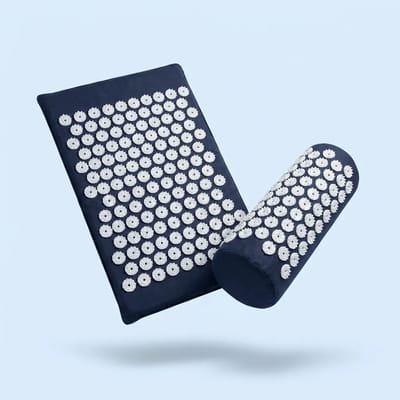
The stretcher works through the shape of its arch, the acupressure mat through thousands of pressure points, and the massage cushion through massage heads, heat and vibration.
If you mainly want a stretching sensation, choose the arch. If you like a tingling, warm feeling, you'll probably prefer the acupressure mat, and if you want active massage, take a look at BackWave™. You'll find them all in the Back collection.
Have a question before you start? Email us at hello@getxneex.com, and if the product isn't right for you, you have 30 days to return it.
Who isn't a back stretcher suitable for?
It isn't recommended during pregnancy. If you have a herniated disc, osteoporosis or scoliosis, or you've had back surgery, you must check with a doctor or physical therapist first.
It's not a medical product and not a substitute for physical therapy. It's a tool for relaxation and a stretching sensation at home.
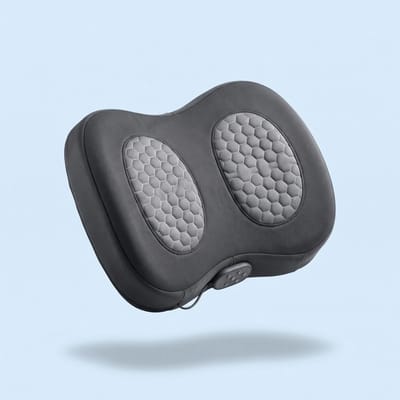
XNEEX BackWave™ – Back Massage Cushion with Heat and Vibration
See the back massage cushionFrequently asked questions
How long should I lie on a back stretcher?
Just 2–3 minutes at first, on the lowest level. Gradually, over several days, extend to 5–10 minutes, twice a day. Each time you move up a level, go back to a short session and build up again. If you feel sharp pain or numbness, stop immediately.
Can I use a back stretcher on my bed?
It's better not to. A soft mattress changes the angle of the arch and makes it less stable. Place the stretcher on a rug or yoga mat so your back rests on it securely, and it's easier to get up gently by rolling onto your side.
When should I move up a level on the stretcher?
Only when the current level feels completely comfortable, even for 5–10 minutes. There's no need to reach the highest level. If a new level feels too strong, go back to the previous one for a few more days, and try again only when your body is ready.
Is a back stretcher suitable if I have a herniated disc?
If you have a herniated disc, osteoporosis or scoliosis, or you've had back surgery, you must check with a doctor or physical therapist before use. They can tell you whether it's suitable for you and which level to start on. Use during pregnancy isn't recommended.
Can I use SpineArch on my office chair?
Yes. Besides lying on it, it also works as lower back support on an office chair or in the car. It folds flat and comes with a carry bag, so it's easy to move between home, work and the car. When sitting, start on a low level.
More from the Knowledge Center
Acupressure mat: how to use it right and who it isn't forLong hours of sitting and your back: quick moves you can do at your deskTight back and tired muscles: a guide to what helps at home and at workAll articles →This article is general information and is not a substitute for medical advice.