Lower Back Stretches at Home: 7 Gentle Moves for the End of the Day
The short answerLower back stretches are slow, gentle movements you do on a rug or yoga mat to relax your muscles after a day of sitting, standing or physical effort. A 7–10 minute routine is enough: knees to chest, pelvic tilt, a gentle twist, cat-cow and child's pose. Hold each position for 20–30 seconds, breathe calmly, and stop right away if you feel sharp pain or numbness.
In brief
- Stretch slowly with calm breathing – no bouncing and no pushing into pain.
- 20–30 seconds per position, 2–3 reps, about 7–10 minutes in total.
- A stretch should feel like a pleasant pull, not like pain.
- Sharp pain, numbness or pain spreading down your leg – stop and see a doctor.
Why do lower back stretches feel good?
Lower back stretches bring movement back to your body after hours in the same position. They let the muscles around your lower back, hips and glutes loosen up, and many people feel their back is lighter and calmer afterward.
They're especially suited to people who sit a lot at a computer or in the car, stand for hours at work, or feel tired in their back at the end of the day. You don't need special equipment: a rug or yoga mat, comfortable clothes and 10 quiet minutes.
How do I do lower back stretches correctly?
Slowly, on a stable floor, with calm breathing. The goal is a pleasant pulling feeling, not an impressive range of motion.
- Hold each position for 20–30 seconds and keep breathing the whole time.
- Don't bounce or "rock" to reach further.
- Do 2–3 reps of each move, on both sides.
- Start with a small range and increase it only if it feels comfortable.
- Stretching after a short walk or a warm shower usually feels more pleasant.
Which lower back stretches can I do at home?
The following seven moves make up a basic, gentle routine. You can do them all in a row, or pick the ones that feel most comfortable for you.
1. Knees to chest
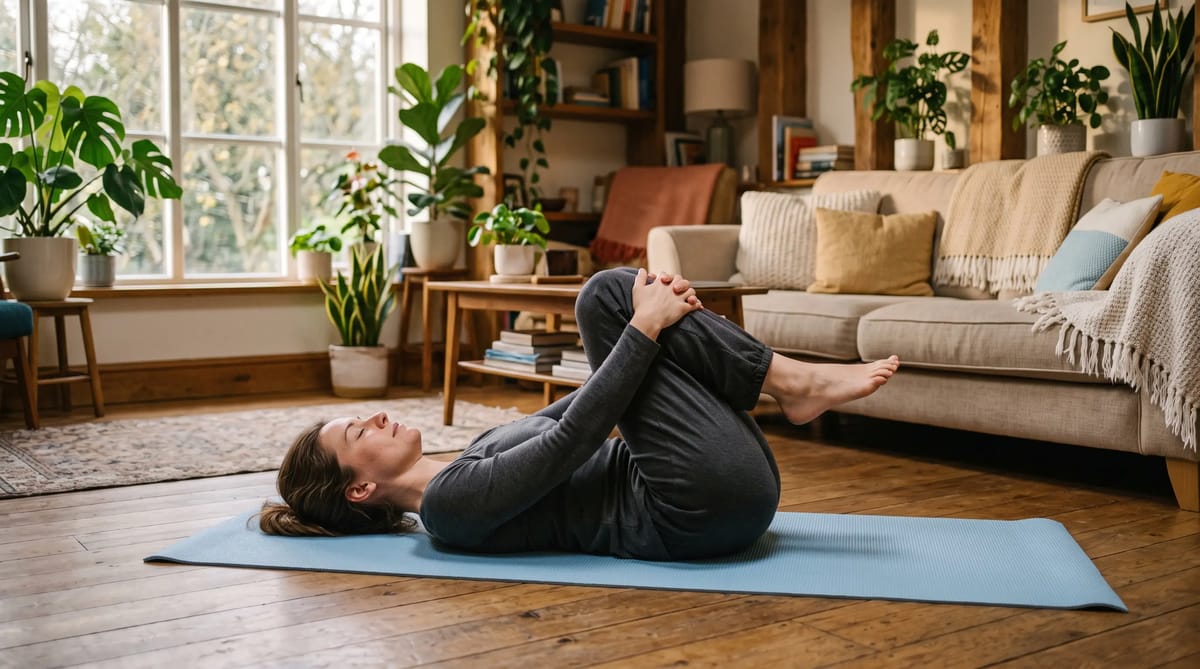
Lie on your back, bring one knee toward your chest with your hands and hold. Then switch, and finally you can bring both knees in together.
2. Pelvic tilt
Lie on your back with your knees bent. Gently press your lower back into the floor, hold for 3–5 seconds and release. 8–10 times.
3. Gentle lying twist
Knees bent and arms out to the sides. Slowly lower both knees to one side, keeping your shoulders on the floor, then to the other side.
4. Glute stretch (figure four)
Lying on your back, place one ankle on the opposite knee and gently draw the lower leg toward your chest. Switch sides.
5. Cat-cow
On hands and knees, round your back up as you breathe out and gently let it sink as you breathe in. 8–10 times, in time with your breath.
6. Child's pose
From hands and knees, sit back toward your heels with your arms stretched forward and your forehead toward the floor. You can widen your knees a little.
7. Low bridge
On your back with knees bent, lift your hips a little off the floor, hold for a few seconds and lower slowly, one vertebra at a time.
How long and how many times a week?
A short, regular routine is better than a long one now and then. The table suggests a simple way to start.
| When | What to do | How long |
|---|---|---|
| In the morning | Knees to chest, pelvic tilt, cat-cow | 3–4 minutes |
| In the middle of a sitting day | A short walk and a standing pelvic tilt | 2–3 minutes |
| In the evening | All 7 moves | 7–10 minutes |
| After activity | Gentle twist, glute stretch, child's pose | 5 minutes |
If you sit a lot, also add the habits from our guide Sitting for long hours and your back.
How do I make stretching a regular habit?
It's easiest to stick with it when you link your stretches to a routine you already have. For example, right after brushing your teeth in the evening, or when you finish your workday.
Leave your yoga mat rolled out or somewhere easy to reach, and start with just three moves. Once it becomes a habit, it's easy to add more.
What can I add to my stretching routine?
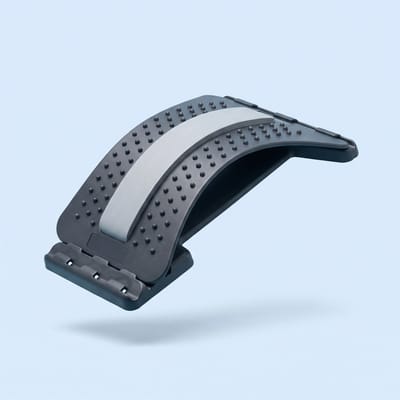
If you enjoy the feeling of stretching, you can add a few minutes on a back stretcher, XNEEX SpineArch™, at the end of your routine. It's an arch with three height levels that you lie on, on a rug. Start on the lowest level for 2–3 minutes and gradually work up to 5–10 minutes. The full guide is in Lower back stretcher.
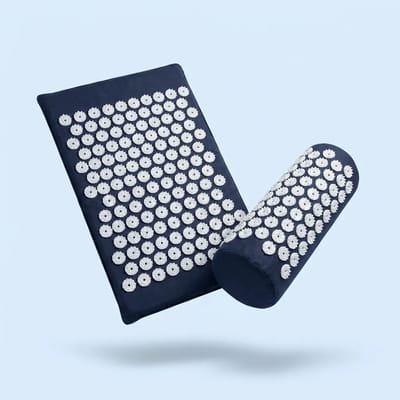
Another option is the AcuMat™ acupressure mat, with more than 6,000 pressure points along your back, for about 20 minutes of relaxation. At first you feel a tingling that turns into a pleasant warm feeling within a few minutes.
You'll find all our solutions in the Back collection. If you have a question before you start, email us at hello@getxneex.com.
When should I avoid stretching my lower back?
A stretch shouldn't hurt. If a particular move is painful, skip it. In the following situations, check with a doctor or physical therapist first:
- After back surgery, or with a herniated disc, osteoporosis or scoliosis.
- During pregnancy, to adapt the moves.
- Pain that started after a fall, an accident or lifting something heavy.
Frequently asked questions
How long should I hold each lower back stretch?
Usually 20–30 seconds per position, with calm breathing, and 2–3 reps on each side. For dynamic moves like pelvic tilts or cat-cow, do 8–10 slow reps. A full routine takes about 7–10 minutes. It's best to do it regularly.
Is it better to stretch my back in the morning or the evening?
Either works. In the morning, choose short, gentle moves after your body has woken up and you've walked around a bit. In the evening, after a day of sitting or standing, you can do a full 7–10 minute routine. Consistency matters more than the time of day.
What should I feel during a lower back stretch?
A pleasant, moderate pull in your lower back, glutes or thighs, and an urge to breathe deeply. Sharp pain, numbness, tingling or pain spreading down your leg are signs to stop right away. If it keeps happening, see a doctor or physical therapist.
Can I do lower back stretches in bed?
A rug or yoga mat is better. A soft mattress sinks and makes it harder to stay stable and control the movement. If getting down to the floor is difficult, you can do knees to chest and pelvic tilts on a firm bed, and the rest sitting on a chair.
Are back stretches suitable with a herniated disc?
With a herniated disc, after back surgery, or with osteoporosis or scoliosis, it's important to check with a doctor or physical therapist first. Some moves may not be suitable, and they can tailor a safe, comfortable routine for your back.
More from the Knowledge Center
Lower back stretcher: how to use it correctly and how fast to progressSitting for long hours and your back: quick moves you can do at your deskAcupressure mat: how to use it correctly and who it's not forAll articles →This article is general information and is not a substitute for medical advice.