Neck Stretching at Home – How to Do It Right and Safely

The short answerStretching your neck at home with an inflatable collar is done sitting down, gradually: put the collar on, fasten the strap snugly and inflate it with the hand pump only until you feel a pleasant stretch – never to the point of pain. Start with five minutes a day, work up gradually to 10–15 minutes and release the air slowly. Stop immediately if you feel pain, dizziness, numbness or shortness of breath.
In brief
- Inflate gradually until you feel a pleasant stretch – never to the point of pain.
- Start with 5 minutes a day and work up gradually to 10–15 minutes.
- Stop immediately if you feel pain, dizziness, numbness or shortness of breath.
- Don't use it after a neck injury or surgery, or if you have osteoporosis or blood pressure problems.
What is an inflatable neck stretcher for home use?
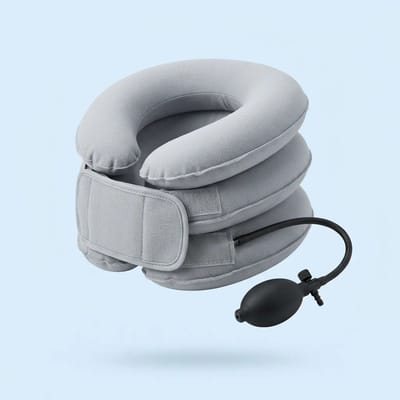
An inflatable neck stretcher is a soft collar you wrap around your neck and inflate gradually. As it fills with air, it rests on your collarbones below and your jaw above, creating a gentle upward stretch of the neck.
XNEEX NeckTrac™ is made of three inflatable layers controlled by a hand pump. It's made of soft fabric, needs no electricity, and once deflated it folds down to pocket size and fits into a carry bag.
Who might neck stretching at home suit?
A gentle stretch mainly suits people whose neck feels loaded and stiff at the end of the day and who want a moment of relaxation at home. It's not meant for injuries and doesn't replace treatment.
- People who work for hours at a computer and feel their head "sinking" into their shoulders.
- People who spend a lot of time driving or on their phone.
- People looking for a short, quiet break during the day, at home or at work.
- People who already stay active and want to add a pleasant feeling of relief.
How do you stretch your neck at home the right way?
Do it slowly, sitting calmly, and inflate only until you feel a pleasant stretch. The most important rule: never to the point of pain.
- Sit up straight: on a stable chair, feet on the floor and shoulders relaxed.
- Put on the collar: wrap it around your neck and fasten the strap so it's snug but not tight.
- Inflate gradually: a few squeezes of the hand pump, pause, and check how it feels. Only continue if it feels good.
- Stay in position: breathe normally and relax your shoulders.
- Release slowly: at the end, let the air out gradually rather than all at once, and only then take it off.
The collar is ergonomic: it presses down on your collarbones and up on your jaw, without pressing against your throat or giving a choking feeling. If you do feel pressure on your throat, let some air out and adjust the position.
How long and how often?
Start with five minutes a day and build up gradually to 10–15 minutes. There's no need to rush – your body needs time to get used to the feeling.
| Stage | Duration | Inflation level | What to watch for |
|---|---|---|---|
| First few days | 5 minutes a day | Low, a light stretch | How your neck feels after use |
| Once you're used to it | Up to 10 minutes | Up to a pleasant stretch | That your shoulders stay relaxed |
| Regular use | 10–15 minutes | Pleasant, not strong | Don't increase it just because you've "gotten used to it" |
When should you not use a stretching collar?
Don't use a stretching collar after a neck injury or surgery, or if you have osteoporosis, blood pressure problems or problems with the arteries in your neck. In these cases, ask a doctor before any kind of stretching.
While using it, stop immediately and release the air if any of these appear:
- Pain, even if it's mild.
- Dizziness.
- Numbness or tingling in your arms, hands or face.
- Shortness of breath or an unpleasant feeling of pressure.
What are the common mistakes with neck stretching?
The most common mistake is over-inflating, thinking "stronger is better." In reality, a gentle, consistent stretch feels better than a strong, occasional one.
- Inflating too fast: several squeezes in a row without stopping to check how it feels.
- A strap that's too loose or too tight: too loose and the collar shifts; too tight and it's uncomfortable on your neck.
- Releasing all at once: let the air out slowly so your neck returns to its position gradually.
- Using it while moving: the collar is meant for sitting calmly, not for walking, driving or lying down with your head turned.
- Ignoring the signs: dizziness or numbness are a signal to stop, not to "wait for it to pass."
How do you combine stretching with everyday habits?
Stretching works best as part of a routine, not as the only solution. Combine it with a well-set-up workspace, movement breaks and a pillow that suits your sleep position.
Many people like to stretch in the evening, after a day at the screen, and finish with a warm shower. Read about choosing a pillow in our article on how to choose a pillow for your sleep position, and for the bigger picture, see our neck and sleep guide.
Have a question before you start? Email us at hello@getxneex.com, and you have 30 days to return. You'll find more solutions in the Neck & Sleep collection.
Frequently asked questions
Is neck stretching at home safe?
When done gently and according to the instructions, most people can try a gentle stretch. It isn't suitable after a neck injury or surgery, or if you have osteoporosis, blood pressure problems or problems with the arteries in your neck. Whenever in doubt, or if you already have pain, check with a doctor first.
How long should I use an inflatable neck stretcher?
Start with five minutes a day and build up gradually to 10–15 minutes. There's no point going longer or increasing the inflation to feel more. What matters is a pleasant, relaxed feeling and releasing the air slowly at the end.
How much should I inflate the collar?
Inflate with a few squeezes, pause and check how it feels. Only continue as long as the stretch feels pleasant. If you feel pain, pressure on your throat or dizziness, release the air immediately. There's no fixed number of squeezes, because every neck feels different.
Can I use NeckTrac at work or when traveling?
The collar needs no electricity, and once deflated it folds down to pocket size and fits into a carry bag, so it's easy to take along. Use it only while sitting calmly – not while driving, walking or doing work that requires moving your head.
Does neck stretching replace physical therapy?
No. Stretching at home can give you a moment of relaxation and a more comfortable feeling, but it's no substitute for professional diagnosis and treatment. If you have ongoing pain, pain radiating down your arm or numbness, see a doctor or physical therapist.
What does it feel like to stretch your neck with an inflatable collar?
You usually feel a gentle lift of your head and a sense of space in your neck, as the collar rests on your collarbones and jaw. It should feel pleasant and relaxing. If you feel pain, pressure on your throat, dizziness or numbness, release the air immediately and stop.
More from the Knowledge Center
The neck and sleep guide: neck tension, screens and pillows →How to choose a pillow for your sleep position – and when to replace it →Long hours of sitting and your back: quick moves you can do at your desk →All articles →This article is general information and is not a substitute for medical advice.