The Neck & Sleep Guide: Neck Tension, Screens and Pillows

The short answerNeck tension usually comes from hours in one fixed position: your head pushed forward toward a screen, your phone down at knee level and a pillow that doesn't suit how you sleep. To feel more comfortable, raise your screen to eye level, take short movement breaks, choose a pillow that keeps your neck in line with your back, and add warmth, massage or a gentle stretch at home.
In brief
- The top of your screen at eye level – and bring your phone up to you, not the other way around.
- A short movement break every 30–60 minutes makes a real difference to how you feel.
- Your pillow should keep your neck in line with your back in your sleep position.
- Warmth, massage and gentle stretching – always within a comfortable range, never to the point of pain.
Why do screens cause neck tension?
Your neck tightens up in front of screens mainly because you hold the same position for a long time: your head drifts forward, your shoulders creep up and your muscles hold that position without a break. Neck tension comes less from one wrong movement and more from hours in the same posture.
Your head is relatively heavy, and when it moves forward of your shoulders, the muscles at the back of your neck and upper back work harder to hold it up. With a phone it's even more noticeable, because you're looking down.
How do you set up a neck-friendly workspace?
Set up your workspace so your eyes look forward rather than down, and your back is supported. A few small changes make a big difference to how you feel at the end of the day.
- Screen height: the top of the screen roughly at eye level. With a laptop, use a stand and an external keyboard.
- Distance: the screen about an arm's length away, so you don't push your head forward to read.
- Phone: lift your phone to eye level instead of dropping your head to it.
- Shoulders: elbows close to your body and shoulders relaxed, not raised toward your ears.
- Breaks: every 30–60 minutes, stand up for a minute, roll your shoulders back and gently move your head.
If you tend to forget to sit up straight, XNEEX PosturePro™ can help – a small sensor that attaches to your upper back and vibrates gently when you slouch. It's a quiet reminder, nothing more. You'll find more ideas for moving at your desk in our article on long hours of sitting and quick back moves.
Which pillow is right for your neck?
The right pillow for your neck is one that keeps it in line with your back in your sleep position. Side sleepers need a higher pillow, back sleepers a medium height and stomach sleepers a very low pillow.
| What you're looking for | A good option | Why |
|---|---|---|
| A fixed shape that supports your neck | XNEEX CervaCurve™ | An ergonomic foam neck pillow |
| Comfort when traveling and in the car | XNEEX TravelRest™ | A neck pillow for travel and the car |
| Sleeping with your head raised | XNEEX WedgeRise™ | A raised wedge pillow for sleep |
If you're not sure what height you need, browse the pillows in our Neck & Sleep collection. You'll find a detailed guide by sleep position in our article on how to choose a pillow for your sleep position.
What can you do at home when your neck feels stiff?
You can combine gentle movement, comfortable warmth and relaxation. The goal is to ease the feeling of stiffness, not to "force it loose."
- Soft movement: slowly tilt your head side to side, and nod "yes" and "no" within a comfortable range, without pushing to the end.
- Warmth: a warm shower or local heat helps many people feel their muscles soften.
- Massage: XNEEX NeckRelief™ is a shiatsu neck and shoulder massager with heat, for relaxing at the end of the day.
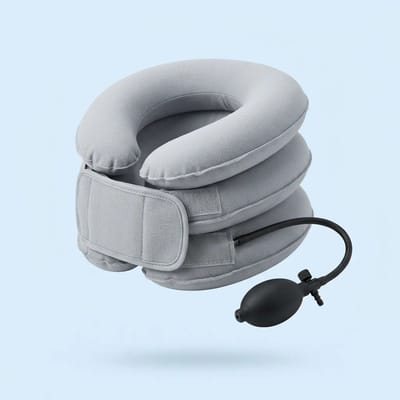
- Gentle stretch: NeckTrac™ is an inflatable collar that gently stretches your neck. Inflate gradually until you feel a pleasant stretch, never to the point of pain, and start with five minutes a day.
We cover stretching at home – who it suits and who it doesn't – in more detail in our article on neck stretching at home.
What should you do for your neck on long journeys?
On long journeys your neck tends to drop to the side or forward when you fall asleep sitting up, so support around your neck helps keep your head in place. A travel pillow such as XNEEX TravelRest™ works in the car, on the train and on flights.
If you're driving, adjust the headrest so it's close to the back of your head, and sit as upright as you can. At rest stops, get out for a few minutes, roll your shoulders and gently move your neck before you carry on.
How is good sleep linked to your neck?
At night your neck should rest, but an unsuitable position can leave it bent for hours. So what happens while you sleep affects how you feel in the morning, and what happens during the day affects your sleep.
A few simple habits before bed:
- Put your phone down before getting into bed, and don't read on it lying down with your head propped on your hand.
- Don't fall asleep on the couch with your head on the armrest.
- Side sleepers: a pillow between your knees, such as XNEEX SleepAlign™, keeps your body in a more comfortable line.
Have a question about fit? Email us at hello@getxneex.com – real people will get back to you. All our solutions are in the Neck & Sleep collection.
Frequently asked questions
Why do I wake up with a stiff neck?
Common reasons are a pillow at the wrong height, sleeping on your stomach with your head turned, or falling asleep on the couch in a bent position. Tension that built up during the day in front of screens can also be felt in the morning. Check your pillow height against your sleep position and try changing one thing at a time.
How high should my computer screen be?
The top of the screen should be roughly at eye level, about an arm's length away. That way you can look straight ahead without dropping your head. With a laptop, use a stand and an external keyboard and mouse.
Does heat help a stiff neck?
Many people find that comfortable warmth, like a warm shower or local heat, helps their muscles feel softer and more relaxed. After a fresh injury or when there's swelling, it's better to check with a professional first. If the pain is sharp or getting worse, see a doctor.
Can I stretch my neck at home?
You can do gentle movements within a comfortable range, and use an inflatable neck stretcher with care: inflate gradually until you feel a pleasant stretch, start with five minutes a day and stop immediately if you feel pain, dizziness or numbness. Don't use one after a neck injury or surgery, or if you have osteoporosis or blood pressure problems.
Which pillow suits people with neck tension?
There's no single pillow that suits everyone. Side sleepers need a high, stable pillow, back sleepers a medium-height pillow with support in the curve of the neck, and stomach sleepers a very low pillow. An adjustable pillow lets you try different heights and find what's comfortable for you.
More from the Knowledge Center
How to choose a pillow for your sleep position – and when to replace it →Neck stretching at home – how to do it right and safely →Long hours of sitting and your back: quick moves you can do at your desk →All articles →This article is general information and is not a substitute for medical advice.