Stiff Neck in the Morning: What in Your Sleep Might Cause It and What You Can Change

The short answerA stiff neck in the morning usually comes from spending several hours with your neck at an awkward angle. The most common reasons: a pillow that's too high or too low for your sleep position, sleeping on your stomach with your head turned, an old pillow that has gone flat, and a whole evening hunched over a screen. Matching your pillow height to your position, changing a few evening habits and moving gently in the morning often make a noticeable difference.
In brief
- Your pillow should fill the gap between your head and the mattress so your neck stays in line with your spine.
- Side sleepers need a higher pillow; back sleepers a lower one; stomach sleepers a very low one, or try switching to your side.
- An hour on your phone before bed means your neck goes to bed already tired.
- If your pillow sags, folds in half or doesn't bounce back, it's time to replace it.
Why do you wake up with a stiff neck?
You mostly wake up with a stiff neck when it has spent the night out of line with the rest of your spine. Six or seven hours at even a slight angle is enough for the muscles to wake up tight.
Common sleep-related causes:
- Pillow height that doesn't suit your position – your head tilts up or drops down.
- Sleeping on your stomach – your head is turned to one side for hours.
- An old pillow – it has sunk in the middle and doesn't hold you like it used to.
- An evening in front of screens – your neck arrives in bed already tense.
- A sagging mattress – it changes the angle of your whole body, even with a good pillow.
What pillow height suits your sleep position?
Pillow height depends on the gap between your head and the mattress in the position you sleep in. The goal is for your nose to line up with the center of your chest, not above it and not below it.
| Sleep position | Suitable pillow height | What to watch for |
|---|---|---|
| Side | Relatively high – fills the width of your shoulder | Your head doesn't drop toward the mattress or tilt up toward the ceiling |
| Back | Medium to low | Your chin isn't pushed toward your chest; support under the nape of your neck |
| Stomach | Very low or no pillow | Your head is turned for hours – worth trying to switch to your side |
| Combination | A two-height pillow or an adjustable pillow | Works for both back and side, so you're not searching for the right spot at night |
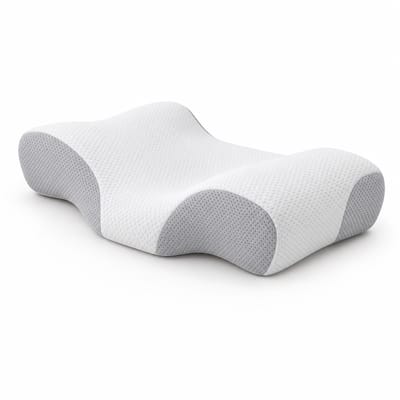
If you sleep on both your back and your side, consider the CervaCurve™ ergonomic neck pillow. It has a wave-shaped profile with a ridge that supports your neck and a central hollow for your head, a lower side for back sleepers and a higher side for side sleepers, plus side cut-outs for your shoulder and arm. If you'd rather adjust the height and firmness yourself, browse the adjustable options in our Neck & Sleep collection.
What's the problem with sleeping on your stomach?
When you sleep on your stomach you can't breathe with your face in the mattress, so your head is turned to one side for hours. That's exactly the position that leaves you with a stiff neck in the morning, usually on one side.
It's hard to change a sleep habit overnight. A few things that help you move to side sleeping:
- A pillow between your knees, which makes side sleeping stable and comfortable.
- A long pillow to hug in front of you, which feels similar to lying on your stomach.
- If you still sleep on your stomach, use a very thin pillow or none at all.
How do screens before bed affect your neck?
When you look down at a phone in your hands, your head tilts forward and the muscles at the back of your neck work the whole time. An hour of that before bed means your neck goes to bed already tired.
Try raising the screen to eye level, reading while sitting with your back supported rather than lying on your side with your head bent, and putting the phone down half an hour before lights out.
What to do when you wake up with a stiff neck
Start with slow, gentle movement, not a hard stretch. The aim is to help your neck feel free again, not to push it into a range that hurts.
- A warm shower relaxes the muscles before you start moving.
- Drop your shoulders away from your ears and roll them back a few times.
- Turn your head slowly from side to side, only as far as feels comfortable.
- Gently tilt your ear toward your shoulder and hold for a few breaths on each side.
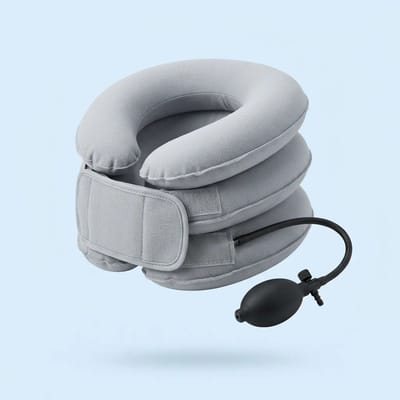
Some people also add a gentle stretch with the NeckTrac™ inflatable neck stretcher to their evening routine. Start with 5 minutes a day, inflate with the hand pump only until you feel a pleasant stretch, and never to the point of pain. Learn more in our guide to neck stretching at home.
When should you replace your pillow?
Replace your pillow when it no longer returns to its shape. A pillow that sinks in the middle, folds in half easily or has to be doubled over to be high enough isn't supporting you properly anymore.
Before you buy a new one, read our guide on how to choose a pillow and browse the Neck & Sleep collection. If you're torn between pillows, email us at hello@getxneex.com, and remember you have 30 days to return.
Frequently asked questions
Why do I wake up with a stiff neck every morning?
The most common reason is that your neck spends the whole night at an uncomfortable angle. That happens with a pillow that's too high or too low for your sleep position, when you sleep on your stomach, or with a pillow that has gone flat. If it happens every morning, start by checking your pillow and your position.
What pillow suits side sleepers?
Side sleepers do best with a relatively high pillow that fills the gap between your head and the mattress across the width of your shoulder. That keeps your head in line with your spine instead of dropping down. A pillow with a higher side for side sleeping, or an adjustable pillow, lets you fine-tune the height.
Is sleeping without a pillow good for your neck?
For stomach sleepers, sleeping with no pillow or a very thin one can be more comfortable. For side or back sleepers, going without a pillow usually lets your head fall back or to the side, leaving your neck unsupported. Most people need a pillow that suits their position.
How often should you replace your pillow?
There's no fixed number; it depends on the material and how it's used. The signs are clear: the pillow sinks in the middle, folds easily, doesn't return to its shape, or you have to fold it to make it high enough. When that happens, it's no longer supporting your neck properly.
What should I do when I wake up with a stiff neck?
Start gently: a warm shower, rolling your shoulders back, slowly turning your head from side to side only as far as is comfortable, and tilting your ear toward your shoulder. Don't pull or force a range that hurts. If it doesn't ease within a few days, or you have numbness or sharp pain, see a doctor.
More from the Knowledge Center
How to choose a pillow for your sleep positionThe neck & sleep guide: neck tension, screens and pillowsNeck stretching at home – how to do it right and safelyAll articles →This article is general information and is not a substitute for medical advice.