Stiff Lower Back in the Morning: Why It Happens and How to Get Out of Bed Easily
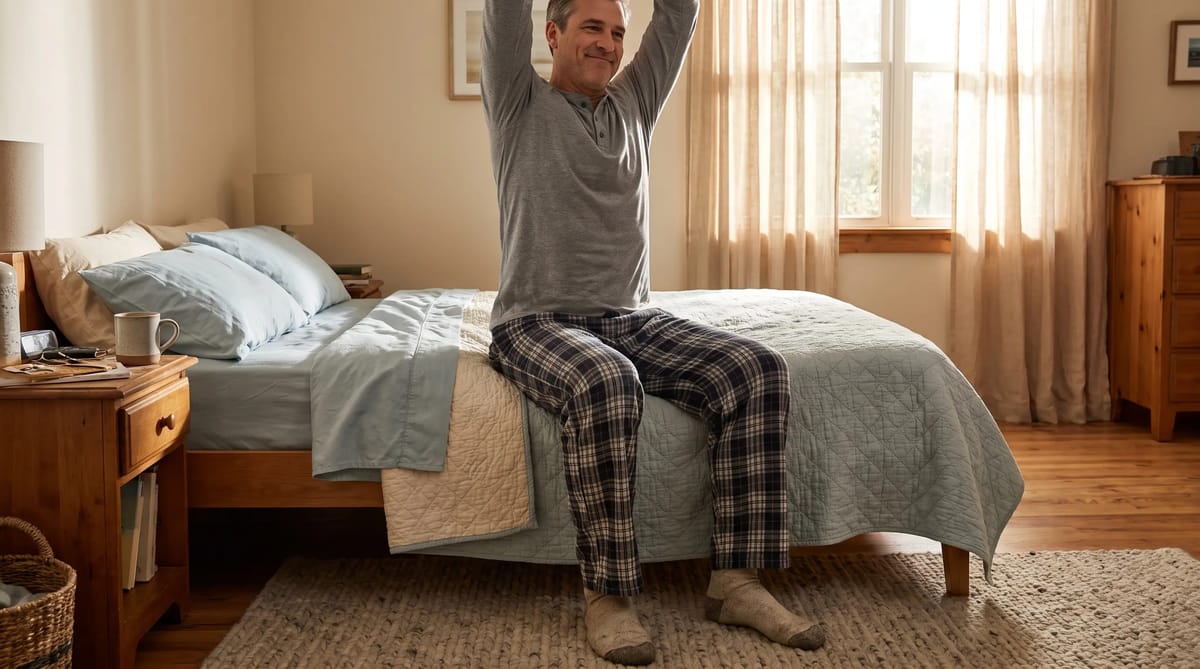
The short answerA stiff lower back in the morning is a common feeling: after hours of lying still, the muscles around your lower back feel tight, and it usually eases up soon after you start moving. What helps: rolling onto your side to get out of bed, doing a few gentle moves before you bend over, checking your sleep position and mattress, and relaxing your back the evening before.
In brief
- Get out of bed by rolling onto your side, not by sitting straight up from your back.
- 2–3 minutes of gentle movement in the morning helps your body "wake up" before you bend down.
- Side sleepers: a pillow between the knees. Back sleepers: a pillow under the knees.
- Stiffness that doesn't ease, pain that wakes you up, or numbness in the legs – see a doctor.
Why is my lower back stiff in the morning?
In most cases, a stiff lower back in the morning comes from long hours without movement. At night your muscles stay in the same position for a long time, and in the morning they need a few minutes to get used to moving again.
A few things can make the feeling stronger:
- A sleep position that twists your pelvis, such as sleeping on your side with your top leg falling forward.
- A mattress that's too soft, so your hips sink into it, or too firm for you.
- A long day of sitting without breaks, which your back carries with it into the night.
- Unusual effort the day before: lifting, gardening, moving house or a new workout.
When the stiffness eases once you start moving, that's usually a sign of tired, tense muscles. When it doesn't ease, it's worth checking with a doctor.
How do I get out of bed when my lower back is stiff?
Don't sit straight up from your back. The comfortable way is to roll onto your side and use your arms.
- Lie on your back and bend both knees.
- Roll onto your side as one unit, knees together.
- Lower your legs off the bed while pushing yourself up to sitting with your hands.
- Sit on the edge of the bed for a moment, breathe, and only then stand up.
This way your lower back doesn't have to lift the whole weight of your upper body in one movement, before your muscles have warmed up.
What gentle moves can I do in the morning?
2–3 minutes of calm movement, still in bed or on the rug, is enough to help your body feel ready for the day. The moves should feel comfortable – don't push into pain.
- Knees to chest: lie on your back, bring one knee toward your chest and hold for a few breaths, then switch.
- Knee drops: with knees bent, slowly tip them right and left within a small range.
- Pelvic tilt: gently press your lower back into the mattress and release, 8–10 times.
- Cat-cow: on hands and knees, slowly round and then arch your back in time with your breath.
- A short walk: a few minutes around the house before you bend down for your shoes or lift anything.
For more ideas for moving throughout the day, see our guide Sitting for long hours and your back.
How do sleep position and mattress affect the lower back?
The goal at night is to keep your pelvis and lower back in a comfortable line, without twisting or sinking. A small change in pillow or position can make a difference to how you feel in the morning.
| Sleep position | What to try | Why |
|---|---|---|
| On your side | A pillow between your knees | Keeps your pelvis level, so your top leg doesn't pull forward |
| On your back | A pillow under your knees | Slightly bent knees take load off the curve of your lower back |
| On your stomach | A flat pillow under your belly, or a gradual switch to side sleeping | Reduces the arch in your lower back in this position |
If your mattress sags in the middle or you wake up stiff in other places too, it may be time to check it. Read more about knee pillows in A knee pillow for side sleepers.
What can I do in the evening so mornings feel better?
The morning starts the evening before. A few minutes of relaxation before bed helps your back go into the night less tense.
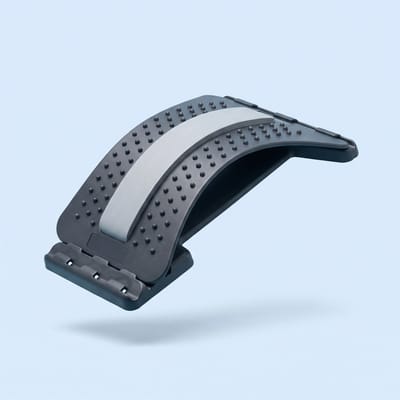
Back stretcher: XNEEX SpineArch™ is an arch with three height levels that you lie on, on a rug or yoga mat. Start on the lowest level for 2–3 minutes and gradually work up to 5–10 minutes, twice a day. For full details, see our guide Lower back stretcher.
Massage and heat: the BackWave™ massage cushion combines rotating shiatsu massage, heat and vibration, and sits on the back of your chair at lower-back height. We suggest about 15–20 minutes, up to twice a day, to relax your muscles after a long day.
You'll find all our back products in the Back collection. Not sure what's right for you? Email us at hello@getxneex.com.
Which morning habits are best avoided?
In the first minutes after waking up, your back isn't ready for load yet. It's worth putting off a few things for a few minutes:
- Bending deeply for your shoes or the laundry right after getting up.
- Lifting children, bags or boxes before you've had a chance to move.
- Sitting hunched over your phone on the edge of the bed for a long time.
- An intense workout without warming up.
Putting your shoes on while sitting, with your foot raised on a stool, is better than bending over from standing.
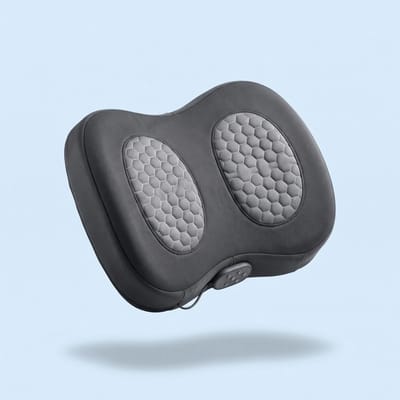
XNEEX BackWave™ – Back Massage Cushion with Heat and Vibration
See the back massage cushionFrequently asked questions
Why does my lower back hurt in the morning and ease up during the day?
After hours of lying still, the muscles around your lower back feel stiff, and movement gradually warms them up. That's why the feeling usually eases once you start moving. If the stiffness lasts a long time, comes back every day or comes with numbness, it's worth talking to a doctor.
What's the right way to get out of bed with a stiff lower back?
Bend your knees, roll onto your side as one unit, lower your legs off the bed while pushing yourself up to sitting with your hands. Sit on the edge of the bed for a moment and only then stand up. This way your back doesn't have to lift your whole upper body in one movement.
Which sleep position is best for the lower back?
There's no single position that suits everyone. Side sleepers benefit from a pillow between the knees that keeps the pelvis level, and back sleepers from a pillow under the knees. Stomach sleepers can try a flat pillow under the belly or gradually switch to sleeping on their side.
Are morning stretches right for everyone?
Gentle moves like knees to chest, pelvic tilts and a short walk suit most people, as long as they feel comfortable and don't hurt. If a move causes sharp pain, numbness or pain spreading down your leg, stop. After back surgery or with a herniated disc, check with a physical therapist first.
What can I do in the evening to wake up with a calmer back?
A few minutes of relaxation before bed helps: gentle stretches on the rug, a few minutes on a back stretcher at a low level, or 15–20 minutes of massage with heat. It's also worth adding a pillow between or under your knees, depending on how you sleep.
More from the Knowledge Center
Lower back stretcher: how to use it correctly and how fast to progressSitting for long hours and your back: quick moves you can do at your deskA knee pillow for side sleepers: why to use one and how to chooseAll articles →This article is general information and is not a substitute for medical advice.