Knee Heating Pad: When to Use It, for How Long and How to Do It Right

The short answerA knee heating pad is mainly suited to a feeling of stiffness and tight muscles around the knee: in the morning, after sitting for a long time, on cold days or at the end of a day on your feet. Soothing warmth for about 15–20 minutes at a time is usually enough. Don't use heat on a fresh injury, on a knee that's swollen, red or warm to the touch, or on damaged skin.
At a glance
- Heat suits stiffness, tight muscles and relaxation – not a fresh injury or swelling.
- About 15–20 minutes at a time, comfortably warm rather than hot, and never fall asleep with the heat on.
- Good times: the morning, after sitting for a long time, after activity and at the end of a day on your feet.
- Sharp pain, swelling that doesn't go away or numbness are reasons to see a doctor or physical therapist.
When is a knee heating pad a good fit?
A knee heating pad is a good fit when your knee feels stiff, tight or cold – not when it's swollen or injured. Soothing warmth helps the muscles around the knee loosen up and gives a feeling of flexibility and comfort.
These are the situations where most people feel heat does them good:
- In the morning: when your knees feel "rusty" during the first steps of the day.
- After sitting for a long time: at the office, on a drive or in front of a screen, when it's hard to straighten your leg.
- On cold days: some people feel their knees are stiffer in the colder months and in air conditioning.
- At the end of a day on your feet: for a moment of rest and relaxation.
- After physical activity: when the muscles around the knee feel tired and tight.
If you're torn between heat and cold, we've gathered the differences in our guide Heat or cold for your knee.
When shouldn't you use heat on your knee?
Don't use heat on a fresh injury, swelling, or a knee that's warm and red. In these situations heat may make the uncomfortable feeling worse, and with a fresh injury it's common to start with cold instead.
- A knock, sprain or twist of the knee in the last two days.
- A knee that's swollen, red or warm to the touch.
- Damaged skin, a wound, irritation or a burn in the area.
- Reduced sensation in the leg, when it's hard to tell if the heat is too strong.
- Diabetes or circulation problems: check with a doctor before using heat.
How long should you keep a heating pad on your knee?
In most cases, 15–20 minutes at a time is enough. After that, take a break and let your skin return to its normal temperature.
You can repeat this once or twice a day, depending on how you feel. The warmth should feel pleasant, not hot. If your skin turns very red, stings or feels uncomfortable, remove the pad right away.
An important rule: never fall asleep with the heat on, and don't keep heat on your knee for hours at a stretch.
How to fit a heating pad into your routine
The easiest way is to link the warmth to moments that already exist in your day. That way you don't need to remember one more task, and the habit builds itself.
| When | What to do | Why it works |
|---|---|---|
| In the morning, with your coffee | 15 minutes of warmth, then a few gentle knee bends and straightens | Your knee starts the day feeling less stiff |
| On a break at the office | Warmth while sitting, followed by a short walk | Breaks up a long stretch of sitting |
| After a workout or walk | Rest with warmth on your knee | Relaxation for tired muscles |
| In the evening in front of the TV | Warmth as part of a moment of rest | Winds down a long day on your feet |
A small tip: gentle movement after the warmth, like straightening and bending your leg while seated, rounds out the feeling of release.
How to do it right and safely
The secret is gentle warmth, limited time and paying attention to your skin. A few simple habits make the difference:
- Check your skin before you start: no wounds, irritation or redness.
- Start with gentle warmth and turn it up only if needed.
- Stick to 15–20 minutes, and take a break before the next round.
- Don't lie or lean with your full body weight on the heat source.
- Look at your skin at the end: mild redness that fades quickly is normal, stinging is not.
Common mistakes to know about
The most common mistake is leaving a knee heating pad on all evening or falling asleep with it. Another is warming a swollen knee just because "heat always helps." And also: relying on heat alone. The combination of warmth, gentle movement and breaks from long periods of sitting works better than any one of them on its own.
How does XNEEX HeatPad™ fit into your day?
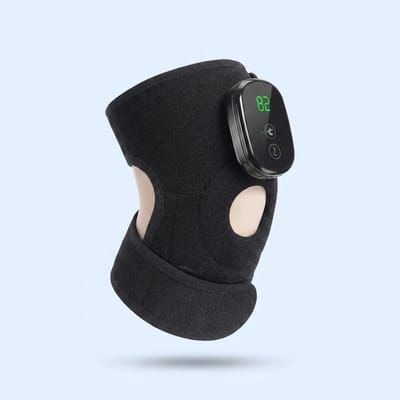
XNEEX HeatPad™ is a heating pad designed for the knee that provides soothing, targeted warmth around it, to relax the muscles and help it feel less stiff. Its ergonomic design sits securely on the knee, so it's comfortable to use at home, at the office or while resting.
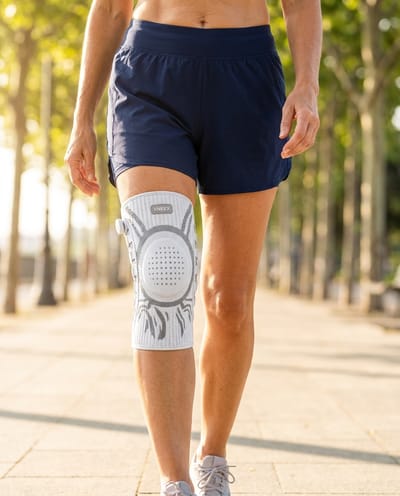
If you also need a feeling of support while moving, for example on stairs or a long walk, the Smart Knee Support is a thin knit sleeve you can wear under your clothes. The heat is for moments of rest, and the support is for moments of movement. You'll find more options in our Knee Pain collection, and tips for the cold season in our guide Knees in cold weather.
Not sure what's right for you? Email us at hello@getxneex.com and get an answer from real people. And you have 30 days to return, no questions asked.
Frequently asked questions
How long can I leave a heating pad on my knee?
The common recommendation is about 15–20 minutes at a time, comfortably warm rather than hot. After that, take a break and let your skin return to its normal temperature. You can repeat this once or twice a day, and you shouldn't fall asleep with the heat on.
When is cold better than heat for the knee?
After a knock, sprain or fresh injury, and when the knee is swollen, red or warm to the touch, cold is generally used rather than heat. Heat is better suited to a feeling of stiffness, tight muscles and relaxing at the end of the day. If you're not sure what's right, check with a physical therapist.
Can I use a knee heating pad every day?
Yes, many people make warmth part of their daily routine, for example in the morning or evening. It's important to keep each session time-limited, check that your skin is fine and listen to how you feel. If your knee doesn't improve over time or swelling appears, see a doctor or physical therapist.
Is heat better before or after activity?
After activity, warmth can give a feeling of relaxation to the tired muscles around the knee. Before activity, some people like a few minutes of warmth followed by a gentle movement warm-up. If your knee is swollen or painful after a workout, it's better to skip the heat and find out what's going on.
Why do my knees feel stiffer in the morning and in cold weather?
After hours without movement, like sleep or sitting for a long time, many people feel their knee needs time to loosen up. Cold can also make muscles feel tighter. Soothing warmth and gentle movement at the start of the day help many people feel more comfortable.
More from the Knowledge Center
Heat or cold for your knee: when each one fits and how to use it rightKnees in cold weather: why they feel the chill first and what helpsKnees on stairs: why going up and down feels hard and what helpsAll articles →This article is general information and is not a substitute for medical advice.