Heat or Cold for Your Knee: When Each One Fits and How to Use It Right
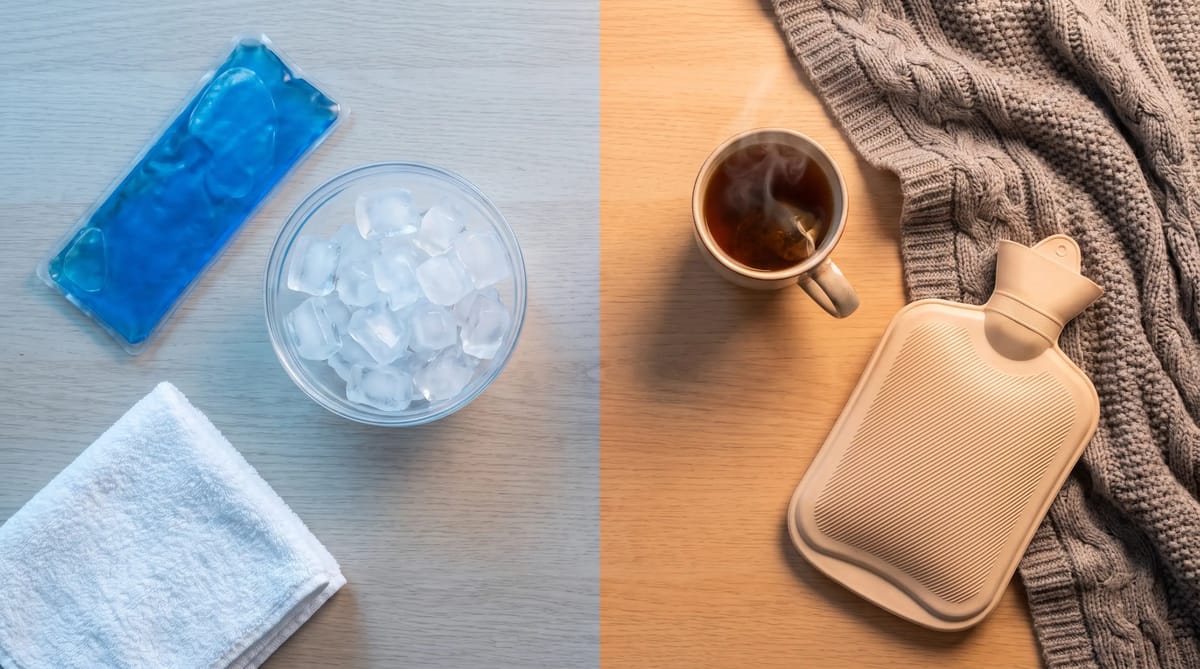
The short answerHeat or cold for your knee? The common rule of thumb is simple: cold suits the first hours and days after a knock, unusual effort, or when there's swelling and local warmth. Heat suits stiffness, muscle tension and a heavy feeling without swelling – for example in the morning or after a long day. Either way, use it for 15–20 minutes, through a layer of fabric, and stop if it feels unpleasant.
At a glance
- Cold – after a fresh knock, unusual effort, swelling or local warmth.
- Heat – for stiffness, muscle tension and a heavy feeling without swelling.
- 15–20 minutes at a time, always through a layer of fabric, never directly on the skin.
- Swelling that won't go down, sharp pain or numbness – a reason to get checked.
Heat or cold for your knee – how do you decide?
Ask yourself one question: is the knee swollen, warm to the touch, or did you just hurt it? If so, cold is usually the better choice. If it's mainly stiff, tight or tired, soothing heat is the better fit.
Choosing between heat and cold for your knee depends mostly on timing and on the kind of sensation. Cold reduces blood flow to the area and gives a cooling, calming feeling. Heat widens the blood vessels and gives a feeling of relaxation and less tense muscles.
When does cold suit the knee?
Cold is best suited mainly to the first 48 hours after a knock or unusual effort. That's when the knee may swell and feel warm.
- After a bump, an awkward twist or a minor fall.
- After a workout, run or walk that was longer than usual, when the knee feels "overloaded."
- When there's swelling or local warmth around the knee.
- At the end of an especially physical day, when you want a cooling feeling.
How to use cold the right way
- Wrap the cold source in a thin towel or cloth – not directly on the skin.
- Hold it there for 15–20 minutes, no longer.
- Let your skin return to its normal temperature before the next round.
- If you can, raise your leg on a pillow while cooling.
When does heat suit the knee?
Heat is a good fit when there's no swelling and no fresh injury, and the feeling is mainly stiffness or tension. It's especially pleasant in the morning, in the evening or on cold days.
- Stiffness after sleep or after sitting for a long time.
- Tight muscles around the knee at the end of the day.
- Before light movement or stretching, so the area feels more ready.
- In colder months, when your knees feel the chill. We cover this in more depth in Knees in cold weather.
Same here: 15–20 minutes, gentle warmth rather than hot, and a layer of fabric between the heat source and your skin. Never fall asleep with a heat source on your body.
Quick decision table: heat or cold?
| What you feel | What usually fits | Note |
|---|---|---|
| A knock or bump in the last few hours | Cold | Avoid heat in the first few days |
| Swelling or local warmth | Cold | If the swelling doesn't go down – get checked |
| Strain after a workout or long walk | Cold | Along with raising your leg and resting |
| Morning stiffness without swelling | Heat | Followed by gentle movement |
| Tight muscles at the end of the day | Heat | Great for a moment of relaxation at home |
| Not sure | Cold, carefully | And check in with a professional |
What about before and after activity?
Before activity, a short burst of heat and gentle movement help the knee feel more ready. After strenuous activity, cold is the better fit for a cooling feeling. That way you can combine both on the same day, each at the right time.
Which mistakes should you avoid?
The most common mistake is thinking "more is better." Applying it for too long, too cold or too hot adds no benefit and can harm your skin.
- Ice directly on the skin.
- Heat on a swollen knee or right after an injury.
- Applying it for more than 20 minutes in a row.
- Using it on an area with reduced skin sensation, or on broken skin.
Which product offers both heat and cold?
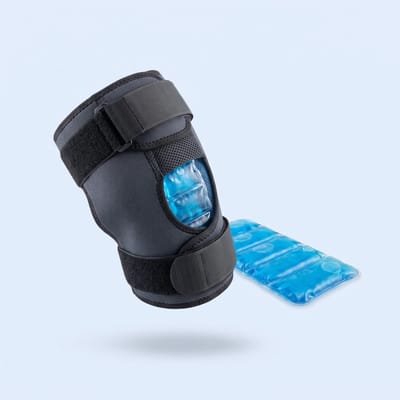
To avoid keeping two different things at home, you can choose a single wrap that works for both. XNEEX CryoWrap is a gel wrap with controlled compression, 360 degrees around the joint. Chill it in the freezer or warm it in the microwave, and the gel stays flexible even after freezing.
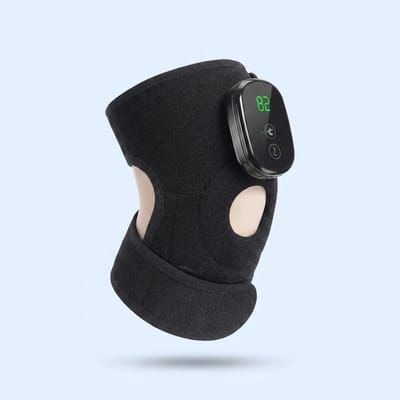
The adjustable straps let you use it hands-free, and it fits the knee, elbow, ankle and shoulder – no electricity and no batteries. If you're mainly after soothing, targeted warmth around the knee to relax the muscles, there's also HeatPad. You'll find more options in our Knee Pain collection.
Questions about our products? Email us at hello@getxneex.com – and you have 30 days to return, no questions asked.
Frequently asked questions
How long should I ice my knee?
Usually 15–20 minutes at a time, through a thin towel or layer of fabric and not directly on the skin. After each round, let your skin return to its normal temperature before cooling again. If the skin turns very pale, hurts or goes numb, stop right away.
Can I put heat on a swollen knee?
It's not recommended. When the knee is swollen, warm to the touch or recently injured, cold is usually the better fit, especially in the first two days. Heat suits stiffness and muscle tension without swelling. If the swelling doesn't go down after a few days, see a doctor or physical therapist.
Heat or cold after a run?
After a long run or intense workout, when the knee feels overloaded, cold is usually the better fit for a cooling, calming feeling. The next day, if there's no swelling and what's left is mainly stiffness, you can switch to soothing heat before light movement and gentle stretching.
Can I alternate between heat and cold?
Some people alternate, but it's usually simpler to choose based on the situation: cold for a fresh knock and swelling, heat for stiffness. A wrap like CryoWrap works for both, since you can chill it in the freezer or warm it in the microwave, depending on what you need that day.
Does a bag of frozen peas work as an ice pack for the knee?
Yes, it's a well-known home fix because it molds to the shape of the knee. Wrap it in a thin towel and hold it for 15–20 minutes. The downside is that it softens quickly and you have to hold it in place. A gel wrap with straps stays put and lets you rest hands-free.
When are heat and cold not enough?
When there's sharp pain, swelling that won't go down, numbness, instability, difficulty putting weight on your leg or pain that's getting worse, heat and cold are no substitute for a checkup. In these cases, and also after a fall or significant injury, see a doctor or physical therapist to understand what's going on in your knee.
More from the Knowledge Center
Knees in cold weather: why they feel the chill first and what helps →How to choose a knee brace: the complete guide to knee support →Smart knee support: who it's for, how to choose your size and how to wear it →All articles →This article is general information and is not a substitute for medical advice.