Knees on Stairs: Why Going Up and Down Feels Hard and What Helps
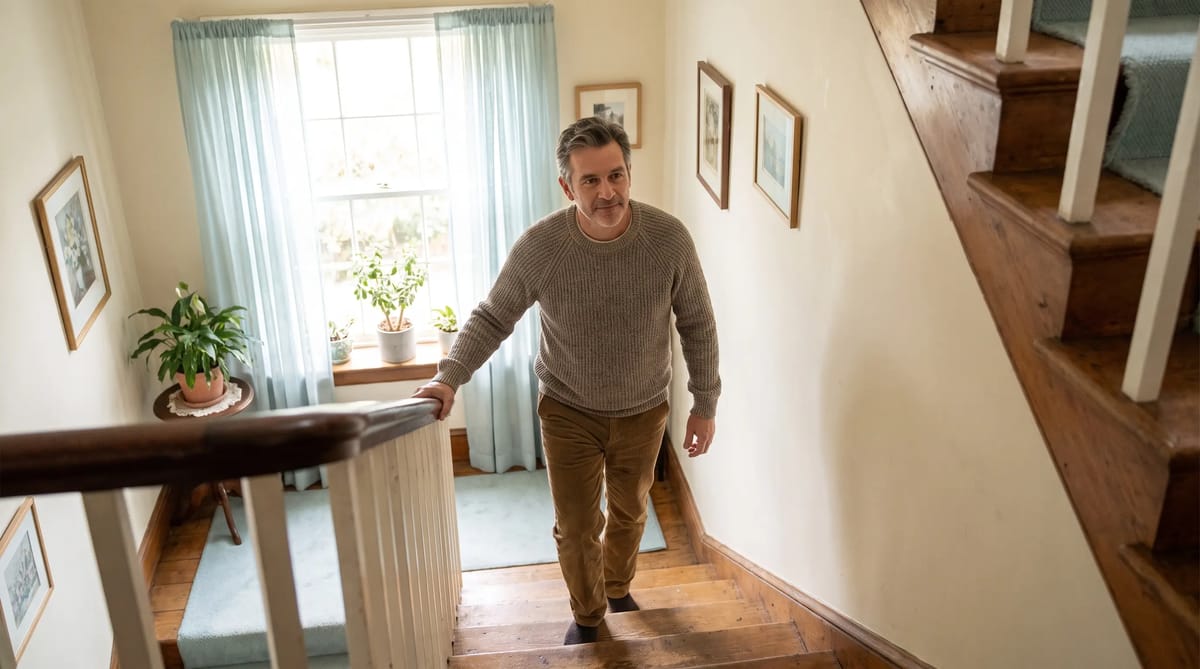
The short answerYour knees work harder on stairs than during regular walking: with every step the knee bends under your body weight, and on the way down your muscles also have to brake. That's why you feel stairs so quickly. What helps: a slow pace, using the handrail, placing your whole foot on the step, stable shoes, gradually strengthening your legs, and, if needed, support such as a knee brace or a strap below the kneecap.
At a glance
- On stairs the knee bends under load, and going down your muscles also brake – that's why you feel it.
- Go up leading with your stronger leg, come down leading with the sensitive one, and use the handrail.
- Gradually strengthening your thighs and glutes, plus stable shoes, make a difference day to day.
- A knee brace or patella strap can give a feeling of support while you move.
Why do knees feel harder on stairs?
Your knees carry a bigger load on stairs than when walking on flat ground. On each step the knee bends more, and your whole body weight shifts onto one leg.
Going up, your thigh and glute muscles push your body upward. Going down they work differently: they brake and control the movement so you don't "drop" onto the next step. That's why many people actually find going down less comfortable, especially in the area below the kneecap.
Tiredness, sitting for a long time beforehand, cold or unstable shoes can also affect how it feels.
How to go up and down stairs more comfortably
The simple rule: go up leading with your stronger leg, come down leading with the sensitive one. That way the leg that feels better does most of the work during the hard part.
- Place your whole foot down: not just your toes. A full step on the stair gives you a more stable base.
- Keep your knee in line with your foot: the knee points forward and doesn't collapse inward.
- Use the handrail: the handrail takes some of the load and gives you confidence, especially going down.
- Stand tall and lean slightly forward going up: this way your thighs and glutes do more of the work.
- Going down, take it slow and controlled: no jumping and no "landing" on the step.
Does the pace matter?
Yes. A slow, even pace gives your muscles time to brake and control the movement, and your knees feel it.
On days when your knee is more sensitive, you can take the stairs one step at a time, bringing both feet onto each step. It takes longer, but it feels more comfortable. And if there's an elevator and you're at the end of a long day, there's no reason not to use it.
Which shoes are best for stairs?
Stable shoes with a non-slip sole and good heel support are the comfortable choice. Flip-flops, loose shoes or worn-out soles make it harder to control your step.
If you stand and walk a lot during the day, cushioned insoles can also add a feeling of comfort with every step.
Which habits help your knees in the long run?
Strong muscles around the knee are the foundation. Stronger thighs and glutes take on some of the work your knee feels on stairs.
- Simple exercises like standing up from a chair without using your hands, stepping up onto a low step, or a glute bridge lying on your back.
- Gradual progress: start with a few reps and add slowly.
- Breaks from long periods of sitting, so your knee doesn't take on the stairs "cold."
- Regular walking on flat ground, as a base for overall fitness.
If you're not sure which exercises suit you, a physical therapist can tailor a personal program.
Small tips for life with lots of stairs
Live on a high floor without an elevator, or work in a building with lots of stairs? Plan your day so you don't go up and down for nothing: batch your errands, carry groceries in a few light trips instead of one heavy one, and take a short rest halfway. When the load is spread across the day, your knees face fewer long, tiring stretches of stairs.
When does knee support make sense on stairs?
Support is a good fit when you want a feeling of stability and confidence during the movement itself: in a building without an elevator, during physical work, or when easing back into activity.
| What you feel | What may fit | When to use it |
|---|---|---|
| You want a general feeling of support around the knee and kneecap | Knee brace | Stairs, long walks and long hours on your feet, physical work |
| Focused strain below the kneecap when going down or squatting | Patella strap | Stairs, running, sports and the gym |
| Stiffness after a day of stairs and standing | Heated knee pad | While resting, at the end of the day |
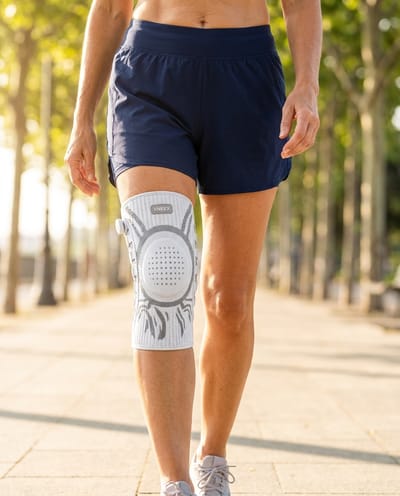
The XNEEX™ Smart Knee Support is a thin, breathable knit sleeve with a silicone ring around the kneecap. A single SmartLock™ dial on the outer side lets you adjust the support with a click, without taking it off, and inner silicone strips help it stay put. You'll find all the details in our Smart Knee Support guide.
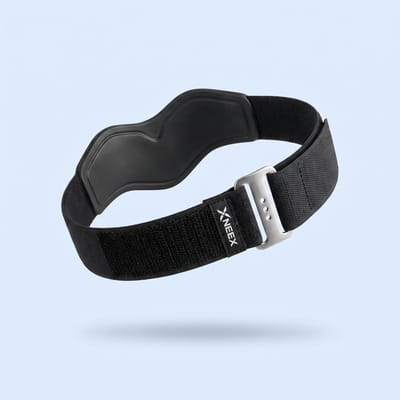
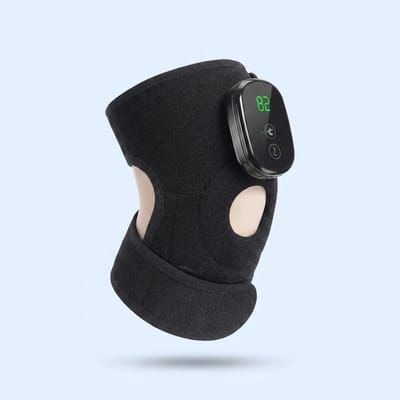
If the strain is felt mainly below the kneecap, XNEEX PatellaBand™ is a slim strap that fastens just below the kneecap, with a wave-shaped silicone pad and focused pressure. Take it off when resting and sleeping. And for the end of the day, XNEEX HeatPad™ provides soothing warmth to relax the muscles around the knee.
Not sure what to choose? There's our guide on how to choose a knee brace, all the options in our Knee Pain collection, and you can always email us at hello@getxneex.com.
Frequently asked questions
Why does my knee hurt specifically when going down stairs?
Going down, your thigh muscles act as brakes and control the downward movement, while the knee bends under your full body weight. That's why many people feel going down more than going up, especially below the kneecap. A slow pace, the handrail and gradual strengthening help. Pain that keeps coming back or gets worse is worth having checked by a doctor or physical therapist.
Which leg should I lead with on stairs when one knee is sensitive?
Go up leading with your stronger leg and come down leading with the sensitive one. That way the leg that feels better carries the weight during the hard part of each step. On sensitive days you can bring both feet onto each step and use the handrail.
Does a knee brace help on stairs?
A knee brace can give a feeling of support and stability when going up and down, and many people like to wear one on days with lots of stairs or walking. It's important to choose the right size, based on the measurement around your leg while standing with your leg straight. A brace doesn't replace muscle strengthening or a checkup when pain persists.
What's the difference between a knee brace and a patella strap?
A knee brace is a sleeve that wraps the whole knee area and gives a general feeling of support. A patella strap is a slim band that fastens just below the kneecap and gives focused pressure. The strap is a good fit when the strain is felt mainly below the kneecap, for example when going down stairs, squatting or running.
Which exercises help strengthen the knees for stairs?
Simple exercises like standing up from a chair without using your hands, slowly stepping up onto a low step and glute bridges strengthen your thighs and glutes. Start with a few reps and progress gradually, without pushing into pain. A physical therapist can tailor a precise program to your situation.
More from the Knowledge Center
Smart knee support: who it's for, how to choose your size and how to wear itPatella strap – who it's for and how to tighten it correctlyHow to choose a knee brace: the complete guideAll articles →This article is general information and is not a substitute for medical advice.