Knees in Cold Weather: Why They Feel the Chill First and What Helps

The short answerIn the colder months, knees often feel stiffer and heavier, especially in the morning and after sitting for a long time. The reason isn't always clear, but we know that in the cold our muscles tighten, we move less, and the body notices every sensation more. To help your knees feel more comfortable, keep them warm, keep moving every day, warm up before effort and use light support during busy hours.
At a glance
- In the cold, the muscles around the knee tighten and we move less – a combination that adds to the feeling of stiffness.
- Light daily movement matters just as much in the colder months as in summer.
- Soothing warmth, layers of clothing and light support help your knees feel more comfortable.
- Sharp pain, swelling that doesn't go away or things getting worse – a reason to see a doctor.
Why do knees feel different in cold weather?
The short answer: in the colder months, several factors add up at once – cold, less movement and changes to your routine. There's no single proven cause, but many people feel their knees "announce" the cold season before any other part of the body.
When it's cold, the muscles and tissues around the joint tend to tighten and feel less flexible. On top of that, we stay indoors more, sit more and go out for fewer walks. A joint that moves less usually feels stiffer when you start moving again.
Some people also feel a change before rain or on damp days. It's a familiar feeling for many, even if the exact explanation still isn't clear-cut. What matters is that there's quite a lot you can do to make the day feel more comfortable.
Which habits help your knees in cold weather?
The simple rule: stay warm and keep moving. These habits are easy to adopt and suit almost everyone.
- Layers: warm pants or a thin base layer protect the knee area from the cold, especially when you head out early in the morning.
- A short movement break every hour: if you sit a lot, get up, walk for a minute or two and straighten your legs a few times.
- Warm up before effort: before a walk, a run or physical work, spend a few minutes on slow movement that gets the joint ready.
- A daily walk: even when it's cold, a regular walk at a comfortable pace keeps your muscles active. On rainy days you can walk at the mall or take the stairs in your building at a slow pace.
- Drink enough: in the cold we tend to drink less without noticing, so remember to drink throughout the day.
- Stable shoes: a non-slip sole is especially important on wet sidewalks.
What to do when your knees are stiff in the morning
Start slowly. A few minutes of gentle movement while still in bed, or right after getting up, helps your body wake up gradually.
- Lie on your back and slowly bend and straighten each knee, ten times.
- Sit on the edge of the bed and straighten your leg out in front of you, hold for two seconds and lower it.
- Stand up, hold on to something stable and shift your weight from one leg to the other a few times.
- Only then move on to your usual activity and to stairs.
A warm shower in the morning is also a pleasant way to feel less stiff before you head out.
And in the evening?
After a long day, especially if you've been standing or walking a lot, your knees may feel tired. Raise your legs slightly on a pillow, do a few slow bends and straightens and let your body relax. If you like, a few minutes of soothing warmth before bed can help you unwind. Also try not to sit on the couch for hours in the same position in front of a screen.
Heat, support or both – what's right for me?
Soothing warmth usually suits a feeling of stiffness and tension, and light support suits hours of movement. If you're not sure, here's a short guide:
| The situation | What to consider |
|---|---|
| Stiffness in the morning or evening at home | A few minutes of soothing warmth, before or after light movement |
| Heading out early into the cold | A warm layer and a thin sleeve under your pants |
| A long walk, stairs or physical work | A knee support for a feeling of stability and support while you move |
| Strain after effort or a fresh knock | Cold is usually better, following the guidance in our heat and cold article |
For more on the difference between them, read Heat or cold – when each one fits.
Support that stays put under your clothes
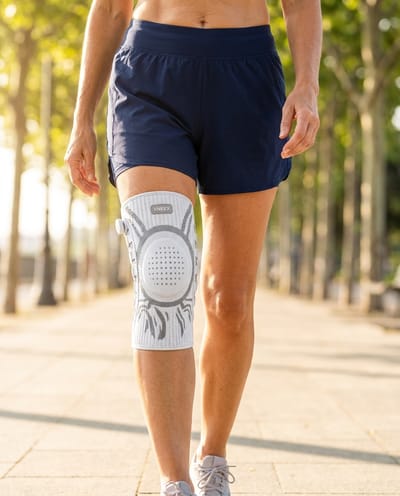
In the colder months clothes are thicker, so it's important for support to be thin. The XNEEX Smart Knee Support is made from a breathable light-gray knit, with a silicone ring around the kneecap and inner silicone strips that keep it from slipping. A single white SmartLock dial on the outer side lets you adjust the support with a click, without taking it off.
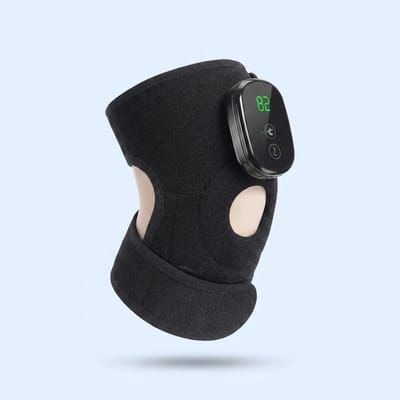
For downtime at home, HeatPad provides soothing, targeted warmth around the knee to relax the muscles and help it feel less stiff. You'll find all the options in our Knee Pain collection.
When is it no longer "just the cold"?
Mild stiffness that improves with movement is a familiar feeling. But pain that changes in character, or that limits you day to day, needs a checkup.
If you're not sure which product is right for you or which size to choose, email us at hello@getxneex.com – real people from the XNEEX team will help.
Frequently asked questions
Why do my knees hurt more in cold weather?
There's no single proven cause, but in the cold the muscles around the knee tend to tighten, and we move less and sit more. That combination makes many people feel stiffness and heaviness in the joint, especially in the morning and after sitting for a long time. Staying warm and moving regularly every day help you feel more comfortable.
Should I keep walking in cold weather when my knees are stiff?
In most cases, yes. Walking at a comfortable pace keeps your muscles active and the joint moving. Start with a short warm-up and wear warm layers and stable shoes. If walking brings on sharp pain or swelling, stop and get checked by a doctor or physical therapist.
Can I wear a knee support under my pants in cold weather?
Yes, if the support is thin and fits your body well. The XNEEX Smart Knee Support is made from a thin, breathable knit that can be worn under clothes, and the inner silicone strips help it stay in place. Be sure to choose your size by measuring around your leg while standing with your leg straight.
Is heat good for knees in cold weather?
Soothing warmth usually suits a feeling of stiffness and muscle tension, for example in the morning or in the evening after a long day. It isn't suitable for acute swelling or a fresh knock, where cold is usually better. Use gentle warmth and don't fall asleep with the heat source on your skin.
When should I see a doctor about knee pain in cold weather?
See a doctor or physical therapist when there's sharp pain, swelling that doesn't go away, local warmth, instability, numbness or pain that gets worse over time. After a fall or an injury, it's also worth getting checked before returning to your usual activity, rather than settling for the explanation that it's just the weather.
More from the Knowledge Center
Heat or cold for your knee: when each one fits and how to use it right →How to choose a knee brace: the complete guide to knee support →Smart knee support: who it's for, how to choose your size and how to wear it →All articles →This article is general information and is not a substitute for medical advice.