Foot Stretches at Home: 6 Simple Moves After a Day on Your Feet
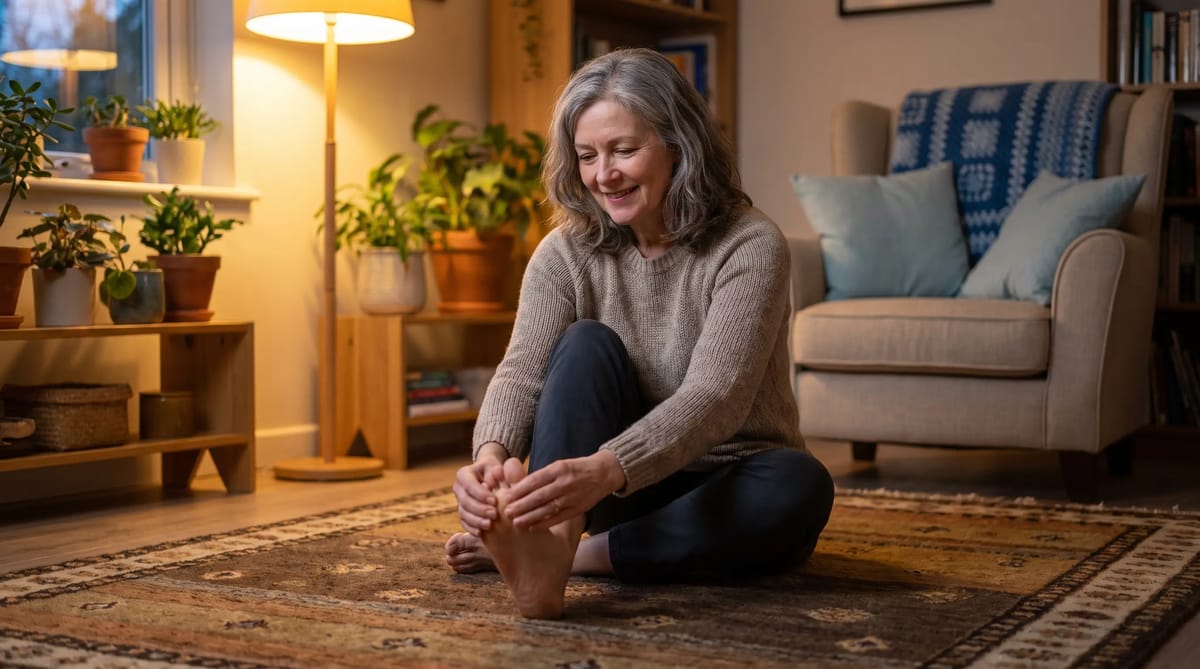
The short answerFoot stretches are a few-minute routine you can do at home at the end of a day on your feet: a wall calf stretch, a towel stretch, toe spreads, rolling your foot on a ball, ankle circles and picking up a towel with your toes. Hold each stretch for 20–30 seconds, breathe normally, and stop if you feel sharp pain. The goal is a more relaxed, flexible feeling.
In brief
- Six simple moves take about ten minutes and need no special equipment.
- Stretch gently to a pleasant stretching feeling, not to the point of pain.
- Your calves, arches and toes work together, so it's worth stretching all of them.
- A foot massage and a cushioned insole can round out the routine.
Why stretch your feet at the end of the day?
Foot stretches help ease that stiff feeling after hours of standing or walking. They're short, need no equipment, and you can do them in front of the TV.
Your foot doesn't work alone. The calf muscles, the arch on the underside of your foot and your toes all work together with every step. After a long day they feel tired and tight, so a good routine looks after the whole chain, not just the foot itself.
How to do the 6 stretches
Do the moves in order, at a relaxed pace. If one move feels uncomfortable, skip it and go on to the next.
1. Wall calf stretch
Stand facing a wall with your hands on it. Step one leg back, heel on the floor, and bend your front knee until you feel a stretch in the back of your calf. Hold for 20–30 seconds and switch legs.
2. Seated towel stretch
Sit on the floor with your legs straight. Loop a towel around the ball of your foot and gently pull your toes toward you. You'll feel the stretch in your arch and calf.
3. Toe spreads and lifts
Sit with your feet flat on the floor. Spread your toes apart as far as you can, hold for a few seconds and release. Then lift only your big toe while the other toes stay on the floor, and vice versa.
4. Rolling your foot on a ball
Place a tennis ball or a water bottle under your foot and roll it slowly from the heel to the base of the toes. The pressure should feel pleasant. It's best to do this seated, so you can control how much weight you put on it.
5. Ankle circles
Lift one foot off the floor and circle your ankle slowly, ten times in each direction. You can also "write" the letters of the alphabet in the air with your big toe.
6. Towel pick-up with your toes
Lay a small towel on the floor and try to scrunch it toward you using only your toes. This move works the small muscles of the foot and leaves your feet feeling more awake.
How long should you hold each stretch?
For most stretches, hold for 20–30 seconds and repeat two or three times. For the active moves, count repetitions instead of seconds.
| Move | Area | Duration or reps |
|---|---|---|
| Wall calf stretch | Calf and heel | 20–30 seconds, 2–3 times per leg |
| Towel stretch | Arch and calf | 20–30 seconds, 2–3 times |
| Toe spreads | Toes | 10 reps |
| Rolling on a ball | Sole of the foot | 1–2 minutes per foot |
| Ankle circles | Ankle | 10 circles in each direction |
| Towel pick-up | Foot muscles | 3–5 times |
What to keep in mind while stretching
A good stretch feels like a pleasant pull. If it hurts, it's no longer the right stretch.
- Start gently and go a little deeper day by day.
- Don't bounce in the stretch. Hold a steady position and breathe normally.
- Stretch both feet, even if only one feels tired.
- If you have balance issues, do the standing stretches next to a wall or a sturdy chair.
- Consistency matters more than length: a few minutes every evening beats a long routine once a week.
What else can you do for your feet at home?
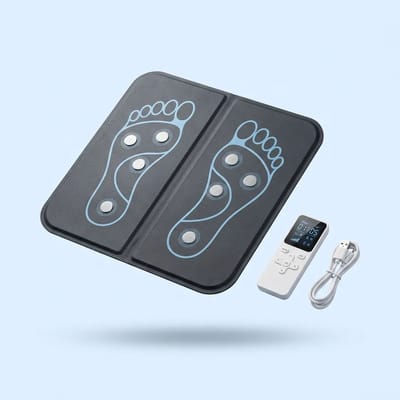
After stretching, you can extend your wind-down time with a massage. The FootPulse massage mat uses EMS to gently stimulate the muscles in your feet, for a feeling of relief and freshness.
- It has 8 modes and 19 intensity levels, with a remote control.
- It's thin, foldable and USB rechargeable.
- Use it for about 15 minutes, once or twice a day, barefoot, increasing the intensity gradually.
FootPulse is not a medical device. It's not suitable during pregnancy, with a pacemaker or implant, on broken skin or with epilepsy. If you have diabetes or circulation problems, talk to a doctor first. You'll find more on using it in our guide to foot massage at home.
And during the day itself?
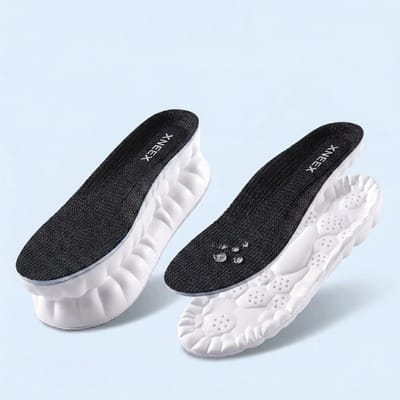
Stretches work better when the day itself is comfortable for your feet. CloudStep insoles add cushioning and support inside the shoe, and a suitable shoe does the rest. Read about choosing shoes in our guide to work shoes for standing all day, and find more products in our Feet & Legs collection.
Have a question about FootPulse or the insoles? Email us at hello@getxneex.com – and you have 30 days to return.
Frequently asked questions
How many times a day should I stretch my feet?
Once a day is usually enough, for example in the evening after work. You can add a few short moves in the morning or during a break too. Consistency matters more than length: a few minutes every day beats a long routine once a week.
Should foot stretches hurt?
No. A proper stretch feels like a pleasant pull in your calf, arch or toes. If you feel sharp pain, tingling or numbness, reduce the range of movement or stop. Pain that comes back every time is a reason to see a doctor or physical therapist.
Why stretch my calves when it's my feet that feel tired?
Your calf muscles connect to your heel and work together with your foot on every step. When your calves feel tight, your feet feel stiffer too. That's why a good foot-stretching routine also includes a calf stretch against a wall or with a towel.
What can I roll my foot on if I don't have a ball?
You can use a water bottle, a tennis ball or any sturdy round object that won't break. Roll slowly from the heel to the base of the toes with pleasant pressure, preferably while seated so you can control how much weight you put on your foot.
Can I combine stretches with EMS foot massage?
Yes. You can stretch first and then massage on a mat like FootPulse, for about 15 minutes barefoot with the intensity increased gradually. It's not suitable during pregnancy, with a pacemaker or implant, on broken skin or with epilepsy; if you have diabetes, talk to a doctor.
More from the Knowledge Center
Foot Massage at Home After a Day on Your Feet – How to Do It Right →Work Shoes for Standing All Day: How to Choose Shoes and Insoles →Tired Feet After Standing All Day – The Complete Guide →All articles →This article is general information and is not a substitute for medical advice.