Foot Massage at Home After a Day on Your Feet – How to Do It Right
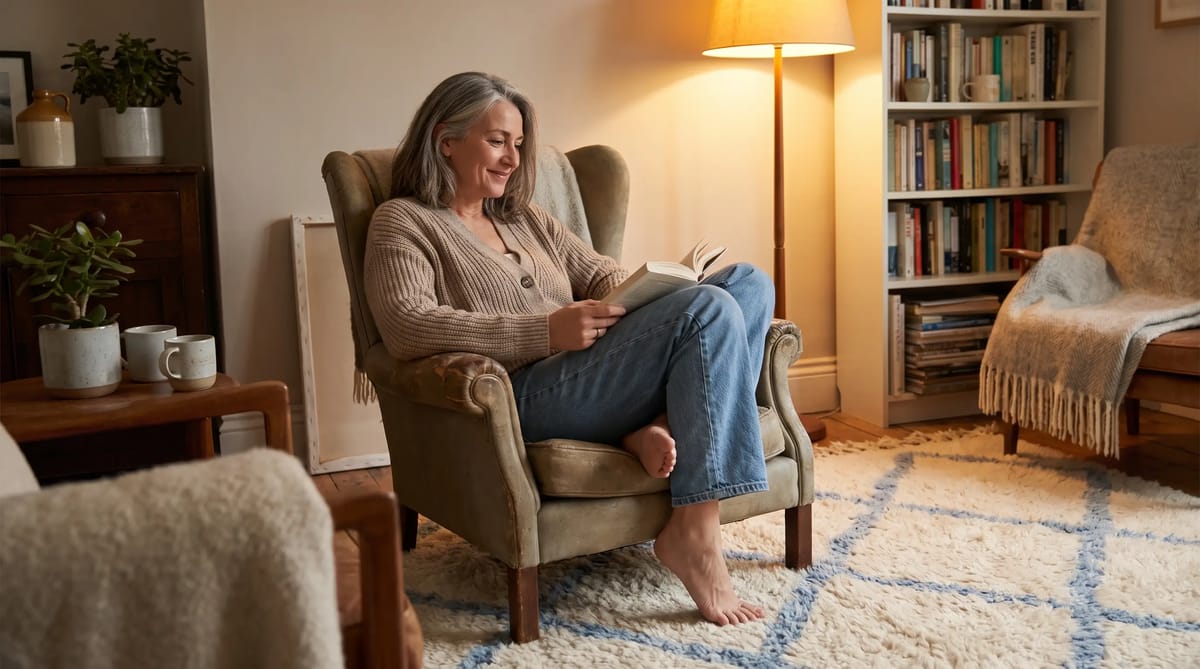
The short answerA foot massage at home is a simple way to relax your muscles after a day of standing or walking. You can massage by hand, roll a ball under your foot, or use an EMS massage mat that gently stimulates the muscles in your feet. About 15 minutes in the evening, barefoot, is enough – start on a low intensity and build up gradually.
In brief
- A routine of about 15 minutes in the evening is enough for fresher-feeling feet.
- You can combine hand massage, a tennis ball and an EMS massage mat.
- On an EMS mat, start barefoot on a low intensity and build up gradually.
- EMS massage is not suitable during pregnancy, with a pacemaker or implant, with broken skin or with epilepsy.
Why does a foot massage at home feel so good after a day on your feet?
After hours on your feet, the small muscles in your feet and calves stay tight and tired. A foot massage at home helps them let go and leaves you with a light, refreshed feeling.
The advantage of massage at home is that you can make it a regular habit. A few minutes every evening is worth more than a long massage once a month.
How to give yourself a foot massage by hand
A hand massage needs no equipment – just a few minutes and a little cream or oil. Sit comfortably with one foot resting on the opposite knee.
- Warm up your foot by stroking it with both hands, from the toes to the heel.
- Press with your thumbs along the arch of your foot, in small circular movements.
- Move to the heel and massage it with slightly firmer pressure.
- Gently stretch each toe and rotate it slightly.
- Finish with strokes along the whole foot up to the ankle.
A simple extra: roll a tennis ball under your foot while seated, for a minute or two per foot. You can even do it under your desk at work.
What is an EMS foot massage mat?
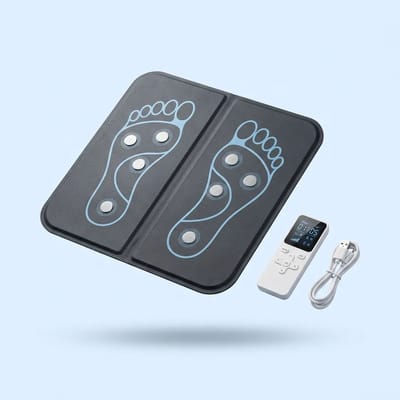
An EMS massage mat is a thin mat you stand on or rest your feet on, and it sends gentle electrical pulses that stimulate the muscles. It feels like a light tingling or "tapping", at an intensity you choose.
XNEEX FootPulse™ is a mat like this, designed to help your feet feel relieved and refreshed. What you should know about it:
- 8 massage modes and 19 intensity levels.
- A remote control, so you don't need to bend down to change settings.
- Thin and foldable – easy to store and take with you.
- USB rechargeable.
- Not a medical device.
How to use an EMS massage mat correctly
The main rule: start low and go up slowly. That way you find out which intensity feels good to you, and you give your body time to adjust.
- Sit comfortably and place the mat on the floor.
- Rest your bare feet on the mat – no socks.
- Choose a mode and start on the lowest intensity.
- Increase the intensity gradually until it feels pleasant, not painful.
- Limit the time to about 15 minutes, once or twice a day.
When is the best time to use it?
Many people prefer the evening, after a workday, while watching TV or reading. You can also use it during a break in the middle of a long day, if you have somewhere to sit.
Hand massage or EMS mat – which suits you?
There's no need to choose just one. Each method gives you something a little different, and you can combine them.
| Hand massage / ball | EMS mat | |
|---|---|---|
| Equipment | Hands, tennis ball, cream | Mat with remote |
| Effort | Needs free hands and a bit of strength | Rest your feet and relax |
| Control | By feel, on any spot | 8 modes and 19 intensities |
| Best for | Anyone, anywhere | People who want an effortless regular routine |
Who isn't an EMS mat suitable for?
There are situations where electrical stimulation shouldn't be used. It's important to go through this list before your first use:
- Pregnancy.
- A pacemaker or electronic implant.
- Broken skin, sores or cuts on your feet.
- Epilepsy.
- Diabetes or circulation problems – only after talking to a doctor.
What does a 15-minute evening routine for your feet look like?
Here's a simple example you can adapt for yourself. It doesn't need much space, and you can do it in front of the TV.
- 2 minutes – calf stretch. Stand facing a wall, one leg back with the heel on the floor, then switch legs.
- 3 minutes – tennis ball. Roll it under each foot, from the heel to the toes.
- 8 minutes – massage. By hand or on an EMS mat, at a comfortable intensity.
- 2 minutes – legs up. Lie down with your legs raised on a pillow or against the wall, and breathe slowly.
After a week or two of a routine like this, you'll notice what works best for you and can spend longer on that part.
How to fit massage into a wider routine
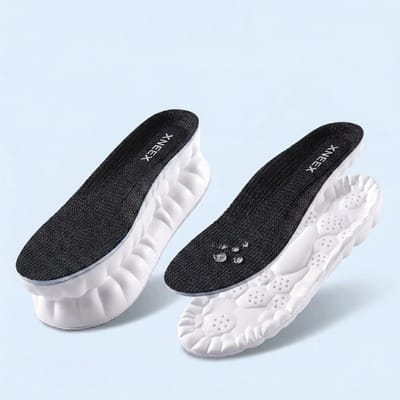
Massage works best as part of a routine: suitable shoes and insoles during the day, short breaks, and in the evening stretching, raising your legs and massage. We wrote about choosing insoles in Insoles for Standing All Day – How to Choose, and you'll find the full picture in our guide to tired feet.
A question about using it? Email us at hello@getxneex.com and you'll get an answer from real people. See more products for your feet in our Feet & Legs collection.
Frequently asked questions
How long a day should I use a foot massage mat?
For XNEEX FootPulse™, the recommendation is about 15 minutes at a time, once or twice a day. A short, regular routine is better than using it for too long. Start on a low intensity, barefoot, and build up gradually until it feels pleasant.
Does EMS foot massage hurt?
It shouldn't hurt. You feel a light tingling or pulsing, and you choose the intensity yourself from 19 levels. If it feels unpleasant, lower the intensity or stop. Always start at the lowest level and go up slowly so your body can adjust.
Who shouldn't use an EMS massage mat?
Don't use it during pregnancy, with a pacemaker or implant, with broken skin or sores on your feet, or with epilepsy. People with diabetes or circulation problems should talk to a doctor before starting. The mat is not a medical device.
Can I use the mat with socks on?
Use it with bare feet resting directly on the mat, without socks. That way the pulses reach your feet best. Before each use, make sure your skin is clean, dry and intact, with no sores, chafing or cuts.
How do I massage my feet at home without a device?
Sit comfortably, apply a little cream, and press with your thumbs in circular movements along the arch and on the heel. Gently stretch each toe and finish with strokes up to the ankle. You can also roll a tennis ball under your foot for a minute or two per foot.
More from the Knowledge Center
Tired Feet After Standing All Day – The Complete Guide →Insoles for Standing All Day – How to Choose and What to Check →Sitting All Day and Your Back: Quick Moves You Can Do at Your Desk →All articles →This article is general information and is not a substitute for medical advice.