Sleeping on Your Stomach: How to Ease Your Neck and Back, and How to Switch Positions

The short answerSleeping on your stomach means keeping your head turned to the side all night, so some people wake up with a stiff neck and lower back. If you sleep on your stomach, use a very low, soft pillow under your head, or none at all, and a thin pillow under your belly and pelvis. If you want to switch to another position, do it gradually, with pillows that make it harder to roll back onto your stomach.
In brief
- When you sleep on your stomach, your head is turned to the side for hours and your lower back can sink into the mattress.
- A low, soft head pillow and a thin pillow under your pelvis can make this position more comfortable.
- Switching to side or back sleeping usually takes a few weeks, and it's best done gradually.
- A pillow between your knees or behind your back helps you stay in the new position.
Why does stomach sleeping strain your neck and back?
When you sleep on your stomach you can't breathe with your face in the mattress, so your head is turned to the side, sometimes almost 90 degrees, for hours. That's the main strain on your neck in this position.
At the same time, your belly and pelvis sink into the mattress, especially if it's soft. That increases the natural curve of your lower back, and some people feel it as stiffness when they get up. Not everyone who sleeps on their stomach feels uncomfortable, but if you wake up with a stiff neck, it's worth looking at your habits.
How to sleep on your stomach more comfortably
If you're not ready to give up stomach sleeping – which is understandable – a few small changes can help:
- A very low head pillow: a flat, soft pillow, or none at all. A high pillow tilts your head back even further.
- A thin pillow under your belly and pelvis: reduces how much your lower back sinks.
- Switch sides: turn your head to the right some nights and to the left on others, not always the same way.
- One leg bent out to the side: a position between stomach and side that rotates your pelvis slightly and reduces the twist in your neck.
- A mattress that isn't too soft: a mattress that sinks a lot increases the arch in your lower back.
This is where an adjustable pillow can help. An adjustable pillow lets you change the height, softness and support, so you can find the low, soft setting that suits you and change it later if you move to another position. Browse the options in our Neck & Sleep collection.
Which pillow suits each position?
Your pillow height should keep your head in line with your spine. The table sums up the differences between positions:
| Position | Head pillow height | Extra pillow to consider | What to watch for |
|---|---|---|---|
| Stomach | Very low or no pillow | A thin pillow under your pelvis | Turn your head to both sides |
| Side | High, fills the gap to your shoulder | A pillow between your knees | Your top leg doesn't fall forward |
| Back | Medium, supports the curve of your neck | A pillow under your knees | Your chin isn't pushed toward your chest |
| Switching positions | An adjustable or two-height pillow | A pillow along your back | Readjust when your position changes |
Read more about matching a pillow to your position in how to choose a pillow for your sleep position.
How to switch from stomach sleeping to another position
The short answer: gradually and patiently. A sleep habit you've had for years won't change in one night, so build the switch in stages.
- Choose a target position. It's usually easier to move from your stomach to your side than to your back, because the positions are close.
- Start with an in-between position. Lie on your side with your top leg bent forward and supported on a pillow, almost on your stomach.
- Add a pillow behind your back. A long pillow along your back makes it harder to roll back onto your stomach.
- Fall asleep in the new position. Even if you wake up on your stomach, that's part of the process.
- Give it a few weeks. It will feel strange at first, and your body gets used to it over time.
Which pillows help you stay on your side or back?
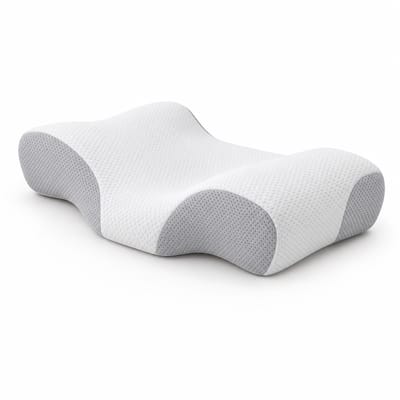
A pillow that suits your new position makes the switch more comfortable. The CervaCurve neck pillow is made of dense memory foam with a wave profile, a lower side for back sleeping and a higher side for side sleeping, plus side cut-outs for your shoulder and ear.
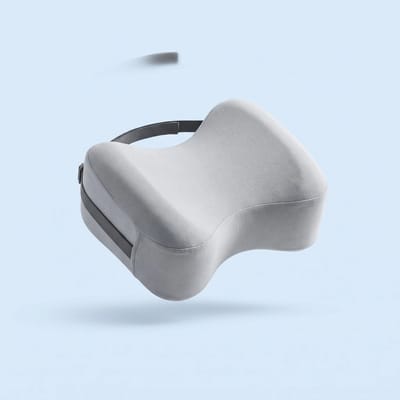
New side sleepers should add a pillow between their knees. SleepAlign is an hourglass-shaped memory foam pillow with an adjustable strap that keeps it in place when you turn over, and a removable, washable cover. Learn why it matters in Knee pillow for side sleepers.
You'll find all the options in the Neck & Sleep collection. If you're finding it hard to choose, email us at hello@getxneex.com, and you have 30 days to return.
When is stomach sleeping less suitable?
There are times when it's especially worth trying a different position. During pregnancy, as your belly grows, sleeping on your stomach is no longer possible, and side sleeping is usually recommended. And if you keep waking up with a stiff neck or back, it's worth checking whether your position is part of the reason.
Frequently asked questions
Is sleeping on your stomach unhealthy?
Stomach sleeping isn't a problem for everyone, but it means turning your head to the side for hours and can increase the arch in your lower back. If you wake up with a stiff neck or back, try a lower pillow or switch gradually to side sleeping.
What pillow is best for stomach sleeping?
A very low, soft pillow, or no pillow at all under your head. A high pillow tilts your head back and increases the twist in your neck. You can also put a thin pillow under your belly and pelvis so your lower back doesn't sink into the mattress.
How long does it take to get used to sleeping on your side?
For most people the switch takes a few weeks. In the first nights you'll probably wake up on your stomach again, and that's a natural part of the process. A pillow along your back and a pillow between your knees can help you stay on your side until your body adjusts.
How do I stop rolling onto my stomach during the night?
Place a long pillow along your back when you lie on your side, so it's harder to roll forward. A pillow between your knees and an in-between position with your top leg bent over a pillow can give you that familiar stomach-sleeping feel without lying fully on your front.
Can you sleep on your stomach during pregnancy?
Early in pregnancy some women still sleep on their stomach, but as the belly grows this position becomes uncomfortable and then impossible. Side sleeping is usually recommended. Ask your doctor or midwife any questions about sleep positions during pregnancy.
More from the Knowledge Center
How to choose a pillow for your sleep position – and when to replace itKnee pillow for side sleepers: why to use one and how to chooseStiff neck in the morning: what in your sleep might cause it and what you can changeAll articles →This article is general information and is not a substitute for medical advice.