Swollen Legs on a Long Flight: How to Prepare and What to Do on the Way
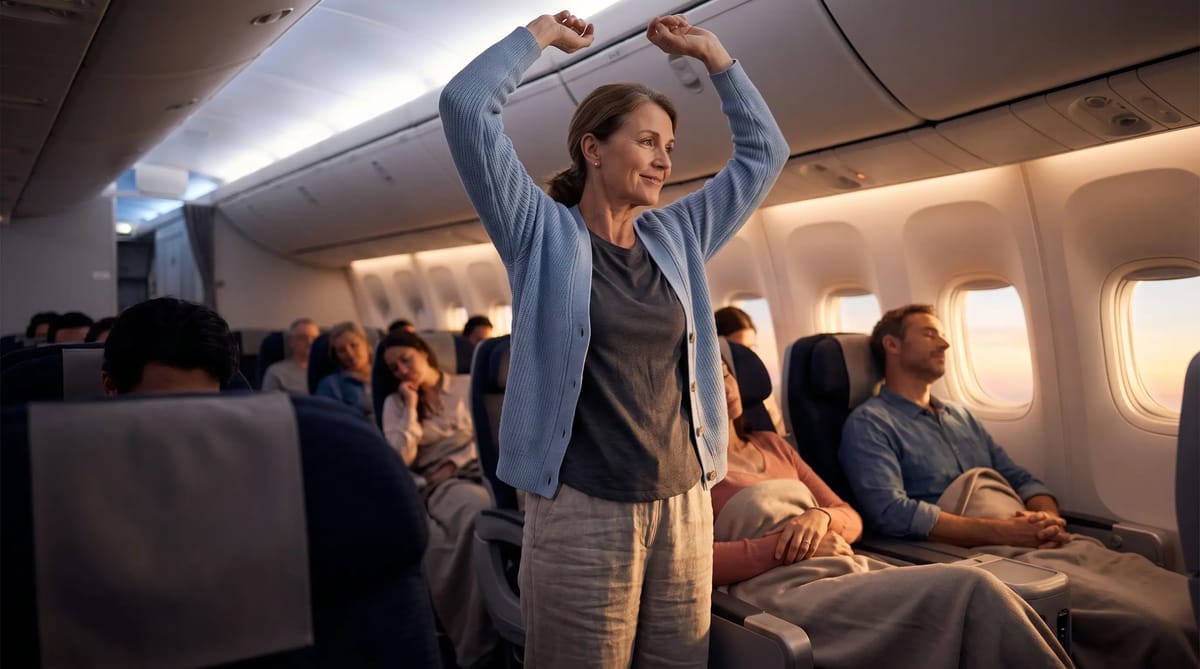
The short answerSwollen legs are common on flights because you sit for hours without moving, with your legs down. What helps many travelers: get up and walk the aisle about once an hour, do ankle circles and heel raises in your seat, drink water, wear clothes and shoes that don't pinch, and consider graduated compression socks. Swelling in one leg only, pain or redness in your calf, or shortness of breath – seek medical care right away.
In brief
- On a long flight, movement is key: get up and walk the aisle about once an hour, with ankle exercises in your seat in between.
- Drinking water throughout the flight, loose clothing and comfortable shoes help you feel better when you land.
- Graduated compression socks are designed for long hours of sitting; put them on the morning of your flight.
- Swelling in one leg, pain or redness in your calf, or shortness of breath – seek medical care right away.
Why are swollen legs on flights so common?
On a flight you sit for hours with almost no movement, knees bent and legs down. Your calf muscles, which usually help push blood from your legs back up, barely work, so fluid tends to collect in your feet and ankles.
The result is familiar: shoes that feel tight toward landing, swollen ankles and a heavy feeling. For most people, swollen legs from a flight ease once they start moving again, but it's worth preparing ahead.
How do you prepare before the flight?
Preparation starts on the morning of the flight: what you wear and what you pack affects your hours in the air.
- Loose clothing: comfortable pants without a tight belt, and no socks with tight elastic.
- Comfortable shoes: shoes that are easy to loosen or slip off and back on, even if your feet swell a little.
- Clear space under the seat: put your bag in the overhead bin so you have room to move your legs.
- An aisle seat: if possible – it makes it easier to get up and walk without disturbing your neighbors.
- Compression socks: if you've chosen to wear them, put them on in the morning, before your legs have a chance to swell.
What should you do during the flight?
The short answer: move as much as you can. A short walk about once an hour and simple seat exercises get your calf muscles working and help your legs feel lighter.
- Ankle circles: lift your foot slightly and rotate it 10 times in each direction.
- Heel–toe: lift your heels with your toes on the floor, then lift your toes with your heels on the floor. 15–20 reps.
- Knee lift: gently pull one knee toward your chest for a few seconds, then switch.
- Walk the aisle: when the seatbelt sign is off, get up and walk for a few minutes, or stand by the galley and do heel raises.
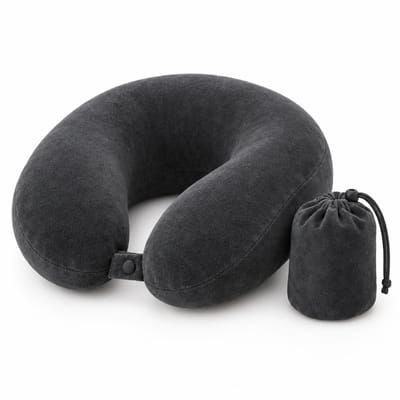
Drink water throughout the flight, even if you don't feel thirsty, and keep alcohol moderate. Avoid crossing your legs for long periods and long naps in a folded-up position. If you want to doze sitting up, the TravelRest neck pillow, with 360° support and a front closure, helps keep your head from dropping forward. For choosing a pillow and sleeping sitting up, read our guide to neck pillows for flights.
Are compression socks good for flying?
For many travelers, yes. Graduated compression socks are designed for exactly this kind of long sitting or standing: the pressure is firmest at the ankle and eases further up, for a supported feeling and lighter legs.
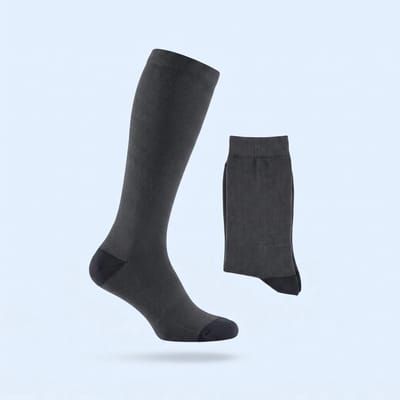
VeinFlow compression socks offer 15–20 mmHg graduated compression, with a nylon–spandex fabric and a breathable panel, a reinforced heel and toe and a wide band that doesn't dig in or slip down. Put them on in the morning, rolling them up from the toes and smoothing them upward with no wrinkles, and take them off before bed. We explain what 15–20 mmHg means in our guide to graduated compression socks.
| Stage | What to do |
|---|---|
| Morning of the flight | Wear loose clothes and comfortable shoes – and if you've chosen compression socks, put them on now |
| In your seat | Ankle circles and the heel–toe exercise, without crossing your legs for long |
| About every hour | Get up and walk the aisle for a few minutes, and drink water |
| After landing | A light walk, and in the evening lie down with your legs raised on a pillow |
Who should not wear compression socks: people with peripheral artery disease, heart failure, an infection or open wound on the leg, or reduced sensation in the leg. If you have diabetes, circulation problems or advanced varicose veins, check with a doctor first. If you feel numbness, notice paleness or feel pain, take them off right away.
Don't skip the movement on overnight flights either. Before you fall asleep, do a short round of ankle exercises, and when you wake up, take a short walk before going back to sleep. If you're flying with children or older relatives, remind them to get up and drink too, because it's easy to forget over long hours in the air. A phone reminder every hour can help.
What should you do after landing?
After hours of sitting, the best thing is to move. A light walk at the airport and the hotel, and resting with your legs slightly raised in the evening, usually help your legs feel normal again within a few hours.
You'll find more evening habits in our guide to heavy legs at the end of the day, and all our leg products in the Feet & Legs collection. Not sure which compression sock size to choose? Use the size guide on the product page, or email us at hello@getxneex.com.
Frequently asked questions
Why do my legs swell on a long flight?
On a flight you sit for hours with almost no movement, knees bent and legs down. Your calf muscles barely work, and fluid tends to collect in your feet and ankles. For most people, the swelling eases once they start walking and moving normally again.
How often should I get up on a flight?
A common recommendation is to get up and walk the aisle about once an hour, when the seatbelt sign is off. In between, you can do ankle circles and the heel–toe exercise in your seat. An aisle seat makes moving around much easier on long flights.
When should I put on compression socks for a flight?
Put them on the morning of your flight, before your legs have a chance to swell, and take them off before bed. Roll them up from the toes and smooth them upward with no wrinkles. If you have diabetes, circulation problems or advanced varicose veins, check with a doctor first.
What's the difference between normal flight swelling and a warning sign?
Mild swelling in both legs that eases after moving is a familiar effect. Swelling in one leg only, pain, warmth or redness in your calf, or shortness of breath and chest pain are signs that need urgent medical care right away.
Besides moving, what else helps my legs on a flight?
Drinking water throughout the flight, moderate alcohol, loose clothing and shoes that are easy to loosen. Keep the space under your seat clear and avoid crossing your legs for long periods. After landing, a light walk and resting with your legs raised help.
More from the Knowledge Center
Graduated compression socks: who they suit and what 15–20 mmHg meansHeavy legs at the end of the day: simple habits for the evening and the morning afterNeck pillows for flights and road trips: how to choose and how to sleep sitting upAll articles →This article is general information and is not a substitute for medical advice.