Knee Pain When Kneeling: How to Do Housework and Gardening Without Overloading Your Knees
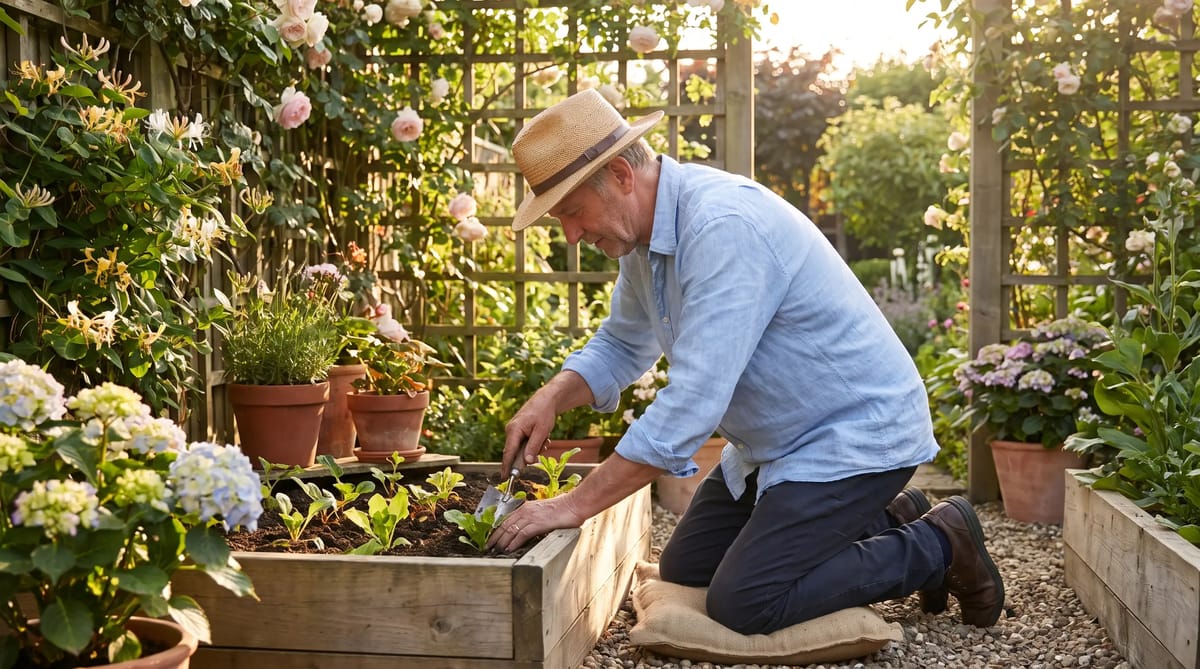
The short answerKnee pain when kneeling usually shows up when you kneel for a long time on a hard surface, or keep getting down and back up again. What helps: thick padding under your knees, a half-kneel or a low stool, changing position every few minutes, lifting close to your body and taking short breaks. After the work, cold suits a warm, slightly puffy feeling, and heat suits stiffness.
In brief
- Never kneel directly on the floor or ground: always put thick padding under your knees.
- Switch between kneeling, half-kneeling, a stool and standing every few minutes.
- Lift close to your body with a straight back, and get up gradually with a hand on your thigh.
- After the work: cold for a warm, slightly swollen feeling, heat for stiffness.
Why do my knees hurt when I kneel?
When you kneel, the weight of your upper body rests on a small spot at the front of the knee, on a hard surface. Stay there a long time, or keep going up and down, and your knees feel it by the end of the day.
Knee pain when kneeling is familiar to anyone who scrubs floors, plants in the garden, assembles furniture or sorts out low cupboards. The good news: small changes in how you work make a big difference to how you feel.
How do I kneel without overloading my knees?
Rule number one: never kneel directly on a hard floor or ground. Put something soft under your knees and change position every few minutes.
- Padding under your knees: a garden kneeling pad, an old cushion or a folded towel. The key is that it's thick enough that you can't feel the ground.
- Half-kneel: one knee on the pad and the other foot flat on the floor. This spreads the weight, and you can switch sides from time to time.
- Low stool: for working in garden beds or a low cupboard, sitting on a low stool takes the weight off your knees completely.
- A supporting hand: rest a hand on your thigh or a steady surface so some of the weight moves to your arm.
- Bring the work to you: instead of stretching forward while kneeling, move along with the job.
How often should I change position?
Try not to stay in the same position for more than a few minutes. Switch between kneeling, half-kneeling, sitting on a stool and standing, and straighten your legs each time you switch.
This table helps you pick a position for the job:
| Job | Recommended position | Tip |
|---|---|---|
| Cleaning floors and corners | Half-kneel on padding | Swap knees every few minutes, and switch to a long-handled mop for large areas |
| Planting and weeding | Low stool or kneeling pad | Work a small area, then get up and move along |
| Low cupboards and shelves | Sitting on a stool | Take things out and sort them on a table at a comfortable height |
| Assembling furniture | Working at a table or seated | Lift parts up to working height instead of kneeling over them |
How do I lift things off the floor without overloading my knees?
Lift close to your body with a straight back, and share the work between your hips and knees. Don't spring up from a full kneel to standing while holding something.
- Stand close to the object, feet shoulder-width apart.
- Lower into a half-kneel, keeping your back straight and chest open.
- Hold the object close to your body.
- Rise gradually using your front leg and a hand on your thigh, without twisting.
- Split heavy bags of soil or fertilizer into several trips, or use a cart.
How do I plan breaks on a day of housework or gardening?
Break the work into short chunks with standing tasks in between. Every 20–30 minutes, get up, walk a few steps and straighten your knees.
Arrange your tasks so kneeling work alternates with standing work: a little weeding, then watering, then back to low work. On a busy day, you can split the job over two days.
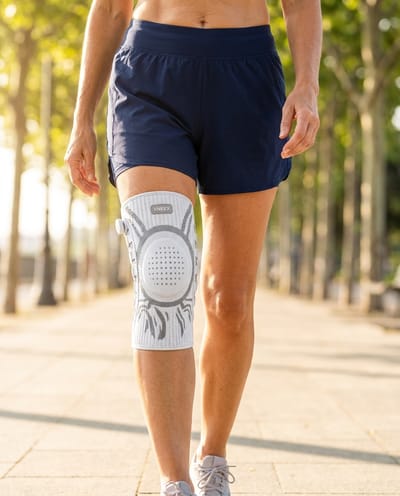
If you do a lot of physical work and want a steadier feeling as you get down and up, the XNEEX Smart Knee Support is slim and fits under your clothes. The SmartLock button on the side lets you tighten it when you switch to active work and loosen it during a break, without taking it off. For more on choosing a size and how to wear it, see our guide to the Smart Knee Support.
Heat or cold for your knees after work?
Cold usually suits a knee that feels warm or slightly swollen after effort. Heat is better for a stiff feeling and tight muscles, when there's no swelling.
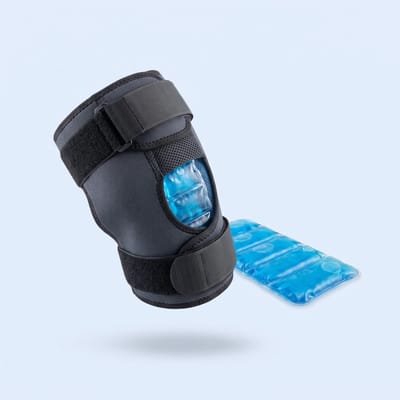
Cold: CryoWrap is a gel wrap that surrounds the knee 360°. Freeze the gel pads for at least two hours, use for 15–20 minutes, and wait at least an hour between uses. Always keep a layer of fabric between the gel and your skin. The same wrap can also be warmed in the microwave for 20–30 seconds.
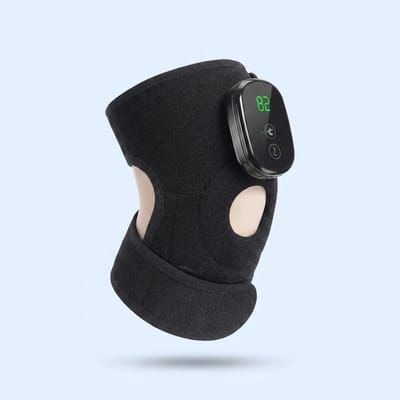
Heat: HeatPad gives pleasant, focused warmth around the knee to relax the muscles and ease that stiff feeling on the evening after a day in the garden.
For a detailed explanation of the differences, see our guide Heat or Cold for the Knee, and find all our knee products on the Knee Pain page. Need help choosing? Email us at hello@getxneex.com.
Frequently asked questions
What should I do when my knees hurt while kneeling?
Stop kneeling directly on hard surfaces, put thick padding under your knees, switch to a half-kneel or a low stool and change position every few minutes. If the pain is sharp, lasts, or comes with swelling, see a doctor or physical therapist.
What should I put under my knees when gardening?
A dedicated garden kneeling pad, an old cushion or a towel folded several times. The padding should be thick enough that you can't feel stones or a hard floor. For longer jobs, a low stool takes the weight off your knees completely.
Can I garden while wearing a knee support?
Yes. A slim knee support like the XNEEX Smart Knee Support fits under your clothes and gives a feeling of stability during physical work and when getting up from kneeling. It doesn't replace padding under the knee, so it's best to use both together.
Cold or heat for my knees after a day of work?
If the knee feels warm or slightly swollen, cold is usually the better fit: 15–20 minutes with a layer of fabric between the gel and your skin. If it feels stiff and tight without swelling, gentle heat can help it relax.
How do I get up from kneeling without straining my knee?
First move into a half-kneel, put a hand on your front thigh or a steady surface, and rise gradually with a straight back. Don't stand up all at once while holding something, and don't twist your body as you rise.
More from the Knowledge Center
Heat or cold for the knee: when each one fits and how to use it properlySmart Knee Support: who it's for, how to choose a size and how to wear itHot/cold gel knee wrap: how to use heat and cold with the same wrapAll articles →This article is general information and is not a substitute for medical advice.