Heel Pain With Your First Steps in the Morning: What You Can Do at Home
The short answerMorning heel pain is usually felt in the first few steps after sleep, while your foot and calf are still stiff. What helps many people: a gentle foot and calf stretch before getting up, rolling your foot over a bottle, supportive shoes or slippers at home instead of walking barefoot on hard floors, a cushioned insole and gradual changes in your activity load. If the pain lasts several weeks, comes with swelling or numbness, or started after an injury, see a doctor.
In brief
- The first steps in the morning are the sensitive moment: start with a light stretch while still sitting on the bed.
- Rolling your foot over a bottle or ball and a quick calf warm-up before getting up make a simple morning habit.
- At home, a supportive shoe or slipper with a cushioned insole is better than walking barefoot on tiles.
- Pain that lasts for weeks, swelling, numbness or pain after an injury is a reason to get checked by a doctor.
Why is morning heel pain felt in those first few steps?
At night your foot and calf rest for a long stretch, and the tissues in your foot and calf shorten slightly and stiffen. Your first steps in the morning stretch them all at once, which is why morning heel pain is often strongest in the first few minutes and eases as your body warms up.
The same feeling can come back after sitting for a long time, for example when you get up from your desk or step out of the car. It's a sign your foot likes a gradual start, not jumping straight into a load.
Heel pain has many possible causes, and only a doctor can tell you what's behind yours. The tips here are general, gentle habits for everyday comfort – not a diagnosis and not a substitute for a checkup.
What can you do before getting out of bed?
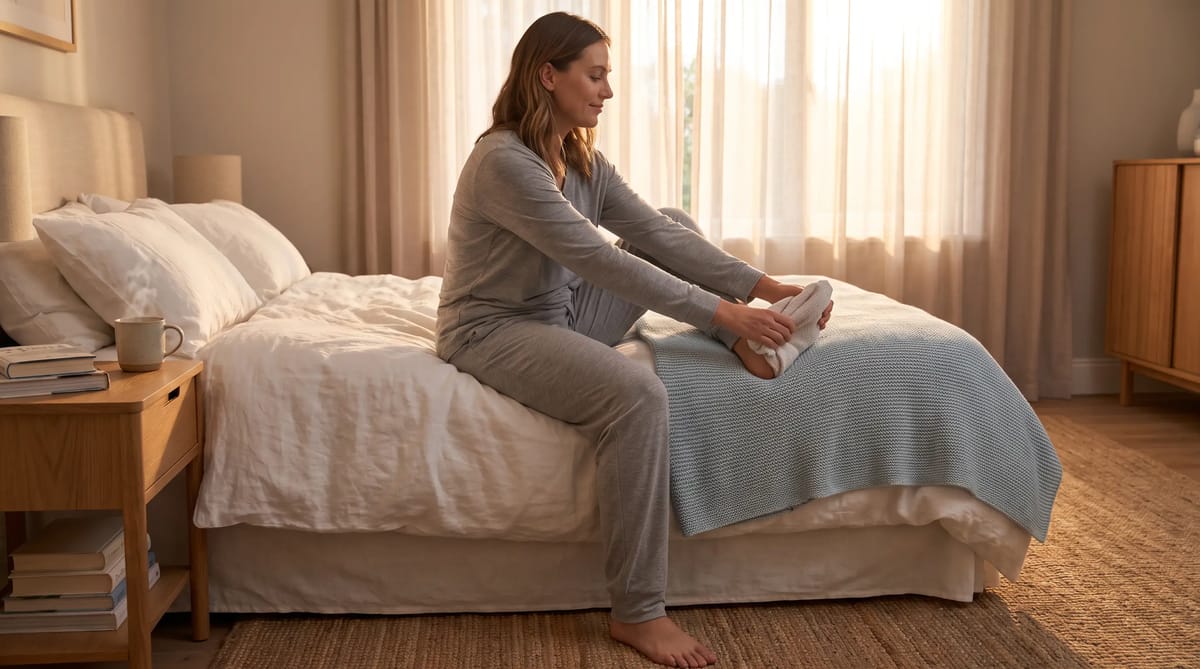
The short answer: warm up your foot and calf for a minute or two before you stand. A few simple movements lying down or sitting on the edge of the bed are enough to make your first steps feel softer.
- Ankle circles: rotate each foot 10 times in each direction, slowly.
- Toe pull: sitting down, rest one foot on the opposite knee and gently pull your toes back toward your shin. Hold for 15–20 seconds, three times on each foot.
- Towel calf stretch: loop a towel around your foot, keep your leg straight and pull the ends of the towel toward you until you feel a pleasant stretch in your calf. 20–30 seconds.
- Scrunch and release: curl your toes as if you were grabbing a towel, then release. 10 reps.
The stretch should feel pleasant and releasing. If it hurts, reduce the range or skip it. You'll find more movements for the end of the day in our guide to foot stretches at home.
How can rolling a bottle help your foot?
Rolling your foot over a water bottle or small ball gives it a simple self-massage. Many people find it helps their foot feel less stiff in the morning and evening.
- Sit on a chair, place a bottle under the arch of your foot and roll it back and forth from your heel to the base of your toes.
- Press gently, without causing pain. A minute or two per foot is enough.
- Some people prefer a chilled bottle from the fridge, others prefer one at room temperature. Choose whatever feels good to you.
Should you walk barefoot at home?
When your heel is sensitive, walking barefoot on tiles or hard wooden floors can feel uncomfortable, especially in the morning. A house shoe or slipper with a stable sole and arch support gives your foot a softer base.
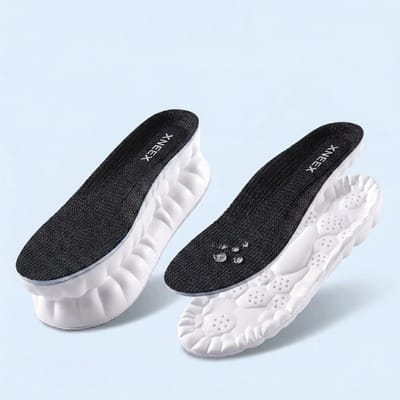
Keep house shoes by the bed so your very first step already has support. In your everyday shoes you can add a cushioned insole such as CloudStep insoles, with an ergonomic design and a shock-absorbing layer. They suit most types of shoes and can be trimmed to fit. You can read more about choosing an insole in our guide to insoles for standing all day.
What should you change in your daily activity?
Instead of stopping moving, change your load gradually. A sudden jump in walking, running or standing is something your foot isn't always ready for.
| Situation | What you can try |
|---|---|
| Morning, before getting up | Ankle circles, toe pulls and a towel calf stretch |
| Walking at home | Supportive house shoes or slippers instead of walking barefoot on hard floors |
| A day standing at work | Comfortable, stable shoes, a cushioned insole, changing position and short breaks |
| Sports and walks | Increase distance gradually, a short warm-up before and a gentle stretch after |
| Evening | Rolling a bottle and resting with your legs slightly raised |
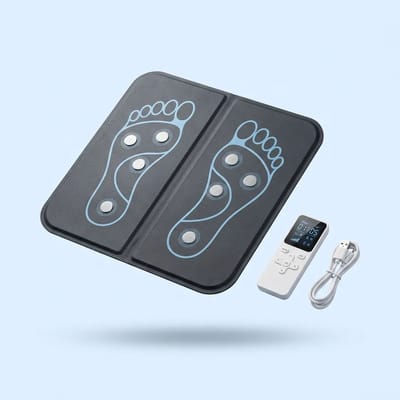
In the evening, after a day on your feet, some people like to add a foot massage, for example with the FootPulse massage mat, to relax and feel refreshed. Don't use it if you're pregnant, have a pacemaker or electronic implant, broken skin or epilepsy, and if you have diabetes or circulation problems, check with a doctor first.
You'll find all our foot solutions, from insoles to massage, in the Feet & Legs collection. If you're not sure which insole size to choose, email us at hello@getxneex.com and a real person will get back to you.
Frequently asked questions
Why does my heel hurt in the morning and then ease off?
At night your foot and calf rest and become stiff. Your first steps stretch them all at once, so the feeling is strongest in the first few minutes and eases as your body warms up. If the pain doesn't ease during the day or lasts for weeks, it's worth getting checked by a doctor.
Which stretches can I do before getting out of bed?
Ankle circles, gently pulling your toes back toward your shin, and a calf stretch with a towel looped around your foot. Hold each stretch for 15–30 seconds, without pain. A minute or two is enough to make your first steps feel more comfortable.
Can an insole help when my heel is sensitive?
A cushioned, supportive insole gives your foot a softer, more comfortable base when walking and standing, which is what many people look for when their heel is sensitive. It's no substitute for a checkup, and if the pain lasts or gets worse, see a doctor or physical therapist.
Should I walk barefoot at home when my heel hurts?
When your heel is sensitive, walking barefoot on tiles or wooden floors can feel uncomfortable. House shoes or slippers with a stable sole and arch support give you a more comfortable base. Keep them by the bed so even your first step in the morning has support.
When does morning heel pain need a doctor?
When the pain lasts several weeks despite changes at home, gets worse, appears even at rest, comes with swelling, redness, numbness or tingling, or started after an injury or fall. A doctor can check what's causing the pain and tailor the next steps for you.
More from the Knowledge Center
Foot stretches at home: 6 simple moves after a day on your feetInsoles for standing all day – how to choose and what to checkTired feet after standing all day – the complete guideAll articles →This article is general information and is not a substitute for medical advice.