When to Start Using a Pregnancy Pillow – and How to Adapt It Through Your Pregnancy

The short answerStart using a pregnancy pillow when your bump begins to grow and sleep gets less comfortable – for many people, during the second trimester. Early on, a small bump wedge or a C-shaped pillow may be enough, and later in pregnancy a U-shaped pillow that wraps your whole body supports your bump, back and knees in one position. Choose based on how much support you want, how much you turn over at night and the size of your bed.
In brief
- Start when sleep gets less comfortable – for many, in the second trimester.
- A bump wedge suits targeted support; a C-shaped pillow gives broad support in a smaller footprint.
- A U-shaped pillow supports your bump, back, knees and neck in one position and lets you turn over without rearranging.
- Before choosing, check how much room there is in your bed.
When should you start using a pregnancy pillow?
There's no set date. When to start using a pregnancy pillow mainly depends on your body: once your bump starts to grow and sleep becomes less comfortable, it's a good time to try one. For many people this happens during the second trimester, and some feel the need earlier or later.
The signs to look for are simple: it's hard to find a position, you toss and turn a lot at night, or you're already building a "nest" out of several regular pillows. There's no need to wait for a particular week. A pillow that arrives early gives your body time to get used to it.
What changes at each stage of pregnancy?
Your need for support changes with your bump. What was enough early on may feel too small later, so it's worth thinking of the pillow as a solution that adapts to each stage.
First trimester
Your bump is still small, and tiredness is usually more noticeable than discomfort. Many people keep sleeping as usual, and sometimes a pillow between the knees is enough to feel more comfortable on your side.
Second trimester
Your bump starts to take up space, and lying on your side becomes your main position. This is the stage when many people discover that a little support under the bump and between the knees makes a difference. A bump wedge or a C-shaped pillow is a good start.
Third trimester
Your bump is big, turning over at night takes more effort, and side sleeping is the position usually recommended in later pregnancy. Here a full-body pillow that supports your bump, back, knees and neck all at once gives you the most.
How do you choose a pregnancy pillow: U, C or wedge?
Choose based on three things: how much support you need, whether you turn over a lot, and how much room there is in your bed. The table sums up the differences:
| U-shaped pillow | C-shaped pillow | Bump wedge | |
|---|---|---|---|
| What it supports | Bump, back, knees and neck in one position | Wraps your back and supports your bump | Your bump when lying on your side |
| Turning over at night | Turn over without rearranging the pillow | You need to shift the pillow a little | Move the wedge to the other side |
| Bed space | The largest, wraps your whole body | More compact, fits a standard double or queen bed | Small, even fits in a bag |
| Especially suited to | Later pregnancy, if you turn over a lot | Broad support in a smaller footprint | An early bump, travel, or alongside another pillow |
| After the birth | Support while nursing | Nursing and reading in bed | Back support when sitting |
For a detailed comparison of the two large pillows, read C or U pregnancy pillow – what's the difference.
Why does a U-shaped pillow suit so many people throughout pregnancy?
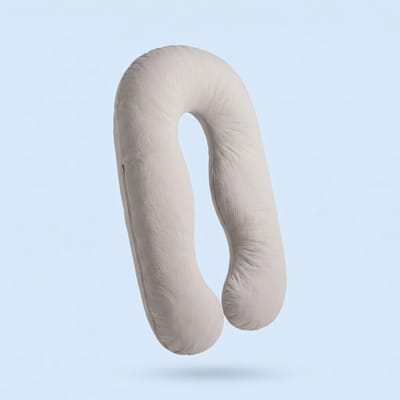
Because it wraps your whole body and adapts to a bump that keeps growing. The MamaCloud U pregnancy pillow supports your bump, back, knees and neck in one position, so you don't need to move pillows in the middle of the night. It's built for 360-degree support, so you can turn from side to side without rearranging it.
The filling is quality polyester that doesn't flatten after a couple of weeks, and the cotton cover is removable, breathable and machine washable. We recommend washing it before first use. How to lie in it:
- Lay the pillow lengthwise on the bed, with the open end facing down.
- Lie on your side inside the U.
- Put one leg over the lower arm, with your bump resting on the inner side.
- The upper arm of the pillow supports your head and neck.
When is a bump wedge enough, and when do you move to a C-shaped pillow?
A wedge suits you when you need targeted support under your bump and nothing more. The BellyWedge support wedge is made of dense memory foam and comes in two layers: start with one and add the second as your bump grows. Place it under the curve of your bump with the higher end facing out. It's small enough for a bag, and you can also use it as back support when sitting.
The MamaCloud C pillow suits you if you want broader support without giving up space in the bed. Place the open side toward your bump: the top for your head, the middle for your back and the bottom between your knees.
What if your bed is small?
Measure the space before you choose. A U-shaped pillow takes up the most room, and in a narrow bed or when sleeping as a couple it can feel big. A C-shaped pillow is more compact and fits a standard double or queen bed, and a bump wedge takes up almost no space. It's also worth talking with your partner about how you'll share the bed.
You'll find more tips for the new habit in side sleeping in pregnancy: how to get used to it, and all the pillows in our Pregnancy collection. Not sure what suits you? Email us at hello@getxneex.com – and you also get 30-day returns.
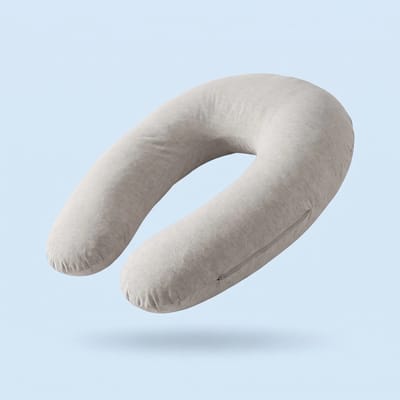
XNEEX MamaCloud™ U – Full-Body U-Shaped Pregnancy Pillow
See the U-shaped pregnancy pillow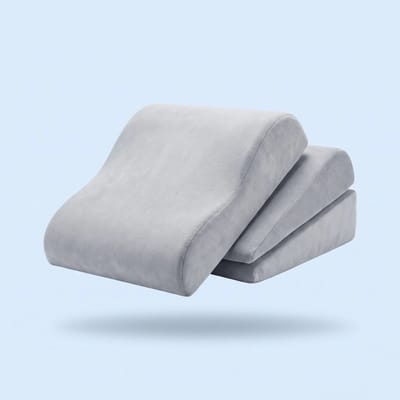
Frequently asked questions
From what week do you start using a pregnancy pillow?
There's no set week. You can start as soon as sleep becomes less comfortable or your bump starts to take up space, and for many people that happens in the second trimester. There's no reason to wait: starting early gives your body time to get used to the pillow before your bump grows.
How do you choose a pregnancy pillow?
Ask three questions: how much support you need, whether you turn over a lot at night, and how much room there is in the bed. A U-shaped pillow gives full support and suits people who turn over a lot, a C-shaped pillow is more compact, and a bump wedge suits targeted support or travel.
Is a pregnancy pillow useful in the first trimester?
It can be, but usually it isn't needed yet. In the first trimester your bump is small, and many people manage with a pillow between their knees. If sleep is already uncomfortable, there's nothing stopping you from starting with a small pillow and moving to a bigger one later.
U-shaped pillow or bump wedge – which is better?
It depends on what you need. A wedge supports only your bump, takes up little room and suits an early bump or your bag. A U-shaped pillow supports your bump, back, knees and neck all at once, and is especially comfortable in later pregnancy. Some people combine the two.
Does a U-shaped pregnancy pillow fit in a double bed?
A U-shaped pillow wraps your whole body, so it takes up more room than a C-shaped pillow or a wedge. In a standard double or queen bed, think about how you'll share the space with your partner. If space is tight, a C-shaped pillow is more compact and fits a standard double or queen bed.
Can you keep using the pregnancy pillow after the birth?
Yes. U-shaped and C-shaped pillows can both serve as support while nursing, and the C-shaped pillow also works for reading in bed. Remember they're for you only – never let a baby sleep on them or leave a baby alone on them unattended.
More from the Knowledge Center
C or U pregnancy pillow – the difference and how to choose the right oneSide sleeping in pregnancy: how to get used to it and which pillows helpPregnancy wedge pillow: when to use it and how to position it correctlyAll articles →This article is general information and is not a substitute for medical advice.