Side Sleeping in Pregnancy: How to Get Used to It and Which Pillows Help
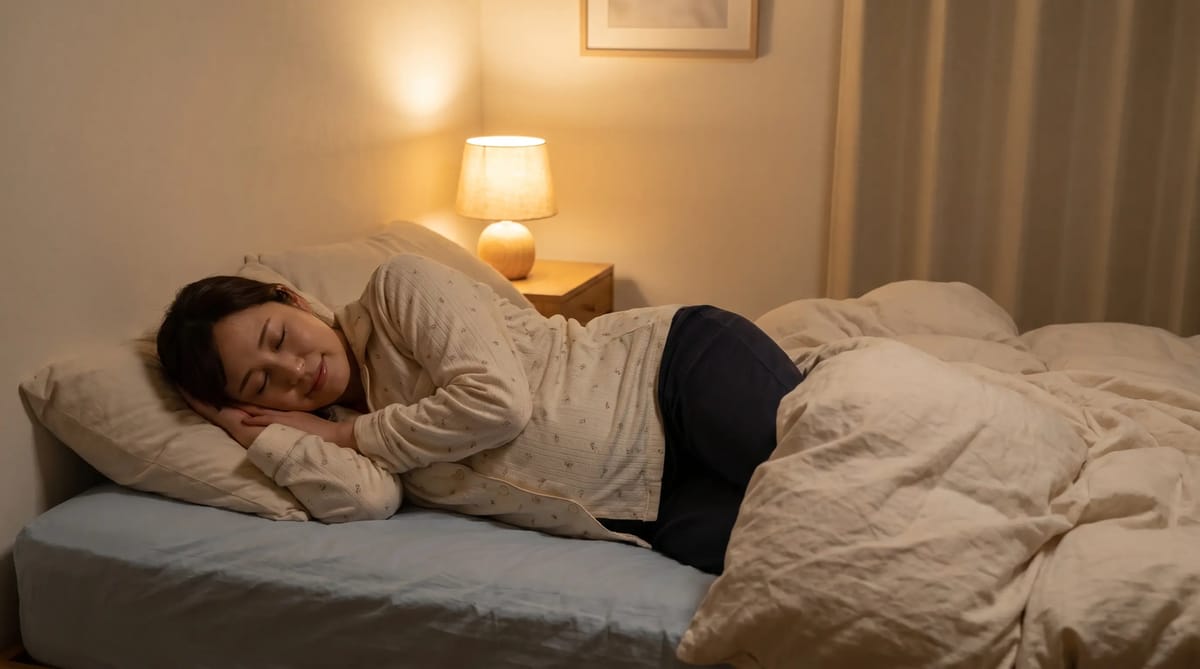
The short answerSide sleeping is the position healthcare professionals usually recommend during pregnancy, especially in the later stages. If you're used to sleeping on your back or stomach, it takes time to adjust. Start early, practice gradually, bend your knees slightly and use pillows that support your bump, your back and between your knees. Personal questions about your position – ask your doctor or midwife.
In brief
- It's worth starting to get used to side sleeping before your bump grows.
- Bent knees, a pillow between them and support under your bump make the position more comfortable.
- Turn over and get out of bed as one unit – without twisting your body.
- Woke up on your back? Just roll back to your side, and take any worries to your doctor or midwife.
Why is side sleeping recommended in pregnancy?
Side sleeping in pregnancy is the common recommendation from doctors and midwives, mainly from the second trimester onward. As your bump grows, lying on your back for long periods becomes less comfortable, and lying on your stomach is no longer possible.
As for which side is better and what suits you personally, the best people to ask are the doctor or midwife looking after you. In this article we'll focus on the practical side: how to get used to the position and how to make it comfortable.
How do you get used to sleeping on your side, step by step?
The easiest way is to start early and progress gradually, like any new habit. Don't expect to get it right on the first night.
- Start with falling asleep. Every evening, get into bed and fall asleep on your side. Even if you move during the night, your body starts to adjust.
- Practice during short rests. An afternoon nap or reading in bed is a good chance to lie on your side without pressure.
- Bend your knees. Slightly bent knees, one on top of the other or the top one a little forward, give you stability.
- Fill the gaps. A pillow between your knees, support under your bump and a pillow behind your back help you avoid rolling backward.
- Switch sides. You don't need to lie on the same side all night. Switching now and then is easier on your shoulders and hips.
What do you do if you wake up on your back?
Simply roll back onto your side, without stressing. It happens to lots of people, and the body naturally moves during sleep.
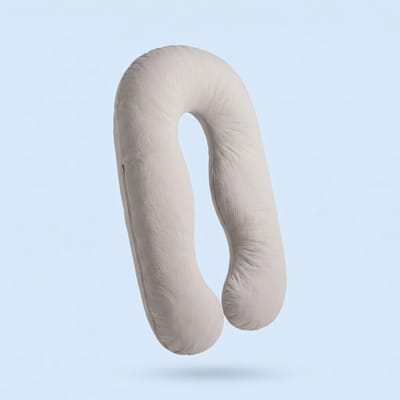
To make rolling backward less likely, you can place a firm pillow behind your back. A U-shaped pregnancy pillow does this by design, because it wraps around both sides. If it worries you, mention it to your doctor or midwife.
How do you turn over at night without fully waking up?
Turn over with your body moving as one unit: shoulders, pelvis and knees together. That makes the movement smoother and pulls less on your bump and back.
- Bend both knees before you move.
- Keep your knees together and roll slowly to the other side.
- If you have a wedge under your bump, bring it with you.
- With a U-shaped pillow there's nothing to rearrange – you simply turn inside it.
How do you get out of bed comfortably?
Get up via your side, not with a straight "sit-up" from your back. It's a simple method many pregnant people adopt.
- Roll onto your side with your knees bent.
- Lower your legs over the edge of the bed.
- Push up from the mattress with your hands to come to sitting.
- Sit for a moment before standing, especially at night.
What helps when your lower shoulder or hip feels pressure?
Pressure in the shoulder or hip you're lying on is a common complaint with side sleeping. In most cases a few small changes help you feel more comfortable.
- Move your lower shoulder slightly forward, so you're not lying directly on the shoulder bone.
- Choose a head pillow at a height that fills the gap between your shoulder and ear, so your neck stays straight.
- Put a pillow between your knees and also between your ankles, so your top leg doesn't pull on your pelvis.
- Switch sides when you feel pressure, instead of sticking to the same side all night.
If a small wedge sounds like it might be enough for you, also read pregnancy bump wedge: when it's enough.
Which pillows help with side sleeping in pregnancy?
The right pillow depends on what's bothering you. This table helps you match a solution to how you feel:
| What you feel | What you can try |
|---|---|
| Your bump pulls downward | A small wedge under your bump, such as the BellyWedge |
| Your top knee falls forward | A pillow between your knees, or the bottom section of a C-shaped pillow |
| You roll onto your back in your sleep | A firm pillow behind your back, or a U-shaped pillow that wraps both sides |
| You rearrange pillows every time you turn over | A U-shaped pillow, which lets you turn over without rearranging |
| Your bed is narrow or shared | A compact C-shaped pillow, or a wedge combined with a regular pillow |
The MamaCloud U pregnancy pillow wraps your whole body and supports your bump, back, knees and neck in one position. You lie on your side inside the U, one leg over the lower arm, with your bump resting on the inner side.
You'll find all the options in our Pregnancy collection. Not sure? Email us at hello@getxneex.com – and you get 30-day returns. For a detailed comparison of the pillows, also read C or U pregnancy pillow.
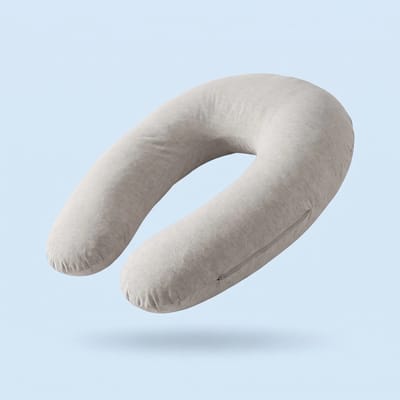
XNEEX MamaCloud™ U – Full-Body U-Shaped Pregnancy Pillow
See the U-shaped pregnancy pillow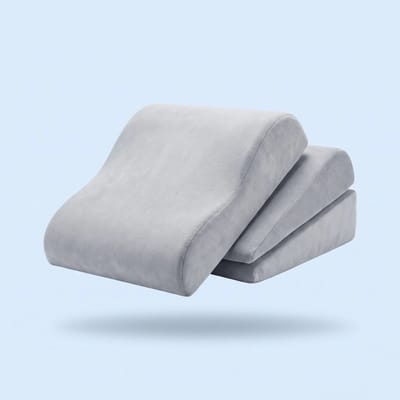
Frequently asked questions
When should you start sleeping on your side in pregnancy?
The common recommendation is to sleep on your side mainly from the second trimester onward, but it's worth starting to get used to it earlier, while it's still easy to move. That way, when your bump grows, the position already feels familiar. For what suits you personally, ask your doctor or midwife.
Which side is better to sleep on in pregnancy?
Many professionals mention the left side, but guidance varies and some people find it comfortable to switch sides during the night. This is a personal question, so the best thing is to ask the doctor or midwife looking after you and follow their advice.
What do you do if you wake up on your back at night?
Simply roll back onto your side, without stressing. The body naturally moves during sleep, and it happens to lots of people. A firm pillow behind your back or a U-shaped pillow that wraps both sides helps you stay on your side. If it worries you, mention it to your doctor or midwife.
Which pillow helps most with side sleeping in pregnancy?
It depends on what's bothering you. A wedge under your bump suits you when only your bump needs support. A C-shaped pillow supports your bump, back and knees and fits a standard double or queen bed. A U-shaped pillow wraps your whole body and lets you turn over without rearranging pillows.
How do you get out of bed in pregnancy without unnecessary strain?
First roll onto your side with your knees bent, lower your legs over the edge of the bed and push up from the mattress with your hands to come to sitting. It's worth sitting for a moment before standing, especially when you get up in the middle of the night. That way your bump and lower back aren't pulled in one sharp movement.
More from the Knowledge Center
C or U pregnancy pillow – the difference and how to choose the right onePregnancy wedge pillow – when and how to position it correctlySleep during pregnancy: a guide to comfort at night, by day and after birthAll articles →This article is general information and is not a substitute for medical advice.