Back Pain in Pregnancy: Sitting, Standing and Sleeping Habits That Help You Feel More Comfortable
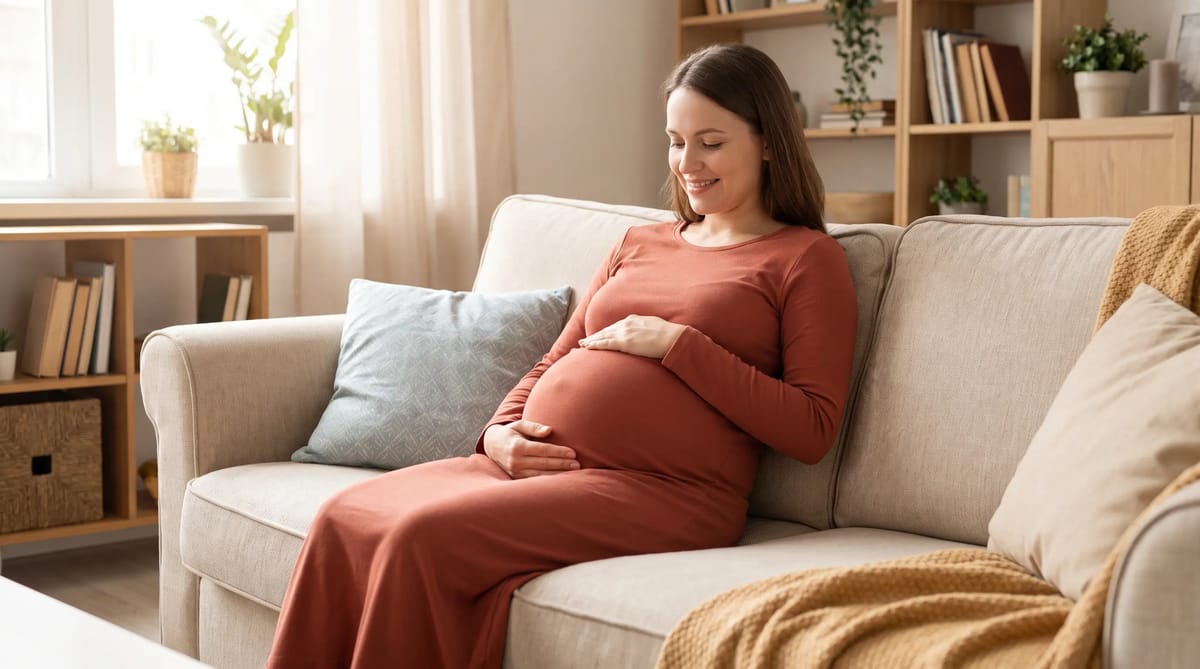
The short answerBack pain is very common in pregnancy, especially in the lower back and pelvis, because your center of gravity shifts forward with your bump and your posture changes. What usually helps is simple habits: sit with your back supported and get up every half hour, stand with your weight on both feet, sleep on your side with a pillow between your knees and support for your bump, and bend your knees when lifting things. Sharp or sudden pain, or pain with other symptoms, needs a call to your doctor or midwife.
In brief
- Back pain in pregnancy is linked to changes in your center of gravity and posture, and it's especially common in the second and third trimesters.
- Sitting: back supported, feet on the floor and a short break about every half hour.
- Sleeping: on your side, knees bent, a pillow between your knees and support under your bump.
- Sudden or severe pain, pain with contractions, bleeding or fever, or pain running down your leg with numbness – contact your doctor or midwife right away.
Why do you get back pain in pregnancy?
Back pain in pregnancy mainly comes from the changes your body goes through to make room for the baby. Your growing bump pulls your center of gravity forward, and to keep your balance your lower back arches more.
On top of that, during pregnancy the ligaments around your pelvis become more flexible in preparation for birth, and your abdominal muscles stretch and offer less support. Together this puts extra load on your lower back and pelvis, which is why the discomfort is often felt at the end of the day, after long sitting or prolonged standing.
How should you sit during pregnancy?
Comfortable sitting in pregnancy starts with a supported back and regular breaks. Sitting itself is less tiring than sitting for a long time without moving.
- Sit well back in the chair so your back rests against the backrest, and if needed add a small cushion behind your lower back.
- Feet on the floor or on a low footstool, with your knees roughly level with your hips.
- Avoid crossing your legs for long periods.
- Get up, walk around and stretch about every half hour.
- At the computer, bring the screen and keyboard closer so you don't lean forward.
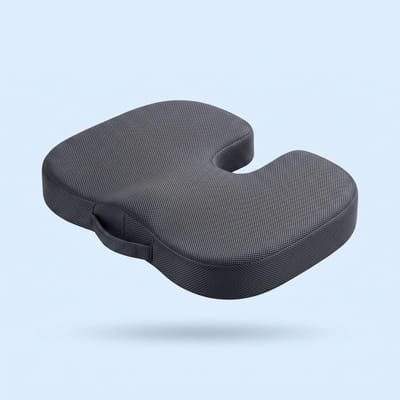
Some people find that a seat cushion makes a hard chair more comfortable. The SitRight seat cushion is made of dense, U-shaped memory foam, with a cutout at the back that keeps pressure off the tailbone and a breathable mesh cover you can remove and wash. It works at the office, in the car and at home. During pregnancy, it's worth checking any new product with your doctor or midwife. You'll find more ideas in our article on sitting comfortably in pregnancy.
How do you stand and walk without straining your back?
When standing, the goal is not to let your lower back arch too much. A few simple habits help:
- Spread your weight across both feet, and when you stand a lot, rest one foot on a low stool and switch from time to time.
- Wear stable, comfortable shoes with a low heel.
- When lifting something, bend your knees, hold it close to your body and avoid twisting at the same time.
- Short, relaxed walks during the day help keep your body from stiffening. Unless your medical team advises otherwise, gentle movement is a good part of the day.
What helps with pregnancy back pain at night?
At night, sleeping on your side with your knees bent and the right support is the foundation. It's also the position usually recommended in later pregnancy.
- Lie on your side with your knees slightly bent.
- Place a pillow between your knees, so your top leg doesn't fall forward and twist your pelvis.
- Support your bump from underneath, so it doesn't pull your body forward.
- When you turn over, keep your knees together and turn your whole body at once.
- When getting out of bed, roll onto your side first and push yourself up to sitting with your hands.
The MamaCloud U pregnancy pillow wraps your whole body and supports your bump, back, knees and neck in one position, so you don't have to move pillows around. Lay it lengthwise on the bed with the open end facing down, lie on your side inside the U, one leg over the lower arm and your bump on the inner side. It's filled with polyester fiber and has a removable, machine-washable cotton cover, which we recommend washing before first use.
If you'd prefer something smaller, consider the BellyWedge bump wedge: a two-layer memory foam wedge you place under the curve of your bump when lying on your side. Start with one layer and add the second as your bump grows. You'll find a full guide to the position in our article on side sleeping in pregnancy.
Which support suits which situation?
| Situation | Habit to try | Possible support |
|---|---|---|
| Long hours sitting at work | Back supported, a break every half hour | A seat cushion or a small lower-back cushion |
| Prolonged standing | Weight on both feet, one foot on a stool | Stable shoes with a low heel |
| Sleeping at night | On your side, knees bent | A U-shaped pregnancy pillow |
| Bump pulling forward when lying down | Support under your bump | An adjustable bump wedge |
You'll find all the products in our Pregnancy collection. Have a question about what suits you? Email us at hello@getxneex.com – and you get 30-day returns.
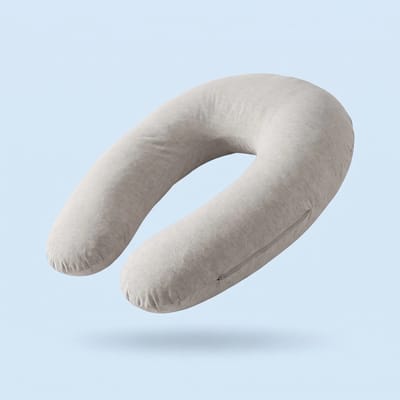
XNEEX MamaCloud™ U – Full-Body U-Shaped Pregnancy Pillow
See the U-shaped pregnancy pillow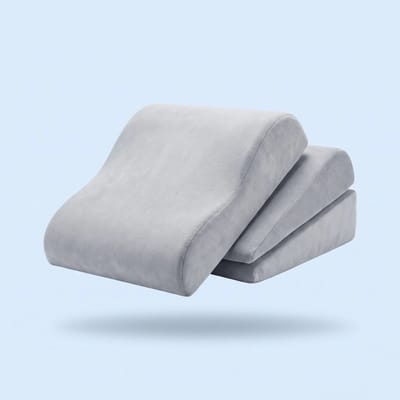
Frequently asked questions
When does back pain start in pregnancy?
For many people, back pain is felt mainly in the second and third trimesters, as the bump grows and the center of gravity shifts forward. Some feel it earlier. Pain that comes on suddenly or is severe is worth checking with your doctor or midwife.
What sleeping position helps with back pain in pregnancy?
Sleeping on your side is usually recommended, with your knees slightly bent and a pillow between them. Support under your bump helps keep it from pulling your body forward. A U-shaped pregnancy pillow gives you all of that support without arranging several pillows.
Can back pain in pregnancy be a sign of labor?
Yes, sometimes. Lower back pain that comes in regular waves, gets stronger or comes with tightening, pelvic pressure or bleeding can be related to labor. In that case, contact your doctor, midwife or labor and delivery unit right away, without waiting.
How should you sit at work with back pain in pregnancy?
Sit well back in the chair with your back supported, feet on the floor or a footstool, and knees roughly level with your hips. Get up and walk around about every half hour. A small cushion behind your lower back or a seat cushion can make the chair more comfortable.
Can you use a massage cushion or heat for your back in pregnancy?
Most back massage and heating devices are not intended for use during pregnancy. Before using any device, exercise or massage, ask your doctor or midwife. In the meantime, you can rely on changing your habits, a comfortable sleeping position and support pillows.
More from the Knowledge Center
Side sleeping in pregnancy: how to get used to it and which pillows helpSitting comfortably in pregnancy: at work, in the car and at homePregnancy wedge pillow: when to use it and how to position it correctlyAll articles →This article is general information and is not a substitute for medical advice.