Knees at the Gym: How to Squat and Lunge Without Overloading Your Knees
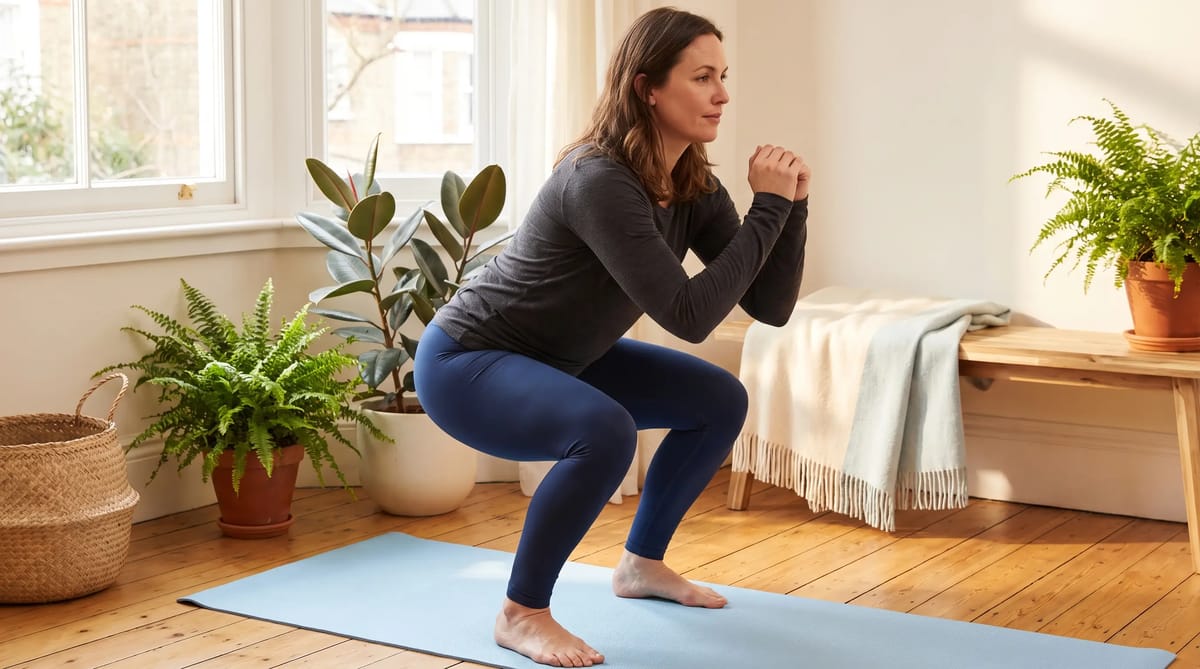
The short answerTo look after your knees at the gym, how much you lift matters less than how you move. In squats and lunges, your knee should travel in line with your foot, your weight should be spread across the whole foot, and depth should be whatever feels comfortable for you. Warm up first, increase the load gradually, and if you get knee pain when squatting, reduce the range or the weight and check your technique before you carry on.
In brief
- Your knee follows your foot: no caving inward, and weight across the whole foot.
- Squat depth is set by control and comfort, not by what other people do.
- A 5–10 minute warm-up and gradual increases in load are the foundation of a knee-friendly workout.
- A patella strap, knee support or sleeve can add a feeling of support, but they don't replace technique.
Why do my knees feel the gym?
Knees work hard at the gym, because almost every leg exercise bends and straightens them under load. When technique is precise and the load goes up gradually, most people train comfortably. When you rush, the knee gets more than it's ready for.
The most common causes of discomfort are the knee caving inward, heels lifting off the floor, going too deep before you have control, and jumping up in weight too fast. Training without a warm-up, or doing legs several days in a row without rest, is also felt mostly in the knee.
How do I squat correctly without knee pain?
A good squat starts with a good stance: feet shoulder-width apart or a little wider, toes turned slightly out, and the descent starting with your hips moving back. As you go down, your knees travel toward your toes, not inward.
- Stance: your body weight is spread across the whole foot – heel, ball of the foot and outer edge.
- Breathing: breathe in, brace your core slightly and keep your chest open.
- Descent: your hips move back and down, as if sitting on a chair. Your back stays long.
- Knee line: your knees follow your toes. It's fine for the knee to pass slightly beyond your toes if it feels comfortable and controlled.
- Depth: go down only as far as you can with your heels still on the floor and your back not rounding.
- Rising: push the floor away with your whole foot and straighten your knees and hips together.
If you have knee pain when squatting, don't keep "pushing" through it. Try lowering the weight, squatting to a shallower depth, or switching to a box squat onto a chair or bench, where you know exactly where the movement stops.
How do I do a lunge that doesn't overload my knee?
In a good lunge, your step is long enough that at the bottom of the movement both knees are bent at roughly a right angle. The front knee is over the ankle or slightly in front of it, and your torso stays upright.
- Start with stationary or reverse lunges – they're usually easier to control than forward or walking lunges.
- Keep your feet about hip-width apart, so you're not "walking a tightrope".
- Don't let the front knee cave inward; picture aiming it over your second toe.
- Lower the back knee with control, without banging it on the floor.
- If the front knee feels strained, take a slightly longer step and lean your torso a little forward.
What else keeps my knees happy over time?
Beyond technique, your habits around training decide how your knees will feel next week. Here are the basics:
- Warm-up: 5–10 minutes on the bike or a brisk walk, followed by a light set of the exercise itself.
- Gradual progress: add weight or reps in small steps, and only when the exercise feels stable.
- Strengthen the surrounding muscles: your glutes, hamstrings and calves support the work your knee does.
- Rest: leave a day between heavy leg sessions.
- Stable shoes: a flat, stable sole is more comfortable for squats than a very soft one.
If you also run, you'll find complementary ideas in our article Knees and Running.
Patella strap, knee support or sleeve – which suits a workout?
Each gives a different feel, and the choice depends on where you feel the strain and what kind of support you prefer.
| Product | How it's made | Good when... |
|---|---|---|
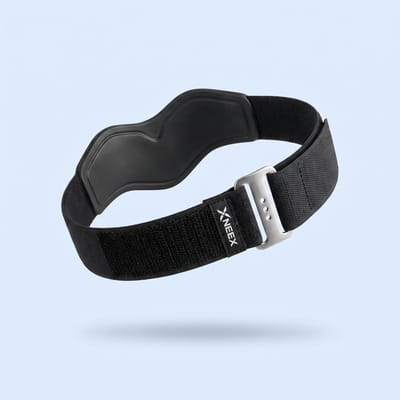
| PatellaBand – below-the-kneecap strap | A slim strap with a wave-shaped silicone pad below the kneecap, hook-and-loop closure and metal buckle, one adjustable size | You feel strain below the kneecap during squats, lunges or jumps |
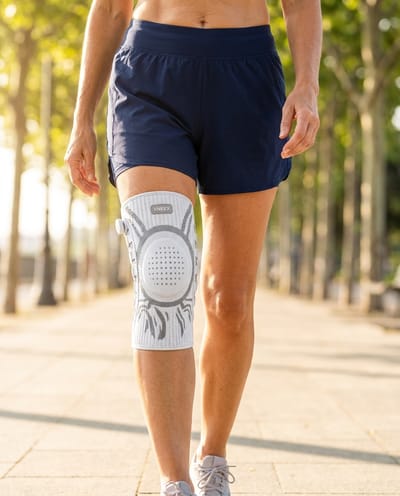
| Smart Knee Support | Breathable knit sleeve, silicone ring around the kneecap, SmartLock dial on the side | You want a feeling of support and stability around the whole knee, adjustable with a press |
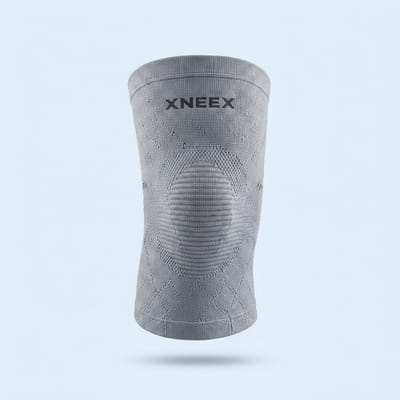
| BambooFlex – pair of sleeves | Breathable bamboo sleeves with graduated compression and 360° stretch | You want a soft, light feel on both knees throughout your workout |
How to fasten the patella strap before a workout
The PatellaBand fits the right or left knee and a leg circumference of about 30–46 cm (12–18 in). Position the silicone pad in the center, just below the kneecap, thread the hook-and-loop strap through the metal buckle and tighten until the support feels comfortable – not too tight. The inner silicone helps it stay in place while you move. If you notice numbness, tingling or a change in skin color, loosen it right away, and take it off when resting and sleeping.
To understand the differences between the options in more depth, read Knee Sleeve or Patella Strap. All the products are waiting in the Knee Pain collection, and if you can't decide, email us at hello@getxneex.com – and you have 30 days to return.
Frequently asked questions
Is it OK for my knee to go past my toes when squatting?
For most people, yes, as long as the movement is controlled and your heels stay on the floor. What matters more is that the knee travels in the direction of your toes and doesn't cave inward, and that your weight is spread across the whole foot. If that position isn't comfortable for you, reduce the depth or try sitting back more.
What should I do if I get knee pain when squatting?
First, stop – don't keep pushing through the pain. Then check your technique: knee line, heels on the floor and depth. You can lower the weight, switch to a box squat onto a bench, or temporarily swap to a different exercise. Sharp pain, swelling or pain that comes back every workout is a reason to get checked.
Forward or reverse lunges – which is easier on the knees?
Many people find reverse lunges easier to control, because stepping back lets you keep the front knee over the ankle. Forward and walking lunges demand more braking and stability. Start with the version that feels stable and progress gradually.
When should I wear a patella strap during a workout?
A patella strap suits people who feel strain specifically below the kneecap in exercises like squats, lunges and jumps. Put it on before your workout, position the pad below the kneecap and tighten for comfortable support. Take it off when resting and sleeping, and loosen it right away if you feel numbness or tingling.
Does a knee support replace warming up and good technique?
No. A knee support, sleeve or strap can add a feeling of support and stability, but the foundation is a warm-up, precise technique, gradual increases in load and rest between workouts. Think of them as an addition to a well-planned workout, not a substitute for one.
More from the Knowledge Center
Knees and running: what to do before, during and after a run so your knee feels goodKnee sleeve or patella strap: what's the difference and when to choose eachBelow-the-kneecap strap: who it's for and how to tighten it correctlyAll articles →This article is general information and is not a substitute for medical advice.