How to Choose Comfortable Walking Shoes: What to Check in the Store and at Home

The short answerComfortable walking shoes fit the length and width of your foot, with room for your toes, a heel that doesn't slip and a sole that flexes at the front and stays stable in the middle. Try them on in the afternoon, with the socks you'll walk in, and walk around the store for a few minutes. At home, keep testing them with short walks on a clean floor before you take them out on a long route.
In brief
- Try on walking shoes in the afternoon, wearing the socks you'll walk in.
- Leave about a thumb's width at the end of the shoe, and check that your heel doesn't slip.
- A good sole bends at the front of the shoe, not in the middle, and doesn't twist easily.
- At home, start with short walks, and only then head out on a long route.
What makes walking shoes comfortable?
Comfortable walking shoes fit the shape of your foot, not just your size number. What matters is a good fit in length and width, a stable heel and a sole that lets your foot roll naturally with every step.
Walking is different from standing for long periods: your foot is constantly moving, rolling from heel to toe and pushing forward. That's why flexibility at the front of the shoe matters so much. If you're looking for a shoe for a day of standing at work, we have a separate article on work shoes for standing.
When is the best time to go shoe shopping?
Afternoon or evening is best. Your feet swell slightly over the course of the day, and a shoe you tried on in the morning may feel tight at the end of a long walk.
Bring the socks you walk in, and if you use insoles, bring those too. That way you test the shoe in real conditions.
What should you check in the store?
Try on both shoes, lace them up the way you'll wear them, and walk around the store for at least a few minutes. Don't rely only on the size you usually buy, because sizing varies between models.
- Length: about a thumb's width between your longest toe and the end of the shoe, while standing.
- Width: the sides don't press on your little toe or on the bump at the base of your big toe.
- Heel: your heel stays in place as you walk and doesn't lift up and down inside the shoe.
- Top of the foot: the laces close neatly without pressing on the top of your foot.
- Sole: bends at the front of the shoe, along the toe line, not in the middle.
- Stability: when you try to wring the shoe like a towel, it doesn't twist easily.
Pay attention to your larger foot, too. Most people have a small difference between their two feet, and you should choose your size based on the larger one.
Which shoe suits which kind of walking?
Not every walk calls for the same shoe. This table helps you think about what matters most depending on where you walk:
| Type of walking | What matters in the shoe | What to check in particular |
|---|---|---|
| City walking and sidewalks | Cushioning and flexibility at the front | A sole that isn't too hard |
| Walking in the park or on dirt trails | Grip and stability | Treads in the sole and a stable heel |
| Long walks on trips | Toe room and long-lasting comfort | No pressure, even after several minutes of walking |
| Short daily walks | Comfort and easy to put on | The heel doesn't slip |
How do you test new walking shoes at home?
The real test starts at home. Walk in the shoes on a clean floor, so if they don't fit, you can still return them.
- Wear the shoes for about half an hour at home, with your walking socks.
- Go up and down stairs and check that your heel doesn't slip and your toes don't get squeezed on the way down.
- Take the shoes off and look for any red areas on your feet.
- If everything is fine, go for a short walk, and gradually go longer over the next few days.
A good shoe feels comfortable from day one. If there's sharp pressure or rubbing, don't count on the shoe "softening up" over time.
What should you avoid when choosing?
The most common mistakes come down to rushing and choosing on looks. A few things to keep in mind:
- Don't buy a shoe that's too small "because it will stretch."
- Don't choose only on looks or on your usual size.
- Don't go on a long walk in a new pair you haven't tested yet.
- Don't keep walking in an old shoe whose sole is worn down on one side.
Should you add an insole to your walking shoes?
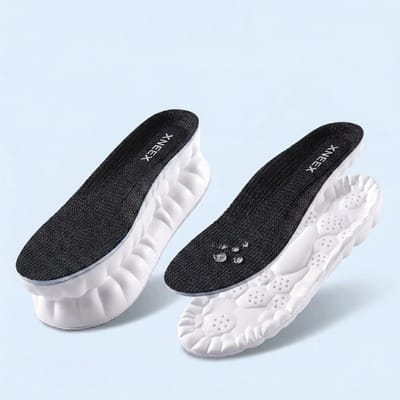
If the shoe is good but you'd like more cushioning, an insole can make it feel more comfortable. The shoe needs a removable inner insole and enough depth.
XNEEX CloudStep™ insoles combine softness with support and shock absorption, suit most types of shoes and can be trimmed to your shoe size. If you add an insole, try the shoe on with it inside.
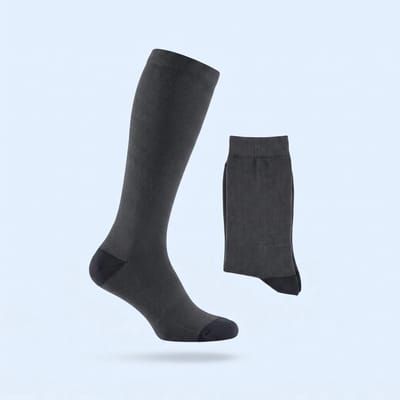
On long walks, some people also like compression socks. VeinFlow™ socks are graduated compression socks at 15–20 mmHg, strongest at the ankle, with a breathable panel and a reinforced heel and toe. Put them on in the morning and take them off before bed. They aren't suitable if you have peripheral artery disease, heart failure, an infection or wound on your leg or reduced sensation, and if you have diabetes or circulation problems, check with your doctor first.
For more on preparing for long routes, read our article on your feet after a long walk. All our products are in the Feet & Legs collection, and there's a size guide on each product page. Questions? Email us at hello@getxneex.com.
Frequently asked questions
How much room should I leave at the end of my walking shoes?
A general guideline is about a thumb's width between your longest toe and the end of the shoe while you're standing. That gives your foot room to swell during the day and slide forward slightly on downhills without your toes hitting the end. Check this in both shoes, based on your larger foot.
Are running shoes good for walking?
Usually yes, if they're comfortable and fit your foot. Running shoes are generally cushioned and flexible. What matters is checking the fit in length and width, a heel that doesn't slip and a sole that bends at the front of the shoe, not in the middle. Very stiff or very high-stacked running shoes are less comfortable for some walkers, so try them out walking, not just standing.
When is the best time to try on walking shoes?
In the afternoon or evening, when your feet are slightly wider after a full day. Try them on with the socks you'll walk in, and with your insoles if you use them, and try on both shoes. Afterwards, walk around the store for a few minutes, including turns and stops.
Do new shoes need time to soften up?
A good shoe should feel comfortable right from the start. You can get used to a new feel gradually, but sharp pressure, rubbing or red areas after a short walk are a sign that the shoe probably doesn't fit, and it's better to swap it.
How do I know it's time to replace my walking shoes?
Check the sole and the inside of the shoe. An unevenly worn sole, flattened cushioning, a heel that leans to one side or new tiredness in your legs on the same walk are good signs that it's time to think about a new pair.
More from the Knowledge Center
Your feet after a long walk: how to prepare and what to do in the eveningWork shoes for standing: how to choose a shoe and insole for a long dayAll articles →This article is general information and is not a substitute for medical advice.