How to Fit Insoles to Your Shoes – and When to Replace Them

The short answerFitting insoles starts with the shoe itself: it needs to be closed enough and have room for an insole. In most cases you take out the original insole, use it as a template and trim the new one a little at a time until it lies flat. Break them in gradually, a few hours a day, and replace them when the cushioning wears down, the insole loses its shape or the comfort is gone.
In brief
- A shoe with a removable insole and room at the toe is the foundation of a good fit.
- Take out the original insole and use it as a template for trimming.
- Trim a little at a time, from the toe end, and check inside the shoe after every cut.
- Replace them when you see wear, creases or flattened cushioning, or when they no longer feel as comfortable as they did at first.
What should you check before fitting insoles to a shoe?
Before fitting insoles, make sure the shoe itself is suitable: it should have an inner insole you can take out, and enough depth that your foot isn't squeezed from above. Even a good insole won't help in a shoe that's too narrow or too soft.
Sneakers, walking shoes and closed work shoes are usually the easy choice. Sandals, heels and very flat shoes generally don't have room for a full-length insole.
- Depth: with the insole in, your heel shouldn't slip out of the shoe as you walk.
- Toe room: roughly a thumb's width between your longest toe and the end of the shoe.
- Stable sole: a shoe that folds easily in the middle won't give the insole a stable base.
- Laces or Velcro: let you adjust the shoe once the insole is in.
Do you need to remove the original insole?
In most cases, yes. A new insole placed on top of the original one raises your foot, so the shoe gets tight and your heel can slip out.
If the original insole is glued in, try gently easing it up from the heel. If it won't come out, that shoe may not be a good match for a full-length insole. Keep the original insole – it makes an excellent template.
How do you trim an insole to your shoe size?
Trim slowly and a little at a time, always at the toe end, following the original insole. The rule of thumb: you can always take more off, but you can't put it back.
- Lay the original insole on top of the new one, with the heels lined up.
- Trace the toe line of the original insole with a pen.
- Cut just outside the line with sharp scissors.
- Slide it into the shoe and check that it lies flat, with no folds at the toe and no gap at the heel.
- If needed, trim a little more and check again.
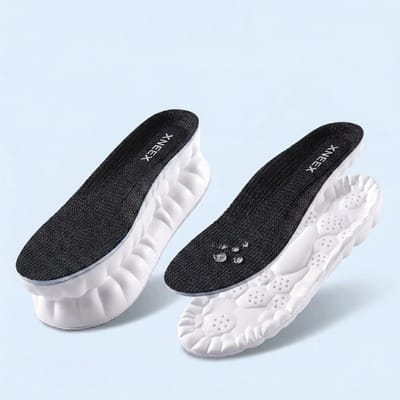
XNEEX CloudStep™ insoles are sold in pairs by shoe-size range, from EU 35–36 up to EU 45–46, and can be trimmed for an exact fit. They suit most types of shoes and combine soft cushioning with support and shock absorption, for a more comfortable feel when you stand and walk.
How long does it take to get used to new insoles?
Usually a few days. It's best to start gradually: an hour or two on the first day, then wear them a little longer each day depending on how they feel.
In the first few days your shoe may feel different, and that's normal. But rubbing, a sharp pressure point or discomfort that keeps getting worse are signs that something in the fit isn't right: the insole is too long, the shoe is too narrow or the insole is moving around inside.
How do you know the insole fits the shoe?
This table helps you spot common problems and what to do about them:
| What you feel or see | Likely cause | What to do |
|---|---|---|
| The insole buckles at the toe | It's too long | Trim a little more from the toe end |
| Your heel slips out as you walk | The shoe is shallow, or the original insole is still inside | Remove the original insole or switch shoes |
| Pressure on the top of your foot | Not enough depth | Loosen the laces or choose a deeper shoe |
| The insole moves around inside | It's too short or narrow for the shoe | Check the size or use it in a different shoe |
When should you replace insoles?
There's no fixed date, because it depends on how many hours a day you walk and stand on them. The best approach is to check them every so often.
- The cushioning is flattened and doesn't bounce back, especially at the heel and the ball of the foot.
- The top layer is torn, worn through or creased.
- The insole has lost its shape and no longer lies flat in the shoe.
- Your feet feel more tired in the same shoe, with no other change in your routine.
If you stand a lot at work, also read our article on work shoes for standing all day, and for choosing an insole in general, see insoles for standing all day.
What else helps your feet at the end of the day?
A comfortable insole is only part of the picture. In the evening, take your shoes off, sit with your feet up and give them some time to rest.
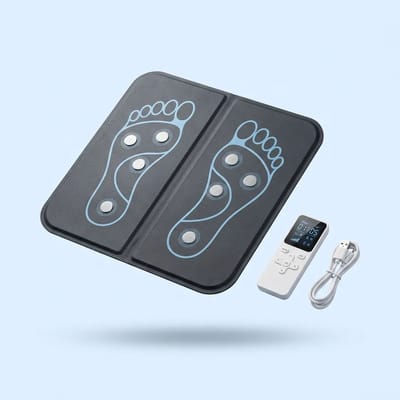
If you enjoy a massage, try FootPulse™, an EMS massage mat with 8 modes and 19 intensity levels. Use it barefoot for about 15 minutes once or twice a day, and increase the intensity gradually. It isn't suitable during pregnancy, with a pacemaker, on broken skin or with epilepsy, and if you have diabetes or circulation problems, check with your doctor first.
All our foot products are in the Feet & Legs collection. Not sure which size to pick? Email us at hello@getxneex.com, and you have 30 days to return.
Frequently asked questions
Can I put an insole on top of my shoe's original insole?
It's usually not recommended. Two insoles raise your foot, the shoe gets tight and your heel may slip out as you walk. It's better to take out the original insole and use it as a template for trimming the new one. If the original insole is glued in and won't come out, that shoe may not be the best fit.
How do I trim an insole without making it too short?
Lay the original insole on top of the new one with the heels lined up, trace the toe line and cut just outside it. Slide it into the shoe, check, and only trim more if you need to. Always trim from the toe end, never the heel.
How often should I replace my insoles?
There's no single schedule for everyone, because it depends on use. Replace them when the cushioning is flattened and doesn't bounce back, the top layer tears or creases, the insole loses its shape, or your feet feel more tired in the same shoe. A quick check every few weeks helps you catch this.
Why does a new insole feel strange for the first few days?
Your foot is used to the shoe without the new insole, so it takes a few days to adjust. Start with an hour or two a day and build up gradually. Rubbing, sharp pressure or discomfort that keeps getting worse are signs to recheck the fit and the shoe.
Can I move one pair of insoles between several pairs of shoes?
Yes, as long as the shoes are the same size and a similar shape, and both have a removable inner insole. If the shoes differ a lot in length or width, it's more convenient to keep a pair of insoles for each pair of shoes you walk in a lot.
More from the Knowledge Center
Insoles for standing all day – how to choose and what to checkWork shoes for standing: how to choose a shoe and insole for a long dayAll articles →This article is general information and is not a substitute for medical advice.