Heat or Cold for the Lower Back: When Each One Fits and How to Use It Correctly
The short answerHeat or cold for back pain? It depends on what happened. When your lower back suddenly seizes up after lifting, a sharp twist or physical effort, it's common to start with cold for the first 48 hours, 10–15 minutes at a time. When your back feels stiff, tired or tight after sitting for a long time, pleasant warmth is better for relaxing. Either way, put a layer of fabric between the source and your skin, never fall asleep with heat on, and stop if anything feels wrong.
In brief
- Back that suddenly seized up: cold for the first 48 hours, 10–15 minutes at a time.
- Back that's stiff or tired from sitting: pleasant warmth for 15–20 minutes to relax.
- Always put a layer of fabric between the source and your skin, and never fall asleep with heat on.
- Sharp pain, numbness or pain spreading down your leg: see a doctor.
Heat or cold for back pain: how do I decide what fits right now?
The simple rule: cold for something fresh, heat for stiffness and tiredness. Ask yourself whether your back suddenly seized up in the last few hours or days, or whether it's a familiar feeling that comes back after a long day.
Here are a few signs that help you tell the difference:
- Better suited to cold: your back "caught" at a specific moment, for example lifting a box or getting up quickly, and the feeling is brand new.
- Better suited to heat: your lower back is stiff in the morning, tired at the end of a workday or tight after a long drive.
- Not sure? In the first days after a sudden episode, cold is the more cautious choice. Once things calm down, you can switch to heat.
We've previously written about heat or cold for the knee. The principles are similar, but the lower back has a few points of its own: how you sit or lie while using it, and how to protect the skin in an area that's hard to see.
When does cold suit the lower back?
Cold mainly suits the first 48 hours after effort or a movement your back "didn't like". The cool feeling is pleasant on a sensitive area and helps you settle down and rest.
Put ice wrapped in a towel, a bag of frozen vegetables or a cold wrap on your lower back for 10–15 minutes at a time. You can repeat this several times a day, with a break of at least an hour in between so your skin can return to its normal temperature.
When does heat suit the lower back?
Heat suits a stiff back, tired muscles and that "locked up" feeling after a long stretch of sitting or driving. Pleasant warmth helps you relax and feel more comfortable, especially in the evening or before gentle stretches.
It's common to use heat for 15–20 minutes at a time. Afterward, it's a good idea to get up, walk around a little and let your back move.
Table: heat or cold depending on your back
| Situation | What fits | How long | Keep in mind |
|---|---|---|---|
| Back suddenly seized up in the last 48 hours | Cold | 10–15 minutes | Always through a towel or cloth |
| Morning stiffness | Gentle heat | 15–20 minutes | Move gently afterward |
| Tiredness after a long stretch of sitting or driving | Heat | 15–20 minutes | Combine with getting up and a short walk |
| Swelling, or skin that's red or warm to the touch | No heat | – | Check with a doctor |
How do I use cold correctly?
- Wrap the cold source in a thin towel. Never put ice directly on your skin.
- Lie on your side or stomach so the cold stays in place without pressing on it.
- Remove it after 10–15 minutes, even if it still feels nice.
- Check your skin: slight redness fades quickly, but white, pale or numb skin is a sign to stop.
How do I use heat correctly?
There are a few convenient ways to warm your lower back. Choose based on where you are and what you need.
- At home, at work or in the car: the BackWave massage cushion combines rotating shiatsu massage, controlled heat and vibration, together or separately. Place it on the back of your chair at lower-back height, lean back and start at the lowest level. It comes with a 12V car adapter, and we recommend using it for 15–20 minutes, once or twice a day.
- Out and about, under your clothes: ThermoRelief heat patches are herbal patches that give gentle, discreet warmth. Stick them on clean, dry skin. They're for external, single use.
- A warm shower: a simple option in the morning, when your back feels stiff.
We've written a separate guide on patches: Heat patches for the back. You'll find more back products in the Back collection.
What should I avoid with heat or cold?
- Don't fall asleep with a heating pad, a warm patch or ice on your back.
- Don't use them on broken, irritated or numb skin.
- Don't use heat on an area that's swollen or warm to the touch.
- Don't jump to the highest setting from the start. Start low and increase based on how it feels.
- During pregnancy, with a pacemaker or electronic implant, or with reduced sensation, don't use an electric heat and massage cushion.
Can I combine heat and cold?
Yes, but not at the same time. The common approach is cold for the first days after a sudden episode, then a gradual switch to heat once your back is less sensitive and starting to feel stiff.
Not sure which product is right for you? Email us at hello@getxneex.com and real people will help you choose. And if the product isn't right for you, you have 30 days to return it.
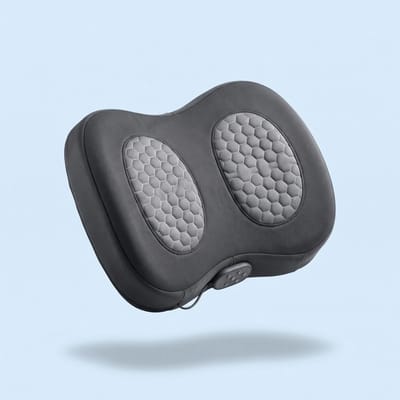
XNEEX BackWave™ – Back Massage Cushion with Heat and Vibration
See the back massage cushion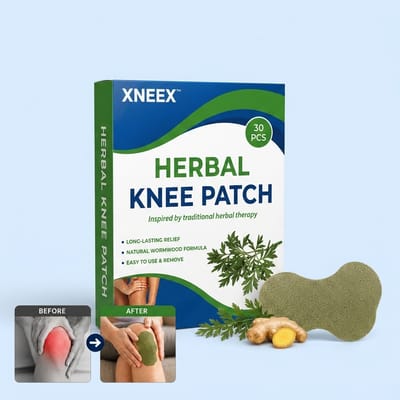
XNEEX ThermoRelief™ Herbal Heat Patches for Muscles and Joints – All Over the Body
See the heat patchesFrequently asked questions
Which is better for a stiff back, heat or cold?
If your back suddenly seized up after effort and it's been less than 48 hours, it's common to start with cold, 10–15 minutes at a time, through a towel. If it's stiffness or tiredness after a long stretch of sitting, pleasant warmth for 15–20 minutes is better for relaxing and feeling comfortable.
How long can I leave a heating pad on my back?
It's common to use heat for 15–20 minutes at a time. For the BackWave massage cushion, the recommendation is 15–20 minutes, once or twice a day. Never fall asleep with heat on, and check your skin after each use. After a heat session, it's a good idea to get up and move a little.
Can I sleep with a heat patch or heating pad on my back?
No. When you're asleep you can't tell if the heat is too strong, and your skin could get hurt. Use heat while you're awake, and remove the pad or patch before you go to sleep. If your back is stiff in the morning, you can use heat after you get up.
Should I put ice directly on my back?
No. Wrap the ice or frozen bag in a thin towel and leave it on for 10–15 minutes. If your skin turns white, pale or numb, remove it right away and let your skin return to its normal temperature before using it again.
When should I avoid using heat on my back?
Don't use heat on an area that's swollen, red or warm to the touch, on broken or numb skin, or in the first days after a fresh injury. With an electric heating cushion, also take care during pregnancy and if you have a pacemaker. If in doubt, ask a doctor.
More from the Knowledge Center
Heat or cold for the knee: when each one fits and how to use it correctlyHeat patches for the back: how to use them correctly and what to checkBack massage cushion with heat: how to use it correctly at home and in the carAll articles →This article is general information and is not a substitute for medical advice.