Your Lower Back on Long Drives: How to Sit in the Car and What to Do at Rest Stops

The short answerOn a long drive, your lower back sits in the same position for hours, sometimes with vibration and without enough support, so it feels tired and stiff by the end of the trip. What helps: setting your seat so your whole back is supported and your knees are level with your hips, supporting the curve of your lower back, stopping for a short break roughly every one to two hours, and moving a little before you lift any luggage.
In brief
- Set your seat before you drive: back supported, knees slightly bent, hands relaxed on the wheel.
- Support for the curve of your lower back and a comfortable seat cushion make hours of driving more comfortable.
- Stop for a short break roughly every one to two hours, and get out of the car to move.
- Pain spreading down your leg, numbness or weakness – see a doctor.
Why does my lower back get tired on long drives?
On a long drive, your lower back stays in the same position for hours, and your muscles are working the whole time to keep your body stable. Without breaks and good support, you end the trip feeling tired and stiff.
A few things make it worse:
- A seat too far from the pedals, so your pelvis slides forward and your back rounds.
- A backrest reclined too far, which makes you push your head and shoulders forward.
- Lack of support for the natural curve of your lower back.
- A wallet or phone in your back pocket, which tilts your pelvis to one side.
- Hours in a row without getting out of the car.
How do I set my car seat to look after my lower back?
Adjust it before you set off, not while driving. The rule is that your whole back rests against the backrest and your body doesn't have to "reach" for anything.
| What to adjust | How it should feel |
|---|---|
| Distance from the pedals | You can press them all the way down with your knee still slightly bent |
| Seat height | Knees roughly level with your hips, not higher |
| Backrest angle | A slight recline, with your shoulders touching the backrest |
| Lumbar support | A comfortable fill for the curve of your lower back, without pressure pushing you forward |
| Steering wheel | Hands relaxed, elbows slightly bent |
| Headrest | The middle of the headrest roughly level with the tops of your ears |
Once it's adjusted, sit deep in the seat so your buttocks are right against the backrest. Take your wallet and phone out of your back pocket.
What can I add to my car to make sitting more comfortable?
When the original seat doesn't give enough support, a seat cushion or back cushion can make the drive more comfortable.
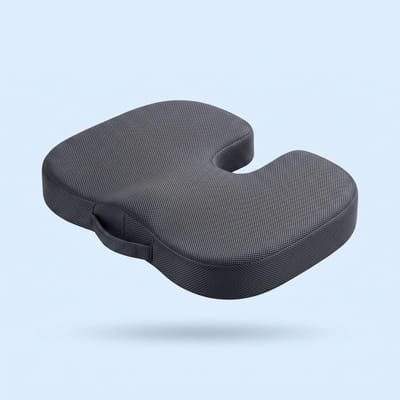
- Seat cushion: XNEEX SitRight™ is a U-shaped cushion made of dense memory foam, with a rear cutout that takes pressure off the tailbone, a breathable mesh cover that comes off for washing, and a carry handle for moving between home, office and car. Place it with the cutout facing back.
- Massage and heat on the road: the BackWave™ massage cushion comes with a 12V car adapter and combines shiatsu massage, heat and vibration. Use it as a passenger or during breaks, and don't fiddle with the remote while driving.
- Heat patches: ThermoRelief™ patches are single-use herbal heat patches that you stick on clean, dry skin and that disappear under your clothes. Read about using them in Heat patches for the back.
You'll find more on choosing a cushion for your chair and car in our guide Seat cushions for your chair.
How often should I stop on a long drive?
A short stop roughly every one to two hours gives your back a break from the fixed position and also helps you stay alert. Even 5 minutes outside the car makes a difference.
When you stop, get out of the car and do a few simple moves:
- Walk for 2–3 minutes around the car or the rest area.
- Hands on your hips and a gentle backward lean, within a small range.
- Standing pelvic tilts forward and back, 8–10 times.
- Roll your shoulders back a few times and take some deep breaths.
While driving, you can change your position slightly at traffic lights: gently press your lower back into the backrest and release, and relax your shoulders.
What should I prepare before a long drive?
A little preparation before you leave saves a lot of discomfort on the way. A few minutes of setup before you start the engine are worth it.
- Plan your rest stops in advance so you're not tempted to skip them.
- Wear comfortable clothes that don't press on your waist, and shoes that are easy to drive in.
- Keep a bottle of water within reach – drinking also reminds you to stop.
- Load heavy suitcases before you're tired, not at the end of a workday.
How do I lift luggage at the end of the drive?
After hours of sitting, your back isn't ready to lift yet. Walk for a few minutes first, and only then lift.
- Stand close to the trunk and don't stretch forward.
- Bend your knees and hold the suitcase close to your body.
- Don't twist your back while lifting – turn with your feet.
- An especially heavy suitcase – lift it with two people.
You'll find all our back and sitting products in the Back collection. Questions about what fits your car? Email us at hello@getxneex.com. And if a product isn't right for you, you have 30 days to return it.
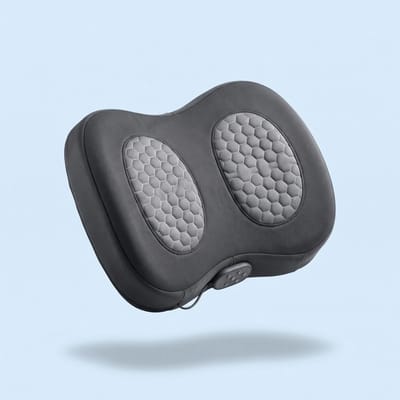
XNEEX BackWave™ – Back Massage Cushion with Heat and Vibration
See the back massage cushion
Frequently asked questions
How should I sit in the car so my lower back doesn't get tired?
Set your seat so you can press the pedals with your knee slightly bent, your knees roughly level with your hips, and the backrest slightly reclined. Sit deep in the seat with comfortable support for the curve of your lower back, and take your wallet and phone out of your back pocket.
How often should I stop on a long drive for my back?
A short break roughly every one to two hours is a good habit. Even 5 minutes of walking and gentle moves outside the car gives your lower back a break from the fixed position and helps you stay alert on the road. It's worth planning your stops in advance.
Does a car seat cushion help the lower back?
A good seat cushion can make sitting more comfortable. A U-shaped memory foam cushion with a rear cutout, like SitRight™, takes pressure off the tailbone and encourages upright sitting. It's not a medical product, and if pain persists, it's worth seeing a doctor.
Can I use a back massage cushion while driving?
BackWave™ comes with a 12V car adapter. It's better to use it as a passenger or during breaks, and not to adjust the remote while driving. The recommended time is about 15–20 minutes, up to twice a day, and it shouldn't be used during pregnancy or with a pacemaker.
What should I do when I get out of the car with a stiff back?
Don't rush to lift your luggage. Walk for a few minutes, do some gentle pelvic tilts and put your hands on your hips for a slight backward lean. When you lift, bend your knees, hold the load close to your body and don't twist your back. Lift an especially heavy suitcase with two people.
More from the Knowledge Center
Seat cushions: how to choose one for your back and tailbone, at the office and in the carHeat patches for the back: how to use them correctly and what to checkBack massage cushion with heat: how to use it correctly at home and in the carAll articles →This article is general information and is not a substitute for medical advice.