Hospital Bag Checklist: What to Pack for Mom, Baby and Birth Partner – and When
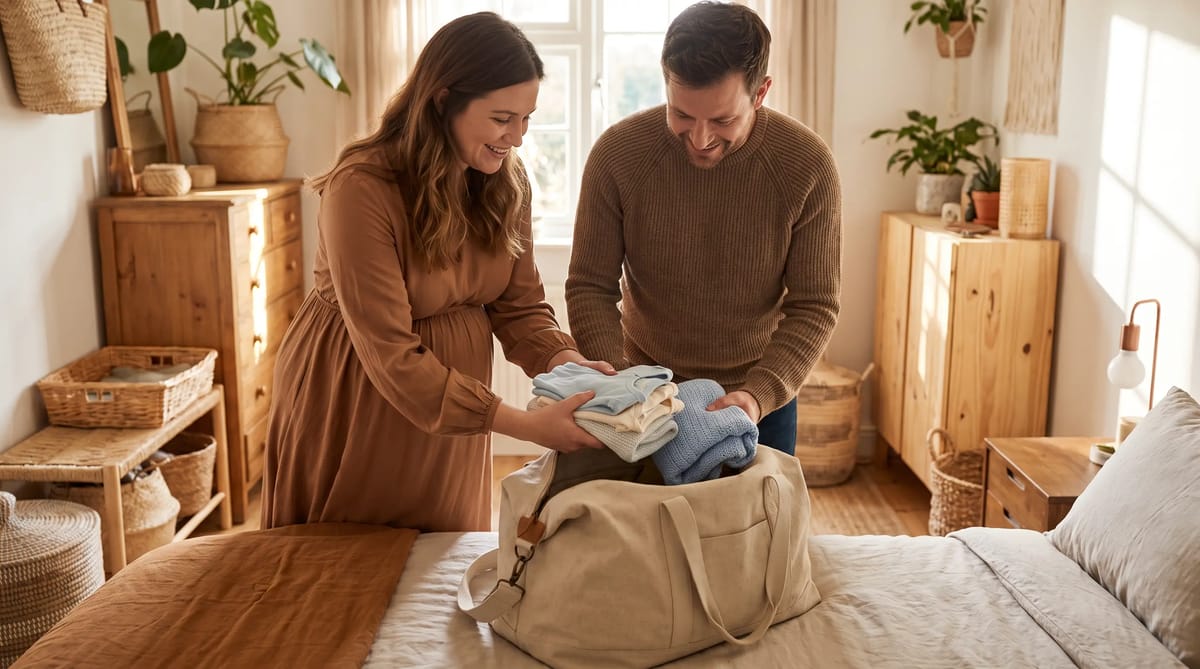
The short answerIt's a good idea to pack your hospital bag a few weeks before your due date – many people do it around week 35 or 36. Split it into three: documents and comfortable clothes for mom, a going-home outfit for the baby, and a small bag for your birth partner. Rules vary between hospitals, so check in advance what the ward provides, and set up a comfortable nursing spot at home for the first days.
In brief
- Pack a few weeks before your due date and keep the bag by the door or in the car.
- Split it into a labor bag, a postnatal ward bag, a baby set and a birth partner bag.
- Check with the hospital in advance which documents you need and what the ward provides.
- Set up a nursing spot at home with a nursing pillow, water and towels within reach.
When should you pack your hospital bag?
Your hospital bag should be ready a few weeks before your due date, so if labor starts early you can just grab it and go. Many people pack around week 35 or 36 of pregnancy.
If your pregnancy is being closely monitored or you've been told you might be admitted early, pack sooner. Keep the bag by the door or in the car, and stick a note on it listing what goes in at the last minute, such as your charger, glasses and regular medications.
What goes in mom's hospital bag?
Mom's bag splits into two parts: what you need in the delivery room, and what you need for your days on the postnatal ward. It's handy to pack two small bags, so your partner isn't rummaging through one big bag in the middle of the night.
For the delivery room
- Photo ID, insurance details, your prenatal records and latest test results
- A long, comfortable top or nightgown, warm socks and slippers
- A hair tie, lip balm and a water bottle with a straw
- Phone, charger and a long cable, since the outlet isn't always next to the bed
For your days on the ward
- A nursing bra and front-opening tops
- Plenty of comfortable underwear and postpartum pads
- Toiletries, a small towel and flip-flops for the shower
- Loose clothes for going home, since your belly doesn't go back to its size right away
What should you pack for the baby?
Your baby needs very little at the hospital – mainly an outfit for going home. Many wards provide diapers and clothes during your stay, but this varies from place to place.
- Two or three bodysuits and a sleepsuit, in newborn size and one size up
- A thin hat and socks
- A blanket or swaddle suited to the weather
- A car seat installed in the car for the ride home. It's worth installing it and practicing buckling before the birth
What should your birth partner bring?
Labor can last many hours, and your birth partner is awake most of the time. A small bag of their own saves unnecessary trips out of the room.
- A change of clothes and a sweater, since delivery rooms can be chilly
- Snacks, a sandwich and a water bottle
- A power bank or an extra charger
- A list of people to update, and the hospital's exact address
How do you organize the list by stage?
Each stage needs different things, so it helps to think about the list by place and time, not just by person.
| Stage | What you need to have | Where it is |
|---|---|---|
| Delivery room | Documents, comfortable clothes, water, charger | Small bag in hand |
| Postnatal ward | Nursing bra, pads, toiletries | Mom's bag |
| Birth partner | Food, change of clothes, power bank | Separate bag |
| Going home | Baby clothes, blanket, car seat | Baby bag and the car |
| First days at home | Nursing pillow, a ready nursing spot, water within reach | At home, set up in advance |
What should you set up at home for the first days?
The first days at home are mostly spent feeding, nursing and resting. A comfortable spot set up in advance saves hunting for pillows and towels when the baby is already hungry.
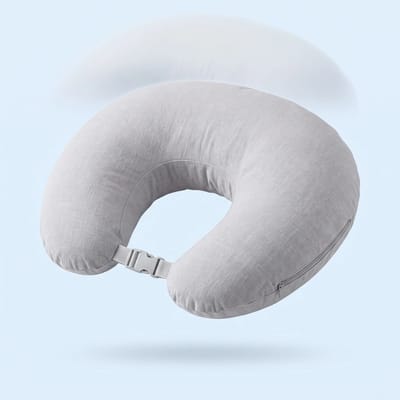
The half-moon NursePillow nursing pillow fastens around your waist with an adjustable buckle, and its firm filling doesn't sink under the baby's weight. The cotton cover is removable and machine washable – a real plus in the first weeks. You can use it for bottle feeding too.
Remember: the pillow is designed for support during feeding only. Never leave a baby on it unattended and never use it for sleep. Babies sleep on their backs, on a flat, firm surface, in a bassinet or their own crib.
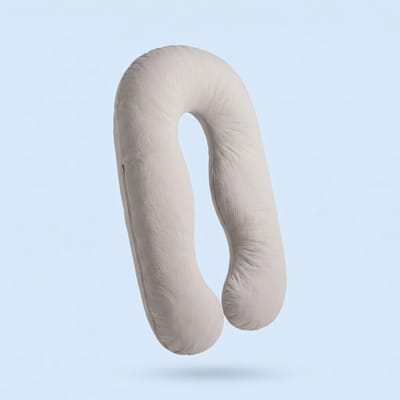
If you're still in late pregnancy, the MamaCloud C pregnancy pillow wraps your back and supports your bump when sleeping on your side, and after the birth you can also use it for nursing and reading in bed. You'll find more ideas in our Pregnancy collection, in our guide on how to use a nursing pillow correctly and in our guide to sleep and comfort during pregnancy and after birth. Have a question about one of the products? Email the XNEEX team at hello@getxneex.com – and you get 30-day returns.
How do you find out what the hospital asks for?
Rules vary between hospitals, so the safe way is to check in advance. You can ask on a maternity unit tour, on the hospital's website or by calling the ward.
- Which documents do you need to bring for admission?
- What does the ward provide for mom and baby, and what do you need to bring?
- How many birth partners are allowed, and at what hours?
- Can you bring food from home or your own pillow?
Once you have the answers, update your list and take out anything you don't need. A lighter bag is easier for your partner and for you.
Frequently asked questions
When should you pack your hospital bag?
Your bag should be ready a few weeks before your due date, and many people pack around week 35 or 36. If your pregnancy is closely monitored, or you've been told you might be admitted early, pack sooner and keep the bag somewhere easy to grab on your way out.
What are the must-haves for the birth?
The most important things are photo ID, your prenatal records and latest test results, your phone and charger, comfortable clothes, and a going-home outfit for the baby with a car seat installed in the car. It's worth adapting the rest of the list to the guidelines of the hospital where you're giving birth.
Does the hospital provide diapers and baby clothes?
Many wards provide diapers and baby clothes during your stay, but it isn't the same everywhere. It's worth asking on a maternity unit tour or by calling the ward, and in any case packing an outfit, hat and blanket for going home.
How many bags should you pack for the birth?
It's handy to pack a small bag for the delivery room, a bag for your days on the ward, and a separate bag for your birth partner with food and a change of clothes. That way nobody has to dig through one big bag in the middle of the night, and everyone knows where their things are.
When do you start using a nursing pillow?
You can use a nursing pillow from the very first feed, in your first days at home. It helps hold your baby at a comfortable height while breastfeeding or bottle feeding. Never leave a baby on the pillow unattended and never use it for sleep.
More from the Knowledge Center
Nursing pillow: how to use it right, what height, and what matters for safetySleep during pregnancy: a guide to comfort at night, by day and after birthC or U pregnancy pillow – the difference and how to choose the right oneAll articles →This article is general information and is not a substitute for medical advice.